


If Election Commission did not decide on SIR, then who did?
Transparency and RTI activist Anjali Bhardwaj claims a principal secretary in ECI declared that it did not take SIR decision
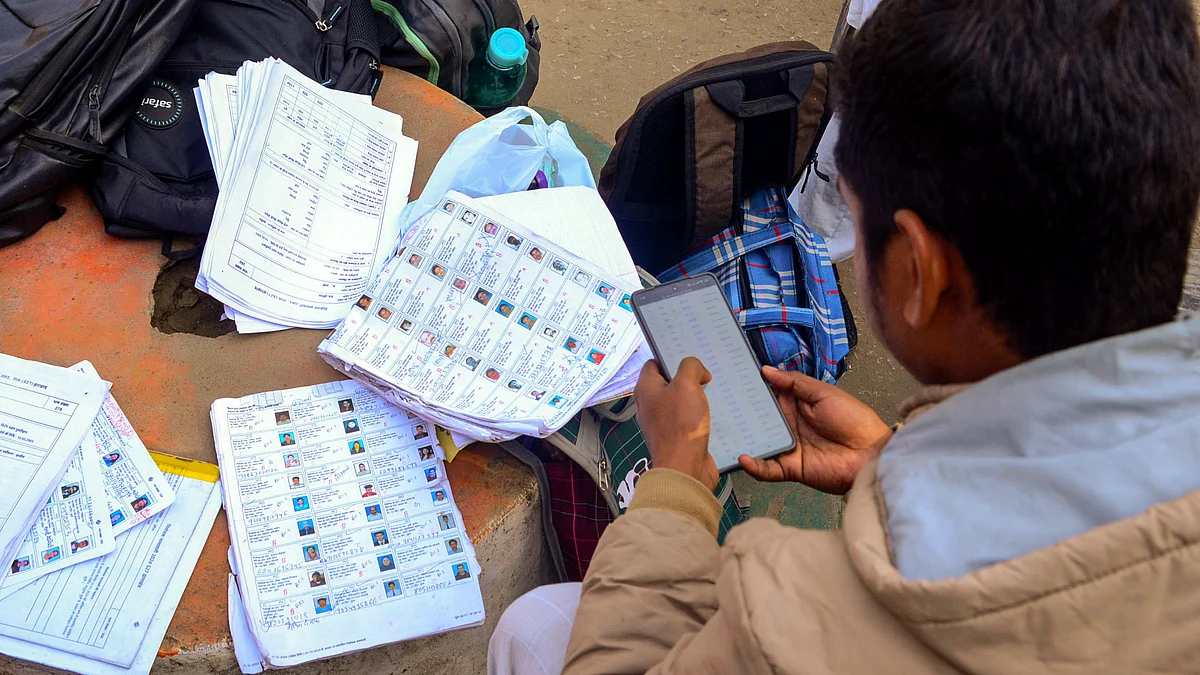


“I had made a straightforward prayer in my Right to Information (RTI) application to the Election Commission. I asked for details in the file on which the decision to conduct the Special Intensive Revision (SIR) of the electoral rolls in the country was taken. In his reply, the principal secretary in the ECI informed me that the decision was not taken by the Commission,” transparency and RTI activist Anjali Bhardwaj told YouTube channel Red Mike (clip below):
If the Election Commission of India (ECI) did not take the decision to conduct the SIR, then who did? In the Supreme Court, which has been ‘hearing’ the challenge to the legal validity of SIR since July, the ECI has repeatedly claimed that it is authorised to conduct an SIR and that it conducted a similar exercise in 2002-03.
Petitioners have pointed out in court that while the ECI's rules do provide for ‘intensive revision’ in one constituency or parts of a constituency, they do not permit such extensive revision across an entire state, much less in the country. They have also pointed out that the rules lay down that ‘intensive revisions’ — as opposed to annual summary revisions — of electoral rolls may be conducted only after the ECI provides the reason in writing. They also state that such intensive revisions can be carried out in constituencies or parts thereof where sudden demographic changes have occurred.
The attention of the Supreme Court was also drawn to the fact that neither the Constitution nor the ECI’s manual mentions anything about a ‘special intensive revision’. Never before has the ECI asked voters to either fill up enumeration forms or demanded documents as proof of their identity, residence or nationality.
It was the Commission’s responsibility, right from the first general election in 1950-51 to the last in 2024, to ascertain where voters lived and whether they were eligible to vote. This is the first time in independent India that the onus of proving their eligibility has been placed on voters. In that sense, no SIR has taken place in India before.
What was also suspicious was the sudden and abrupt announcement of SIR in Bihar on 24 June; and launching the exercise the very next day. Had the ECI taken the decision, it surely would have consulted the stakeholders and at least informed the booth-level agents of political parties at the workshop held for them in April? It looks suspiciously as though the ECI was acting under instructions. And there seem to be no records, files or a trail of file-notings that would prove that a process was followed.
If the ECI is finally telling the truth — in the RTI response to Bhardwaj — then the needle of suspicion inevitably points to the appointing authority of election commissioners — the Government of India. Surely the ECI would not have taken such a fraught decision, involving huge expense and mobilisation of lakhs of government employees — without even consulting the states about their availability? Surely the decision was not influenced by an NGO or two?
Join our official telegram channel (@nationalherald) and stay updated with the latest headlines