


India has at least started to stir: Cong cites Noida unrest to attack 'Modi model'
Opposition cites 12-hour shifts, Rs 8,000–10,000 wages; questions how ‘outside forces’ could trigger chaos in major industrial hub
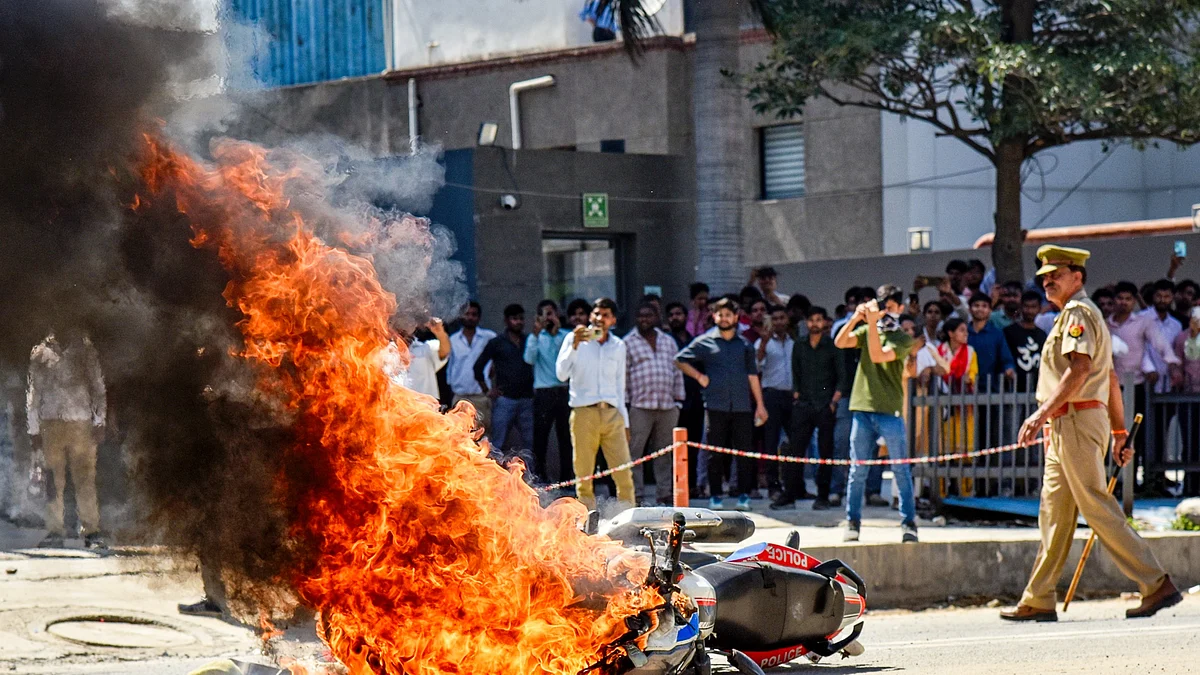


The Congress on Wednesday, 15 April used Tuesday's violent worker unrest in Noida to mount a sharp political attack on the Narendra Modi government, arguing that the protests lay bare the contradiction between headline claims of rapid economic growth and the reality of stagnant wages and precarious work.
A day after clashes broke out in Noida’s industrial belt, with workers blocking roads and confronting police over pay and working conditions, the party said the anger reflected deep-rooted distress among labourers across major urban centres.
In a strongly worded video statement on the party's official social media accounts, Congress spokesperson Supriya Shrinate questioned the government’s narrative of India as the world’s fastest-growing major economy, alleging that millions of workers continue to earn between Rs 8,000 and Rs 10,000 a month despite working up to 12 hours a day.
Referring to videos circulating from Noida, the party said workers claim their wages have remained largely unchanged for nearly a decade even as the cost of rent, food, education, healthcare and fuel has risen sharply.
The Congress argued that the situation is not confined to Noida but reflects a wider pattern across industrial hubs such as Gurugram, Faridabad, Delhi and Mumbai, where long working hours and low wages remain common.
It also pointed to recent protests by women employed on the Uttar Pradesh government’s CM Helpline in Lucknow, who said salaries of around Rs 7,000 were insufficient to cope with inflation.
Linking the unrest to labour reforms, the party alleged that the implementation of four Labour Codes in November 2025 has enabled longer working hours without corresponding wage growth, worsening the pressure on low-income workers.
The Uttar Pradesh government responded to the unrest by announcing an interim increase in minimum wages and constituting a committee to examine workers’ grievances. However, chief minister Yogi Adityanath also suggested the protests may have involved a broader conspiracy or the role of “external elements”.
The Congress criticised the suggestion, arguing that invoking an unspecified “external hand” raises more questions than it answers.
Opposition leaders said that if outside actors were indeed capable of triggering such widespread disruption in one of north India’s largest industrial clusters, it would point to serious failures in intelligence and governance. Alternatively, they argued, attributing the unrest to shadowy conspiracies risks deflecting attention from the underlying economic distress driving workers onto the streets.
Authorities have made arrests in connection with the violence, while investigations are examining whether social media mobilisation played a role in the scale of the protests.
The Congress maintained that the unrest reflects growing frustration among workers struggling to cope with inflation while wages remain largely stagnant.
Contrasting labour incomes with rising corporate earnings, the party argued that the benefits of economic growth are unevenly distributed, with those at the bottom of the income ladder facing increasing financial pressure despite working longer hours.
The Noida protests have added a sharp political edge to the debate over labour reforms, wages and inequality, with opposition parties portraying the unrest as a warning sign of mounting discontent among India’s urban workforce.
As tensions continue in parts of the National Capital Region, the episode has intensified scrutiny of whether India’s rapid economic expansion is translating into improved living standards for workers whose labour underpins that growth.
Join our official telegram channel (@nationalherald) and stay updated with the latest headlines