


Kerala: ECI sends letter with BJP seal, calls it ‘clerical error’
Poll body withdraws document after oversight sparks neutrality concerns and political sniping
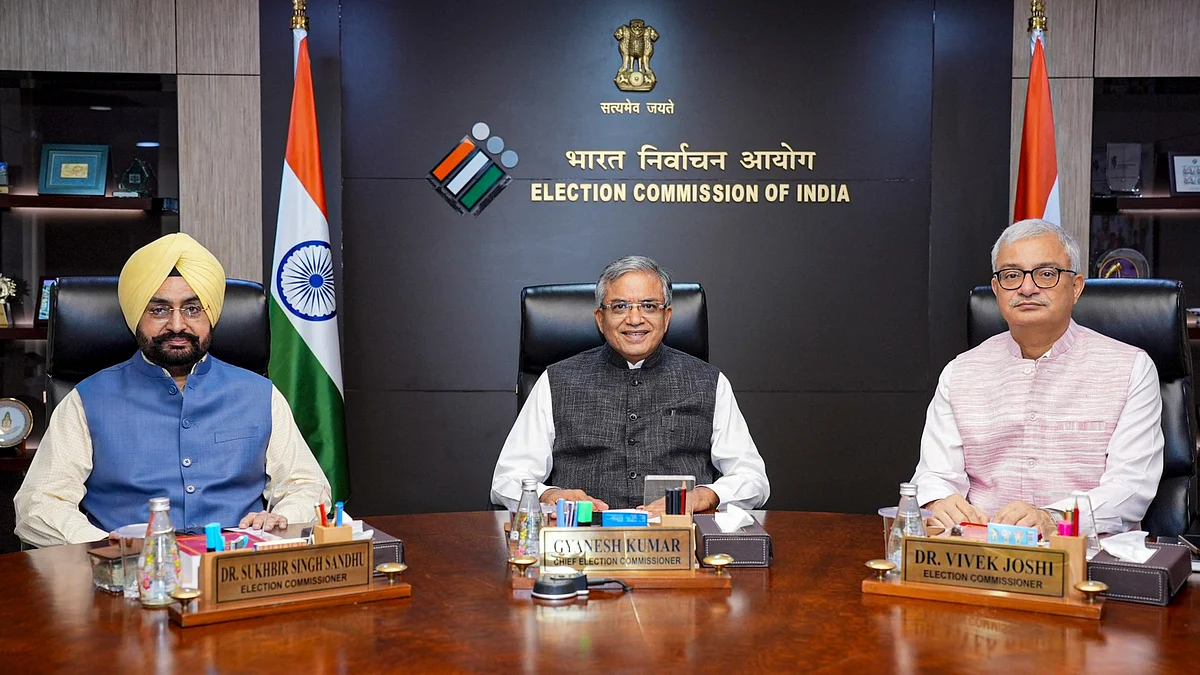


The Election Commission of India’s insistence that it maintains a “rigorous and foolproof system” is facing awkward scrutiny after an official communication was circulated bearing the seal of the BJP’s Kerala unit — an error the poll body has described as a mere “clerical oversight”.
The controversy erupted after a letter sent by the office of the chief electoral officer (CEO), Kerala, to political parties carried the BJP’s party seal instead of an official Election Commission authentication mark, triggering sharp reactions from opposition parties, including the Congress.
In a clarification issued after the document began circulating on Malayalam news channels, the CEO’s office said the mistake occurred because the BJP Kerala unit had earlier submitted a photocopy of a 2019 directive relating to disclosure of candidates’ criminal antecedents, which contained the party’s seal.
According to the explanation, the office “failed to notice the party symbol” on the copy submitted by the BJP and inadvertently redistributed the same document to other political parties while responding to queries on the guidelines.
The office said the error was identified and rectified, and that on 21 March, the deputy chief electoral officer issued a formal communication withdrawing the document. The withdrawal notice was sent to political parties as well as district election officers and returning officers.
The Commission has urged the public and media not to draw conclusions from what it described as a clerical lapse, asserting that the electoral system remains protected by safeguards designed to prevent external influence.
That assurance, however, has done little to quiet the obvious question: how does a constitutional body circulate an official communication carrying the seal of a political party — and only notice after it reaches multiple recipients?
Opposition leaders were quick to characterise the episode as symptomatic of a deeper institutional problem, arguing that the appearance of a party seal on an ECI communication risks reinforcing perceptions that the poll body’s independence is under strain.
Also Read: All the Commission’s men (and women)
The Congress, in a sharply worded social media post, called the development a “serious red flag” and asked how a political party’s mark could appear on an official document of a constitutional authority tasked with ensuring free and fair elections.
At one level, the Commission’s explanation suggests an administrative mix-up: a photocopy provided by a party was reused without removing identifying markings. At another, the episode raises questions about document verification protocols inside an institution that routinely emphasises procedural integrity down to the smallest detail.
The irony is difficult to miss. Thanks to the (still) ongoing special intensive revision (SIR), voters are being routinely disqualified for paperwork discrepancies far less consequential than a party seal appearing on a Commission communication. Yet here, the explanation rests on an oversight that appears almost banal in its simplicity: a failure to notice a political party’s stamp on a document being circulated in its own name.
The ECI’s assurance that the system is “foolproof” may therefore invite less comfort than intended. After all, a process that can accidentally forward a party-stamped document as an official communication is, by definition, not entirely proof against fools — or at least against faulty proofreading.
Whether the lapse remains an isolated administrative error or becomes a political talking point may depend less on the explanation already offered, and more on whether the Commission can convincingly demonstrate that such oversights are the exception rather than the rule.
Join our official telegram channel (@nationalherald) and stay updated with the latest headlines