


Kerala: When majoritarian bigotry boomerangs
The FCRA amendments and P.C. George’s outburst have derailed the BJP’s Christian outreach in Kerala


As polling closed in Kerala’s Assembly election, the BJP found itself confronting a familiar ceiling just when it believed it had begun to crack it. This time, the party entered the contest with unusually high expectations in central Kerala, where even a modest shift in Christian votes could have altered outcomes in several key constituencies. What it needed was a break. What it encountered was a rupture.
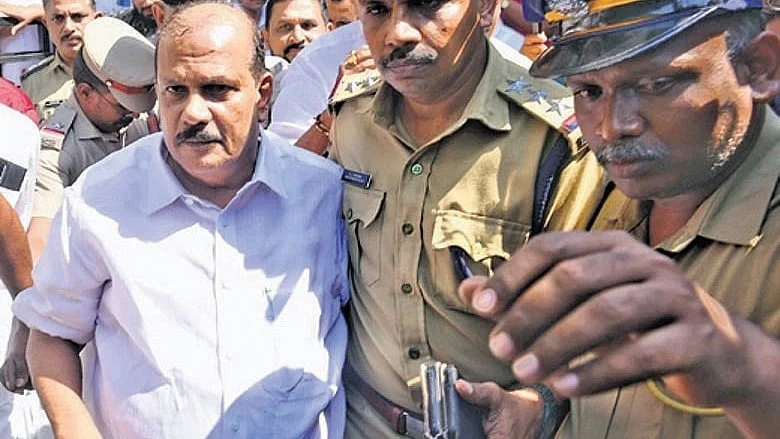
At the centre of that rupture stands P.C. George, the BJP’s controversial candidate from Kottayam’s Poonjar, known for his abrasive rhetoric. His remarks have complicated an already fragile outreach effort, with sections of the clergy occasionally receptive, even as the laity largely resisted majoritarian politics.
George, who moved through the UDF and the LDF before landing in the BJP, publicly attacked Christian bishops at a crucial moment in the campaign. Christians, he said, were “just two per cent” of the population and their bargaining with the “Hindu majority” was unwarranted. He accused sections of the clergy of playing a “double game” while benefiting from foreign funds, and called for stricter scrutiny of Church institutions and their financial dealings.
These comments landed in an already charged electoral atmosphere, amid growing anxiety around the Foreign
Contribution Regulation Act (FCRA), the central law governing foreign funding to institutions in India. At the heart of the controversy is a provision in the FCRA Amendment Bill 2026 that allows the central government to take over assets created using foreign funds if an organisation’s FCRA registration is cancelled, expires, is surrendered, or even if its renewal is delayed.
For organisations entangled in disputes, this provision is alarming. A delay caused by litigation, administrative hurdles, or even technical lapses could potentially lead to state takeover of properties and institutions.
For the state’s Christians, particularly Catholics, the FCRA directly affects a vast institutional network from hospitals in rural areas to schools for marginalised communities and social welfare programmes that often fill gaps left by the state.
Also Read: The FCRA noose tightens
“Foreign funding supports essential services,” explains Fr Paul Thelakkatt, a former spokesperson of the Syro Malabar Church. “When licences are delayed or cancelled, the impact is immediate. It affects patients, students and entire communities.”
By questioning the role of foreign funding and reducing Christians to numerical insignificance, George reinforced anxieties that were already present. Father Thomas Tharayil, deputy secretary-general of the Kerala Catholic Bishops Conference said, “When someone says we are only two per cent and should not bargain, at a time when our institutions face scrutiny over funding, people will connect the two. It creates distrust.”
This distrust has altered the political mood in central Kerala. Constituencies where the BJP had hoped to make incremental gains have become cautious.
John Nellikunnel, Bishop of the Syro Malabar Church in Idukki, captures the shift: “Earlier, there was curiosity. Now people are asking what these policies mean for our institutions.”
There is recognition in the BJP that they have lost both the moment and the momen-tum. Says a party functionary from central Kerala, “We were making gains this time, but issues like FCRA and statements like George’s have set us back.”
The response from the Church was swift and sharp. A Bishop of the Malankara Orthodox Syrian Church publicly rebuked George and warned against attempts to diminish a community that has played a foundational role in Kerala’s social development.
George’s outburst strained the BJP’s relationship with those he once claimed to represent and protect. Kerala’s demographic structure explains why this matters. Hindus constitute roughly 54 to 55 per cent of the population, Muslims around 26 to 27 per cent and Christians about 18 to 19 per cent.
Unlike in many other states, no single community can decisively determine electoral outcomes on its own. Within this framework, Christians occupy a pivotal position. Their concentration in districts such as Kottayam, Ernakulam, Idukki and Pathanamthitta gives them disproportionate electoral influence.
Also Read: Congress-led UDF raring to make a comeback
For the BJP, this demographic reality has long been a structural constraint. The party’s vote share in Kerala has grown steadily, from around 6 per cent in the early 2000s to about 10–12 per cent in the last Assembly elections. Yet this growth has not translated into proportional seat gains. The party opened its account in the Assembly in 2016, lost that foothold within five years and has since struggled to expand pockets.
The reason lies in arithmetic. Even a near complete consolidation of upper caste Hindu votes does not take the BJP close to a winning threshold in most constituencies. Without support from either Muslims or Christians, the path to power remains blocked.
Given the political distance between the BJP and Muslim voters in Kerala, the Christian community has emerged as the more viable bridge. Recognising this, Prime Minister Narendra Modi engaged with bishops during visits to Kerala. When Archbishop Joseph Pamplany said supporting the BJP was an option — provided economic demands like better rubber prices for largely Christian farmers were addressed — it indicated a willingness within sections of the Church to engage.
In Thrissur, Suresh Gopi demonstrated how this approach could translate electorally. By avoiding overtly polarising rhetoric and focusing on personal outreach, he reduced resistance among sections of Christian voters and became the BJP’s first Lok Sabha MP from Kerala.
For the Assembly election, the BJP hoped to capitalise on this beginning by fielding multiple Christian candidates, including P.C. George, his son Shone George, Union minister George Kurian and national leader Anoop Antony, all contesting on the lotus symbol. Yet as polling concluded, there was little evidence that this strategy had paid.
“We will talk to anyone who addresses our problems,” says P.V. Kuriakose, a rubber farmer in Kanjirappally. “But if there is uncertainty about our institutions, people will step back.”
Other groups, including Orthodox, Jacobite and Latin Catholic communities, remain sceptical of the BJP’s ideological framework. The FCRA issue and George’s remarks have reinforced that scepticism, while exposing the limits of an approach where policy and politics do not align. The BJP may yet manage to make deeper inroads in the state by engaging its large Christian community, but it did mess up its messaging this time round, squandering potential gains in these elections.
Join our official telegram channel (@nationalherald) and stay updated with the latest headlines