


Kolkata: Assault on patty seller at Gita recital sparks political storm ahead of polls
Police probe attack on Muslim vendor at Gita recital as parties trade charges over 'vigilantism' in poll-season Bengal
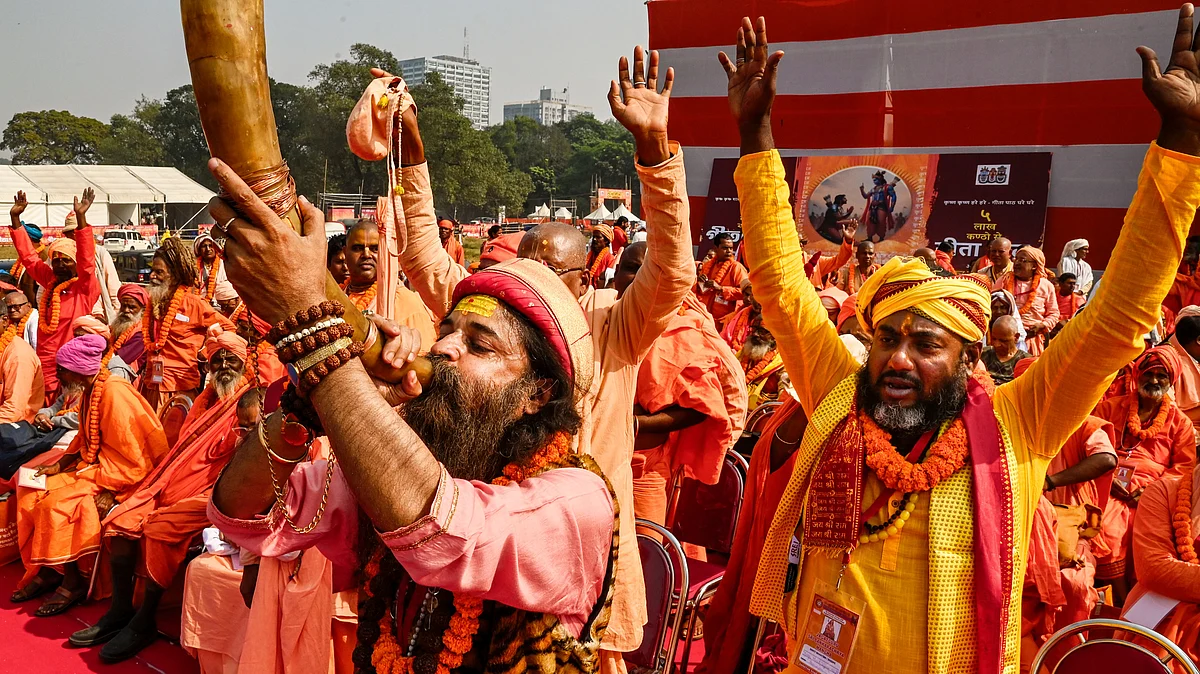


With West Bengal heading toward Assembly elections next year, an assault on a Muslim vendor selling chicken (and vegetable) patties near a mass Gita recital at Kolkata’s Brigade Parade Ground on 7 December has ballooned into a major political confrontation.
Opposition parties have accused the BJP of normalising food policing and vigilante behaviour — practices they say are spilling over into Bengal from states where the party’s cultural strictures already dominate public life.
The incident took place during 'Paanch Lakh Konthe Gita Paath', organised by Sanatan Sanskriti Sansad. The vendor, Sheikh Riyazul, a resident of Hooghly's Arambag who has sold patties in the Maidan area for over 23 years, said he was approached by a group of saffron-turbaned and tilak-wearing youths who asked his name, then immediately began beating him.
“They asked me my name. As soon as I told them, they started thrashing me. They also made me do squats and threw my food,” he said. The viral video shows the group slapping him, pulling his ears, and emptying his patties onto the ground before stamping on them — behaviour more in line with playground bullies than participants in a devotional gathering.
Riyazul filed a complaint at Maidan police station, which has led to a formal investigation. CPI(M) advocate Sayan Bandopadhyay submitted a separate petition urging the police to treat the incident as attempted lynching, warning that “a section of people is trying to impose Uttar Pradesh’s mob-lynching culture in Bengal”.
Police say footage from the event is being analysed to identify the offenders.
The assault has quickly been folded into the larger election-season narrative, with TMC and CPI(M) leaders arguing that the BJP’s aggressive cultural messaging — already under scrutiny after Prime Minister Narendra Modi’s widely mocked “Bankim da” remark about Bankim Chandra Chattopadhyay during the Vande Mataram debate in Parliament — is encouraging vigilantism dressed up as religiosity.
TMC state general-secretary Kunal Ghosh condemned the attack and mocked the selective piety displayed: “Don’t buy if you don’t eat non-vegetarian food. But why beat up the seller? This is livelihood. I saw many people wearing leather shoes while holding the Gita — why wasn’t action taken against them?”
TMC spokesperson Arup Chakraborty went further, calling the attackers “aggressive Hindutva heroes” who were performing “drama, not devotion”. He described the incident as an attack on Bengali identity and a symptom of a “Manuvadi, Brahmanical ‘one nation, one religion’ mentality.”
The Opposition argues that what happened to Riyazul fits neatly into a broader pattern seen across several BJP-ruled states, where food policing has effectively become a parallel moral code.
From beef rumours becoming grounds for mob violence to vigilante groups raiding eateries over biryani and meat sales, BJP-state moral squads have long specialised in turning ordinary meals into public order emergencies. In some regions, refrigerator inspections and cow vigilante patrols have become so common that the police often arrive after the food enforcers.
This style of dietary vigilantism, critics say, has now reached Kolkata — where a handful of men decided that a hawker selling chicken patties posed a greater spiritual threat than beating him senseless at a religious event. If Bengal needed a preview of the cultural controls the BJP’s more militant affiliates favour, the “patty police” provided a demonstration: a model of policing that requires no law, no logic, only the stamina to stomp on snacks in the name of sanctity.
Event organisers from the Sanatan Sanskriti Sansad denied having banned non-vegetarian food at the venue. BJP leader Debjit Sarkar, however, questioned the vendor’s presence: “Can Gita paath be done after eating chicken patties?”
Riyazul said he would have complied had he simply been asked to leave. “Never has this happened in two decades,” he said.
With the Assembly elections approaching and the BJP attempting to deepen its cultural footprint in Bengal, the assault has become more than a law-and-order incident — it now sits at the intersection of food politics, identity, and an increasingly polarised campaign season.
With PTI inputs
Join our official telegram channel (@nationalherald) and stay updated with the latest headlines