


Mamata Banerjee’s chance to highlight ‘stolen mandate’ at Martyrs’ Day rally
Once a symbol of electoral reform, the 21 July rally returns to the centre of Bengal's political battle.
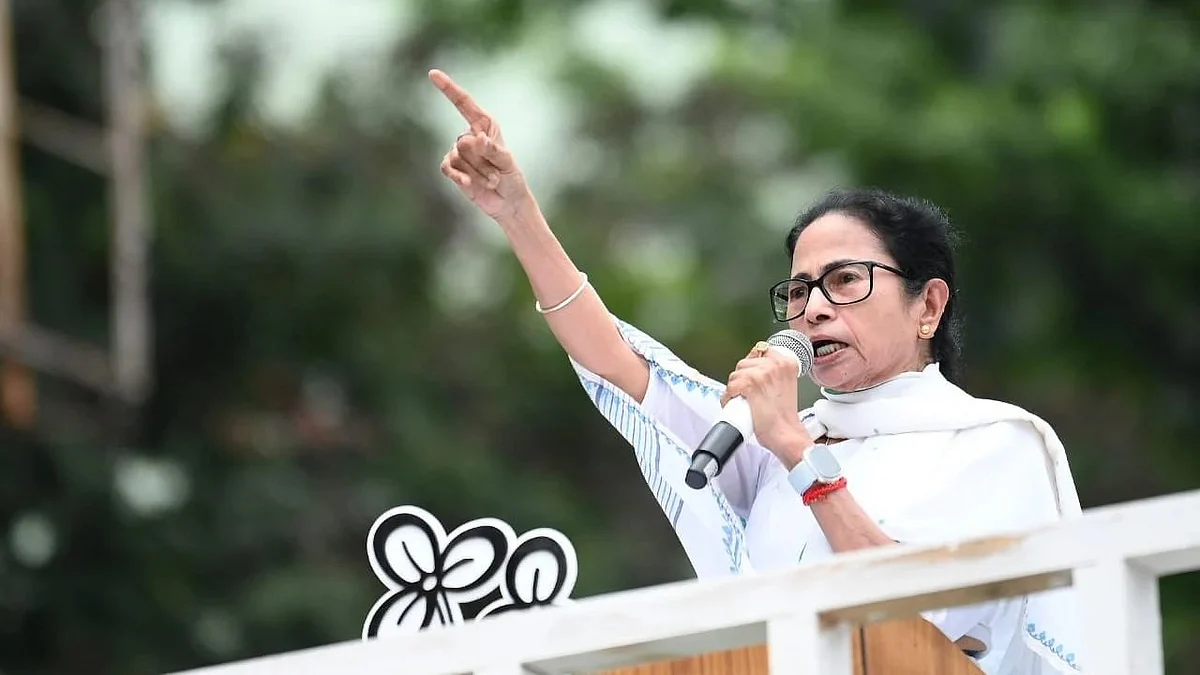


The demand that prompted the Youth Congress march led by Mamata Banerjee, then heading the party's state youth unit, on 21 July 1993 in what was Calcutta was ahead of its time. With the Left Front government firmly in the saddle since 1977, the Youth Congress accused it of perfecting the art of 'scientifically rigging' elections and demanded the introduction of photo identity cards for voters to ensure free and fair elections.
It was a reasonable demand, and the Election Commission of India (ECI) introduced the Electors' Photo Identity Card (EPIC) programme in the mid-1990s. It was rolled out across the country by 2004. The issue was for the ECI to address, but the Youth Congress decided to march to Writers' Building, then the state secretariat, to press the demand. Then chief minister Jyoti Basu and the Left Front government, for reasons known only to them, declared that the procession would not be allowed to converge at Writers'.
Multiple roads converge at Writers' Building, though the secretariat has since shifted across the river to Nabanna in Howrah. Built in 1777, Writers' Building initially housed junior clerks of the British East India Company. After Independence, it continued to accommodate key government departments, including the offices of the chief minister and other ministers.
The Youth Congress, led by Mamata Banerjee, sought to catch the police off guard by opting against one large procession. Instead, it planned scores of smaller processions approaching from different routes before converging at BBD Bag (formerly Dalhousie Square) in front of Writers'. The situation quickly spun out of control and the police, unable to contain the surge of protesters arriving from multiple directions, opened fire, killing 13 people.
The Youth Congress, and later the Trinamool Congress (TMC) formed by Banerjee in 1998, continued to observe the day as Martyrs' Day. When the TMC swept to power in 2011, the annual rally grew in stature and scale with the backing of the state government. Over time, the focus on electoral reforms gradually receded as the event evolved into a show of political strength by the ruling party.
Thirty-three years later, the 21 July rally, or Martyrs' Day as the TMC christened it, has acquired renewed political significance following the controversy-ridden Assembly election in April 2026, which saw the BJP secure a landslide victory in the state for the first time. While the BJP has little interest in the event itself, all three factions of the TMC are planning separate programmes on Tuesday, 21 July. While the rebel TMC (Ritabrata) faction was granted permission to hold its rally on Mayo Road, TMC (Mamata) had to approach Calcutta High Court for permission.
The high court allowed TMC (Mamata) to hold its rally opposite Birla Planetarium, about 3 km from Mayo Road, between noon and 3 pm on Tuesday. The court also directed that attendance be restricted to no more than 2,500 people. Significantly, PTI reported on 21 July 2025 that last year's rally had attracted "lakhs of people".
The rebel faction, by contrast, does not appear to have been subjected to similar restrictions. Backed by the BJP, its rally on Mayo Road near the Grand Hotel is expected to draw a much larger crowd, which the rebels hope will strengthen their claim to being the "real" TMC.
The beleaguered former chief minister, however, retains the advantage when it comes to reminding people of electoral malpractices and taking credit for the introduction of EPIC. Not only Banerjee but also a section of independent observers contend that this year's Assembly election was decisively influenced by the Special Intensive Revision (SIR), which they allege disenfranchised 27 lakh eligible voters.
The ECI has also come under scrutiny for what critics describe as a virtual war against the previous state government by replacing police personnel and election staff with officials of its own choosing. Union home minister Amit Shah was widely seen by critics as facilitating that exercise through the deployment of Central forces, which they allege acted against the then ruling party.
The former chief minister appears acutely aware of how precarious the situation is. Anticipating that the BJP may seek to obstruct Tuesday's rally, she has expressed concern that supporters could be discouraged from attending and that suppliers might be intimidated into withdrawing logistical support. The party's bank accounts have already been frozen by the Enforcement Directorate and the police. The recent attack by BJP supporters on a small procession in Kolkata protesting the eviction of hawkers and bulldozer action is likely to serve as a warning to many.
The possibility of BJP workers and members of the rebel Trinamool faction hurling eggs to humiliate her in public cannot be ruled out, given what she believes is the free hand afforded by the police to BJP and rebel Trinamool supporters.
The former chief minister took to Facebook Live to voice her concerns that decorators and sound system operators associated with her party's event could face intimidation.
"We are grateful to the court for granting permission. But I know they may intimidate the decorator and the microphone operator. I request the administration to act impartially. We can deliver speeches without microphones if necessary. If needed, I will address the gathering while standing on a rickshaw or a handcart," she declared.
As the countdown begins, Kolkata and West Bengal brace for what could be a tense day marked by confrontation and unrest. All eyes, however, will be on Mamata Banerjee and her faction of the TMC to see how they seek to capitalise on the issues of alleged vote theft, disenfranchisement and citizenship that continue to dominate Bengal's political discourse.
Join our official telegram channel (@nationalherald) and stay updated with the latest headlines