


Mass disenfranchisement ‘intrinsically arbitrary’, strikes at Constitution: Justice Ujjal Bhuyan
Supreme Court judge says no authority can strip millions of citizens of voting rights and stresses need for notice and hearing before deleting names from electoral rolls


Supreme Court judge Justice Ujjal Bhuyan on Sunday said any process that results in the disenfranchisement of millions of Indian citizens would be “intrinsically arbitrary” and amount to a negation of the constitutional order.
Speaking at the valedictory address of the 19th NALSAR-Justice BR Sawhney Memorial Moot Court Competition at NALSAR University of Law in Hyderabad, Bhuyan said no amount of “whataboutery” could justify taking away citizens’ voting rights.
“If any process results in disenfranchising millions and millions of Indian citizens making them second class citizens in their own country in the sense of being citizens without voting rights, such a process is intrinsically arbitrary. No amount of whataboutery can justify it,” he said.
The judge said such a process would strike “at the very heart of the Constitution” and amount to a negation of the constitutional order adopted by India.
“Indian Constitution does not provide for two classes of citizens: citizens with voting rights and citizens without voting rights,” Bhuyan said.
He added that any process leading to the “wholesale disenfranchisement” of Indian citizens would be violative of Articles 326 and 14 of the Constitution.
“No authority can do it; no court can condone it. No one is above the Constitution,” he said.
On deletion of names from electoral rolls
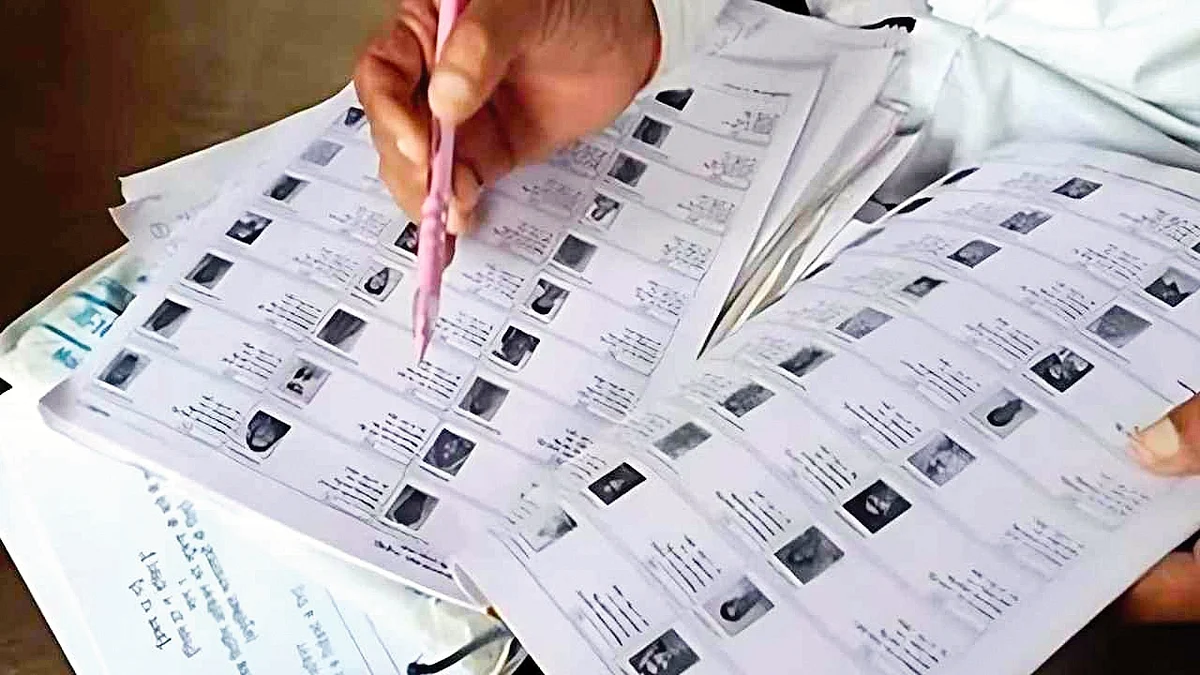
Bhuyan also spoke about the deletion of voters’ names from electoral rolls, saying that, except in the case of a dead voter, a name once included in the electoral roll could not be removed without notice and an opportunity of hearing.
“Except in the case of a dead voter, the name of a voter once enlisted in the electoral roll cannot be deleted without notice and hearing,” he said.
He said the right to vote or to be included in the voters’ list could not be separated from the status of an Indian citizen.
“It will be like taking out the soul from the body,” he said.
Bhuyan said that while the Supreme Court had held in several judgments that the right to vote was not a fundamental right, it had recognised voting as a constitutional right.
“In my view, the right of an Indian citizen to cast his vote is central to the basic structure doctrine itself,” he said.
‘Right to vote intertwined with freedom struggle’
The judge also linked the right to vote with India’s independence struggle, saying it represented the freedom achieved after years of struggle and sacrifice.
“Indian citizens’ right to vote is intertwined with India’s long years of struggle against foreign rule. It is a manifestation of our freedom achieved after so much of struggle and sacrifice. Article 326 cannot be tinkered with at all,” he said.
Bhuyan also invoked the principle of political equality, saying that the value of an individual’s vote did not depend on their wealth or social standing.
“One may be a billionaire, and one may be a rickshaw puller; yet both will have their votes, and the value of their votes would be equal,” he said.
Quoting former US Supreme Court justice Felix Frankfurter’s observation that the highest office in a democracy is that of the citizen, Bhuyan questioned the value of citizenship without the right to vote.
“And what is the worth of a citizen without her voting right,” he asked.
Join our official telegram channel (@nationalherald) and stay updated with the latest headlines