


Modi slams 'anarchy' at Jadavpur Univ, Mamata hits back with open letter
PM alleges campus decline and ‘anti-national’ activity; CM defends students, calls remarks an insult to Bengal
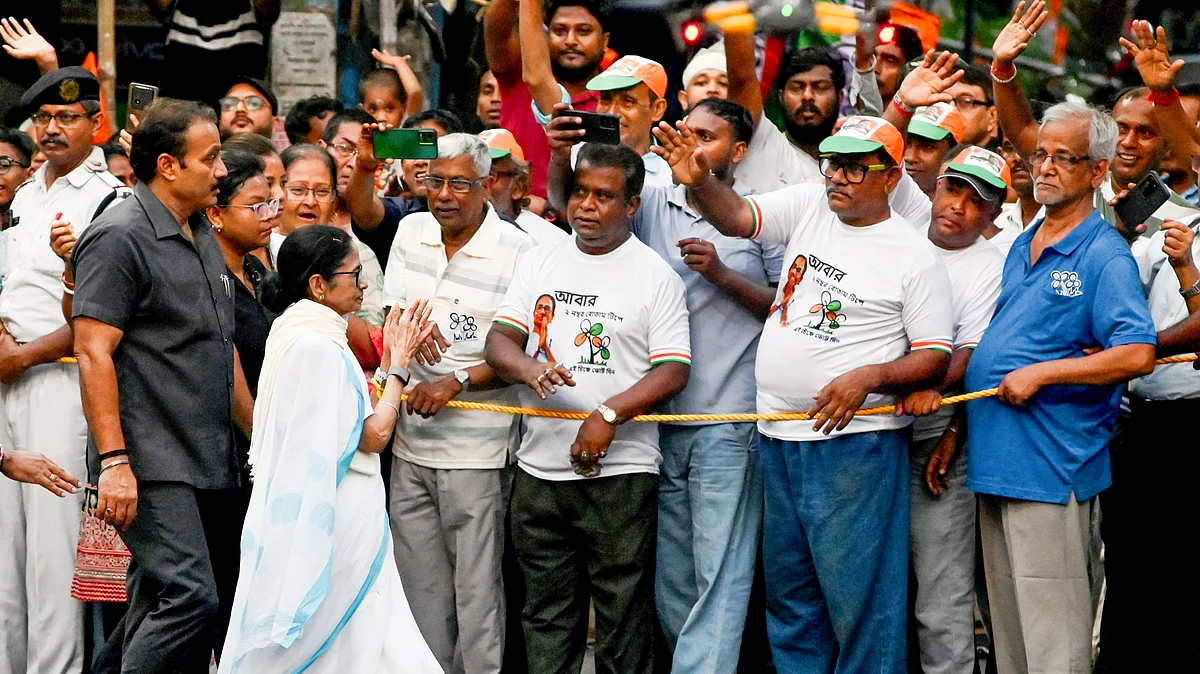


Prime Minister Narendra Modi on Friday sharpened his attack on West Bengal’s ruling Trinamool Congress at an election rally in Baruipur, accusing the state government of allowing “anarchy” to take hold at Jadavpur University — one of India’s most prominent higher education institutions.
Chief minister Mamata Banerjee responded with an open letter and social media posts, calling his remarks an insult to Bengal’s youth and turning the charge of anarchy back on the Centre.
Addressing the rally ahead of phase two of the ongoing state Assembly elections, Modi invoked the university’s legacy while alleging a decline in its present condition. “The name of Jadavpur University was once spoken of with reverence across the globe,” he said. “Its foundation rested on nationalism. But today, threats echo within its premises. Anti-national slogans are scrawled on walls. Instead of studies, students hit the streets. We want learning, not chaos; empathy, not intimidation.”
He questioned how a state government that, in his view, was failing to safeguard a premier institution could secure Bengal’s future. The prime minister also referred to what the right-wing ecosystem is fond of calling the “tukde-tukde gang” — a nebulous catch-all used for alleged anti-national elements who wish to break the country into pieces (tukde) — and criticised what he described as disruptions to academic activity on campus.
Banerjee responded swiftly and sharply. In a public letter, she wrote: “Honourable Prime Minister, it pains me deeply to ask: Is this how you describe the brilliant students of renowned Jadavpur University? Year after year, it tops your own government’s NIRF rankings — a true seat of excellence. Yet you disparage it? Can you stoop so low?” She praised the university’s students for their “sharp minds and questioning spirit”, describing these as the essence of education rather than signs of disorder.
Escalating her attack, Banerjee listed what she described as real instances of anarchy. “Anarchy is bulldozers as tools of power, not justice,” she said. “It’s farmers dying while their voices are silenced. It’s freeing rapists for political gain. It’s denying the poor their rights, dividing the nation on religious lines for votes, dodging the media, and ignoring Manipur’s flames while chasing elections.”
She defended student protests as integral to democracy and urged Modi not to “tarnish” an institution shaped by nationalist thinkers such as Sri Aurobindo. “Please don’t insult Bengal,” she added.
The exchange has stirred sharp reactions in Kolkata’s political and academic circles, particularly around Jadavpur University, long associated with left-leaning student activism. Students were quick to respond. Vaishnavi Sarkar of the Democratic Students’ Front said, “No right-wing student group has ever dominated Jadavpur. The prime minister’s frustration stems from that failure.” Noel Gomes of We the Independent (WTI), a campus organisation, added, “Our students walk tall and fearless. That’s what intimidates him.”
The campus has frequently been at the centre of political debate, with protests over issues ranging from fees to national policies drawing both praise and criticism. The TMC has characterised such activism as democratic dissent, while BJP leaders have often described it as evidence of ideological extremism.
Political analyst Sujit Chatterjee said, “Modi’s Baruipur speech fits a broader BJP narrative painting TMC as soft on ‘anti-nationals’ to rally Hindu voters in south Bengal. However, this may not work. We already saw students all over India speaking against Modi and his government after what happened at universities in Delhi and elsewhere.”
With elections approaching, both sides appear to be intensifying their messaging. Modi has repeatedly targeted the TMC government on education, employment and law and order, while Banerjee has countered by highlighting Centre-state tensions, including disputes over funding and issues such as violence in Manipur. Her letter has been widely shared online, amplifying the political divide.
Analysts say the episode reflects a familiar electoral pattern. One observer noted that Modi’s remarks appear aimed at tapping urban youth sentiment, while Banerjee’s response seeks to frame the issue as one of regional pride and identity. For now, Jadavpur University has once again become a focal point in West Bengal’s high-stakes political contest.
Join our official telegram channel (@nationalherald) and stay updated with the latest headlines