


PM Modi trying to cut rural poor's livelihood, new Bill insult to Bapu's ideals: Rahul Gandhi
The Leader of Opposition in Lok Sabha alleged that Narendra Modi has long been opposed to Mahatma Gandhi’s ideas and has consistently sought to weaken MGNREGA since coming to power
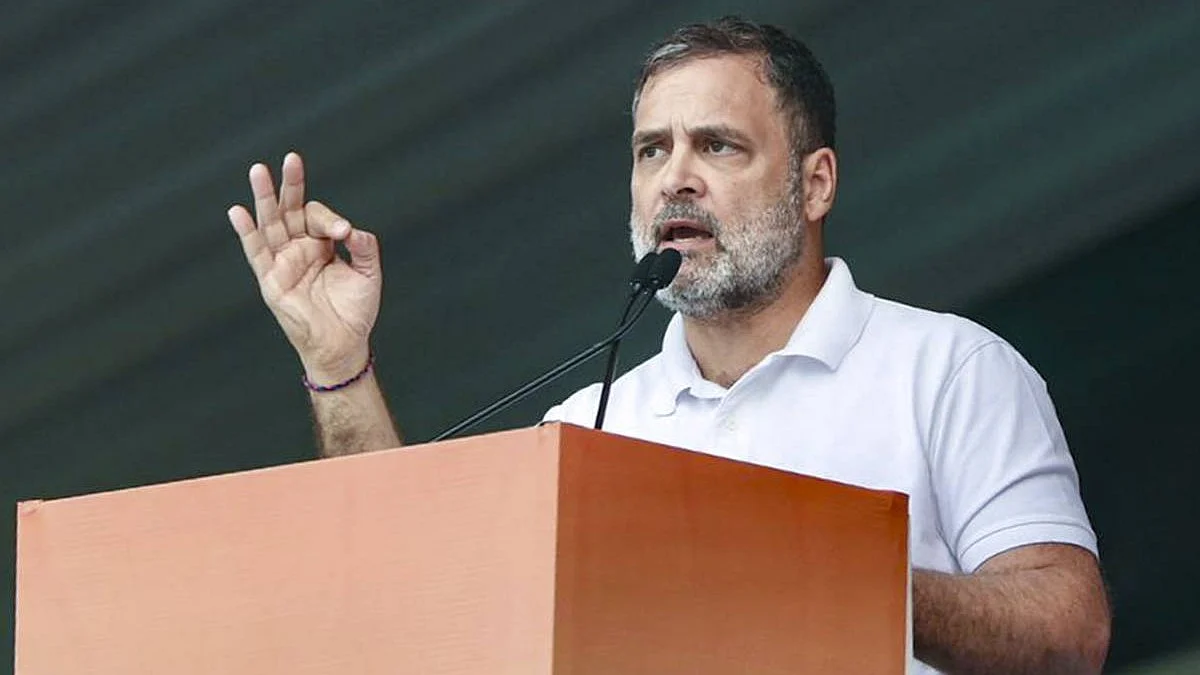


Congress leader Rahul Gandhi on Tuesday described the Viksit Bharat Guarantee for Rozgar and Ajeevika Mission (Gramin) Bill as an insult to the ideals of Mahatma Gandhi, accusing the Narendra Modi government of attempting to dismantle the rural employment guarantee framework and jeopardise the livelihoods of the rural poor.
His remarks came as several Opposition MPs staged a protest in the Parliament House complex against the Bill, which seeks to replace the MGNREGA (Mahatma Gandhi National Rural Employment Guarantee Act), 2005.
Opposition parties accused the BJP-led NDA government of “insulting” the Father of the Nation by removing his name and weakening the rights-based structure of the scheme.
In a post on X, the Leader of the Opposition in the Lok Sabha alleged that Prime Minister Narendra Modi has long been opposed to Mahatma Gandhi’s ideas and has consistently sought to weaken MGNREGA since coming to power. The Congress, he said, would oppose any such move.
“Modi ji has a deep hatred for two things — the ideas of Mahatma Gandhi and the rights of the poor. MGNREGA is a living embodiment of Mahatma Gandhi’s dream of village self-rule. It is a lifeline for millions of rural families and proved to be an economic safety shield during the COVID era,” Gandhi said in his post, written in Hindi.
He alleged that over the last decade, the government had systematically undermined the scheme and was now determined to “wipe out MGNREGA completely” through the new legislation.
The VB-G RAM G Bill, 2025, was introduced in the Lok Sabha by Union Rural Development Minister Shivraj Singh Chouhan amid strong Opposition objections to the removal of Mahatma Gandhi’s name from the law.
Gandhi outlined what he described as the three foundational principles of MGNREGA — a legal right to employment on demand, autonomy for villages to decide their own development works, and full central funding of wages along with 75 per cent of material costs.
“Now, Prime Minister Modi wants to change this very MGNREGA to concentrate all power solely in his own hands,” Gandhi alleged.
“The Centre will decide the budget, schemes and rules; states will be forced to bear 40 per cent of the expenses; and once the budget is exhausted or during the crop harvest season, no one will get work for two months.”
He said the proposed changes amounted to an assault on Gandhian principles and warned that after “destroying the future of India’s youth through severe unemployment”, the government was now seeking to eliminate the secure livelihood of the rural poor.
“The Congress party will oppose this anti-people bill — from village lanes to Parliament,” Gandhi said.
According to the text of the Bill, it proposes a statutory guarantee of 125 days of wage employment in a financial year to every rural household whose adult members volunteer to undertake unskilled manual work. States will be required to frame schemes aligned with the new law within six months of its commencement.
The Rural Development Ministry has defended the legislation, saying it seeks to create a modern statutory framework aligned with the goal of ‘Viksit Bharat 2047’. It said the Bill aims to generate employment while building durable rural infrastructure through four priority areas — water security, core rural infrastructure, livelihood-linked infrastructure, and special works to mitigate extreme weather events.
The Bill has emerged as a major flashpoint in Parliament, with the Opposition demanding that it be withdrawn or sent to a parliamentary standing committee for detailed scrutiny.
Follow us on: Facebook, Twitter, Google News, Instagram
Join our official telegram channel (@nationalherald) and stay updated with the latest headlines