


Rahul Gandhi targets Puri over Epstein links amid warning on energy crisis
Opposition leader says India’s energy security has been “bartered”, triggers uproar in Lok Sabha and intervention by speaker
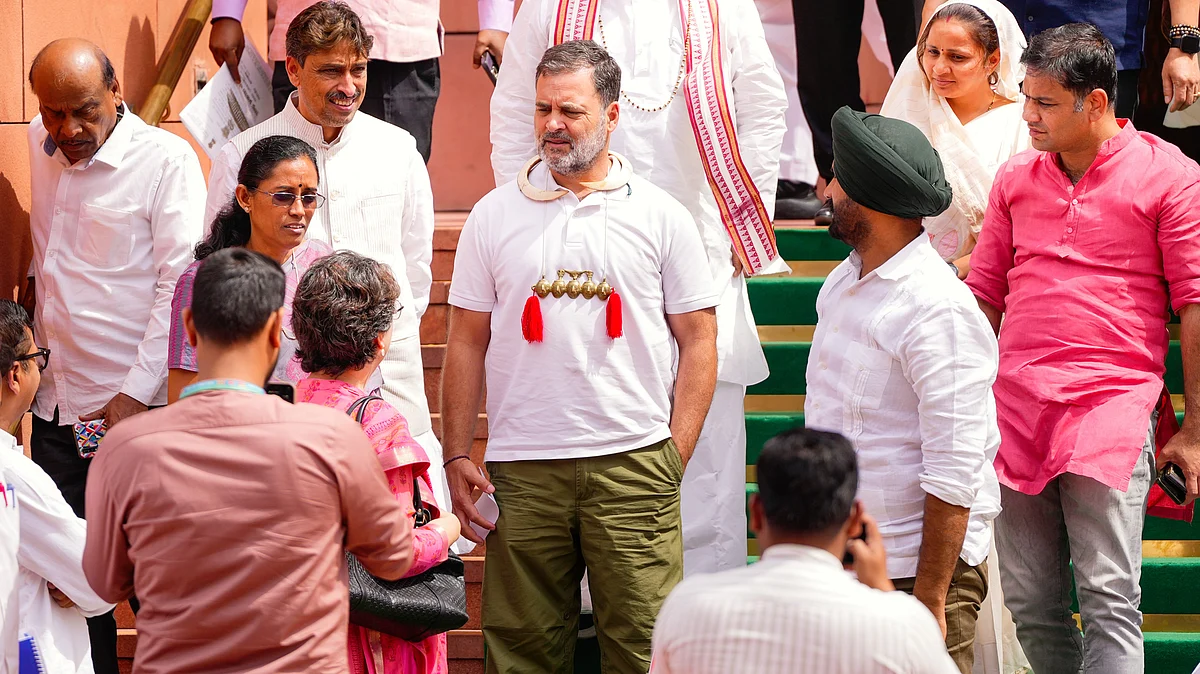


Lok Sabha Leader of opposition Rahul Gandhi on Thursday accused the government of compromising India’s energy security and linked petroleum minister Hardeep Singh Puri to deceased convicted American sex offender Jeffrey Epstein, triggering an uproar in the Lok Sabha and forcing the speaker to cut short his speech.
Raising concerns about the impact of the West Asia conflict on India’s fuel supplies, Gandhi alleged that New Delhi had effectively allowed the United States to dictate its energy purchases.
“The foundation of every single nation is its energy security. I do not say this lightly, but allowing the United States to decide who we buy oil from, who we buy gas from, whether we can buy oil from Russia or not, whether our relationships with different oil suppliers can be decided by us, this is what has been bartered,” Gandhi said.
Referring to the Strait of Hormuz, through which about 20 per cent of global oil flows, Gandhi warned that the war in the region could have “far reaching consequences” for India.
“The central artery from where 20 per cent of the global oil flows, Strait of Hormuz, has been closed. And this will have tremendous repercussions for us because a very large portion of our oil and natural gas comes through the Strait of Hormuz,” he said. “The pain has just started, restaurants are closing there is widespread panic about LPG, street vendors are affected. This is only the beginning.”
Gandhi said he had long been puzzled by why India would allow another country to effectively determine its oil purchases — an apparent reference to the United States granting India a temporary waiver to continue buying Russian oil.
“This is a very puzzling fact for me, why a nation the size of India would allow any other nation, the President of another nation, to give us permission to buy Russian oil, decide who our relationships are with,” he said. “I have been trying to figure this puzzle out and I have figured this puzzle out. The puzzle is about compromise.”
He then pointed towards Puri while speaking in the House and alleged that the minister himself had acknowledged being a “friend” of Epstein. “The puzzle is about compromise. We have a gentleman sitting here who is the oil minister. He himself has said that he is a friend of Epstein,” Gandhi said.
Speaker Om Birla immediately intervened and asked Gandhi not to refer to Epstein, saying the Leader of Opposition must stick to the subject for which he had given notice — concerns about LPG supply.
Gandhi insisted he was speaking about India’s energy security and attempted to refer to documents he claimed showed financial links involving the minister’s family. “I am talking about economic security, here I have a document which shows that his (Puri’s) daughter has received money from George Soros,” he said, prompting loud protests from treasury benches.
Amid the uproar, the speaker ruled that Gandhi could not raise issues beyond the topic mentioned in his notice. “I have said in the morning also that the House runs according to rules. The notice that was given you speak on that. If you wanted to speak on this issue, you should have given notice, I would have decided whether to allow it or not,” Birla said.
Opposition members protested as Gandhi’s speech was halted. Some MPs shouted slogans of “Epstein, Epstein” when Puri rose to respond, with chants of “dekho dekho kaun aaya Epstein ka dost aaya (see, Epstein's friend is here)”.
The petroleum minister then delivered a roughly 14-minute statement in the House, asserting that India’s crude oil and LPG supplies remained secure and that domestic LPG delivery schedules had not been affected.
The disruption forced the speaker to adjourn the House briefly before proceedings resumed with discussion on the supplementary demand for grants.
Later speaking to reporters in the Parliament complex, Gandhi reiterated that India’s energy security had been compromised by what he called a “flawed” foreign policy and warned that the government must prepare for disruptions caused by the West Asia conflict.
“Gas and fuel are going to be a problem because our energy security has been compromised,” he said. “A flawed foreign policy has created this problem. Now what we have to do is to prepare… otherwise crores of people will suffer massive losses.”
Gandhi also argued that the conflict in the region reflected a broader shift in the global order. “This war is fundamentally about the current world order… We are going into an unstable time. When you are going into an unstable time you have to change your mindset,” he said.
The Congress leader added that he had sought permission to make a statement in Parliament on the reported LPG shortage but was not allowed to complete his remarks.
Union parliamentary affairs minister Kiren Rijiju later said Gandhi had been given “special permission” to raise the LPG issue but had deviated from the subject. “He was given special permission to speak on the LPG shortage, but he spoke on various other issues. The House runs according to rules,” Rijiju said.
This is the second time in about a month that Gandhi’s speech has been cut short in the Lok Sabha. In the first half of the Budget Session, he was stopped during the debate on the motion of thanks to the President’s address when he sought to refer to an allegedly unpublished memoir by former Army chief General M.M. Naravane (retd).
The Opposition had subsequently brought a no-confidence motion against the speaker, which was defeated in the House on Wednesday.
With agency inputs
Join our official telegram channel (@nationalherald) and stay updated with the latest headlines