


Sonia hits out at Modi govt silence on Khamenei killing, urges Parl. debate
In April 2001, then prime minister Atal Bihari Vajpayee visited Tehran and reaffirmed India’s deep ties with Iran, Congress leader recalls
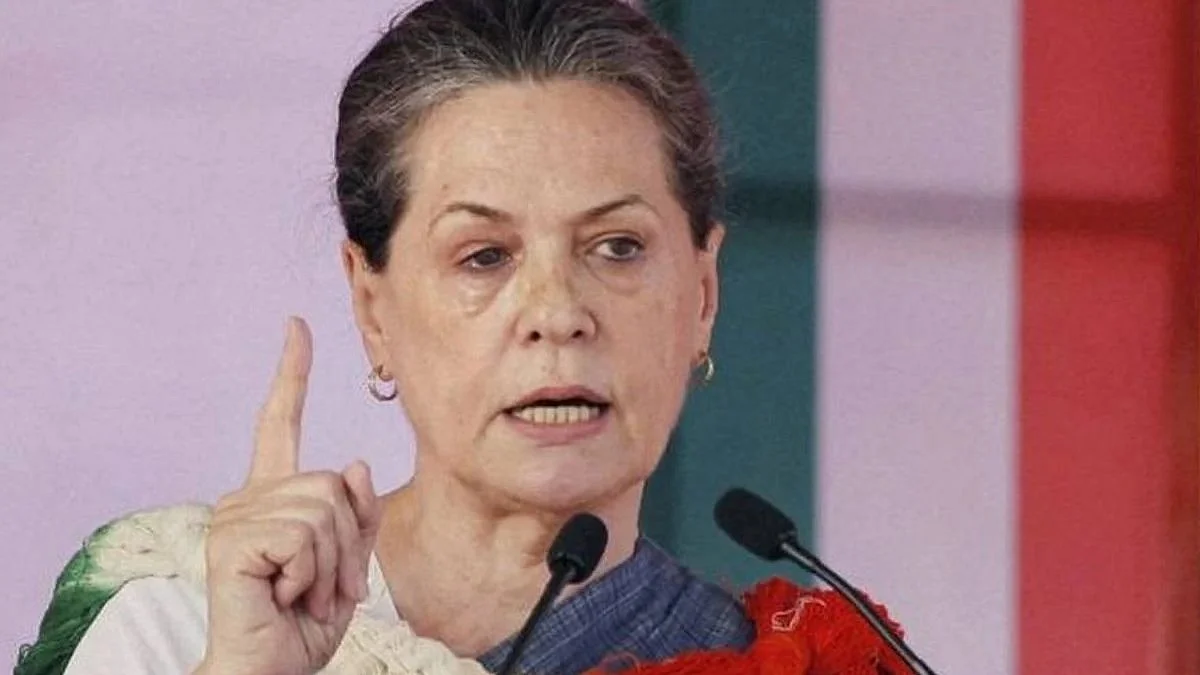


In a sharp and uncompromising attack on the Narendra Modi-led government, Congress Parliamentary Party chairperson Sonia Gandhi on Tuesday termed New Delhi’s silence over the targeted assassination of Iran’s supreme leader, Ayatollah Ali Khamenei, as “not neutrality, but abdication” — asserting that such reticence raises serious questions about the direction, consistency and credibility of India’s foreign policy.
Writing in The Indian Express, the former Congress president said the killing of a sitting head of state during ongoing diplomatic negotiations marked a grave rupture in contemporary international relations — a moment when the fragile architecture of the global order appeared to crack under the weight of force.
On 1 March, Iran confirmed that Khamenei had been assassinated in targeted strikes allegedly carried out a day earlier by the United States and Israel. For Sonia Gandhi, the shock of the event was matched only by what she called New Delhi’s conspicuous quietude. The Government of India, she noted, refrained from condemning the assassination or the violation of Iranian sovereignty.
Initially, she wrote, Prime Minister Narendra Modi confined himself to criticising Iran’s retaliatory strike on the UAE, without addressing the sequence of events that preceded it. Later, he spoke in generalities — expressing “deep concern” and urging “dialogue and diplomacy” — even though diplomatic engagement had been underway before what she termed the “massive unprovoked attacks” by Israel and the US.
“When the targeted killing of a foreign leader draws no clear defence of sovereignty or international law from our country,” Gandhi argued, “it raises serious doubts about the direction and credibility of our foreign policy.” Silence, she insisted, cannot be mistaken for balance; in this instance, it is complicity by omission.
She underscored that the assassination was carried out without a formal declaration of war and during an active diplomatic process — a development she said struck at the heart of international norms. Citing Article 2(4) of the United Nations Charter, which prohibits the threat or use of force against the territorial integrity or political independence of any state, Gandhi warned that if such acts pass without principled objection from the world’s largest democracy, the erosion of global norms risks becoming routine.
The unease, she suggested, was sharpened by timing. Barely 48 hours before the assassination, Modi had returned from Israel, where he reiterated unequivocal support for Prime Minister Benjamin Netanyahu, even as the Gaza conflict continues to draw global condemnation over mounting civilian casualties.
At a moment when much of the Global South — alongside major powers and India’s BRICS partners, including Russia and China — appeared measured in their responses, Gandhi described India’s high-profile political endorsement of Israel as a visible and disquieting departure from its traditional posture of moral clarity and strategic autonomy.
“The consequences of this event extend beyond geopolitics,” she wrote. “The ripples of this tragedy are visible across continents.” India’s stance, she claimed, risks being interpreted as tacit endorsement.
The Congress party, she said, has unequivocally condemned the bombings and targeted assassinations on Iranian soil, calling them a dangerous escalation with grave regional and global consequences. It has extended condolences to the Iranian people and to Shia communities worldwide, reaffirming that India’s foreign policy must remain anchored in the peaceful settlement of disputes — a principle reflected in Article 51 of the Constitution of India.
Invoking history, Sonia Gandhi recalled that in April 2001, then Prime Minister Atal Bihari Vajpayee, during an official visit to Tehran, had warmly reaffirmed India’s deep civilisational and contemporary ties with Iran. That spirit of balanced engagement, she suggested, appears diminished today.
India’s relations with Israel, she acknowledged, have flourished in recent years across defence, agriculture and technology. Yet it is precisely because New Delhi maintains ties with both Tehran and Tel Aviv that it possesses the diplomatic space to urge restraint. Such space, she argued, rests on credibility — and credibility flows from principle, not expediency.
This, she maintained, is not merely a moral argument but a strategic imperative. Nearly 10 million Indians live and work across the Gulf region. In past crises — from the Gulf War to conflicts in Yemen, Iraq and Syria — India’s ability to safeguard its citizens depended on its reputation as an independent actor, not as a partisan proxy.
She posed a pointed question: Why should countries in the Global South trust India to defend their territorial integrity tomorrow if it appears hesitant to defend that principle today?
The appropriate arena for resolving this dissonance, Gandhi said, is Parliament. When it reconvenes for the second part of the Budget session, the government’s “disturbing silence” over the breakdown of international order must be debated openly and without evasion.
The targeted killing of a foreign head of state, the fraying of international norms, and the widening instability in West Asia, she asserted, are not distant abstractions. They touch directly upon India’s strategic interests and moral commitments.
India has long invoked the ideal of vasudhaiva kutumbakam — the world is one family. That civilisational ethos, Gandhi wrote, is not a ceremonial slogan but a pledge to justice, restraint and dialogue, even when such commitments are inconvenient.
At a moment when the rules-based global order appears visibly strained, she concluded, silence is abdication. If India aspires to be more than a regional power — to serve as a conscience-keeper in a fractured world — it must rediscover the moral strength that once defined its voice, and articulate it with clarity and conviction.
With PTI inputs
Join our official telegram channel (@nationalherald) and stay updated with the latest headlines