


SC verdict on Bihar SIR raises more questions, says Congress
SC made no comment on fundamental mistake in SIR — the extremely short time limit, Abhishek Manu Singhvi says after judgement
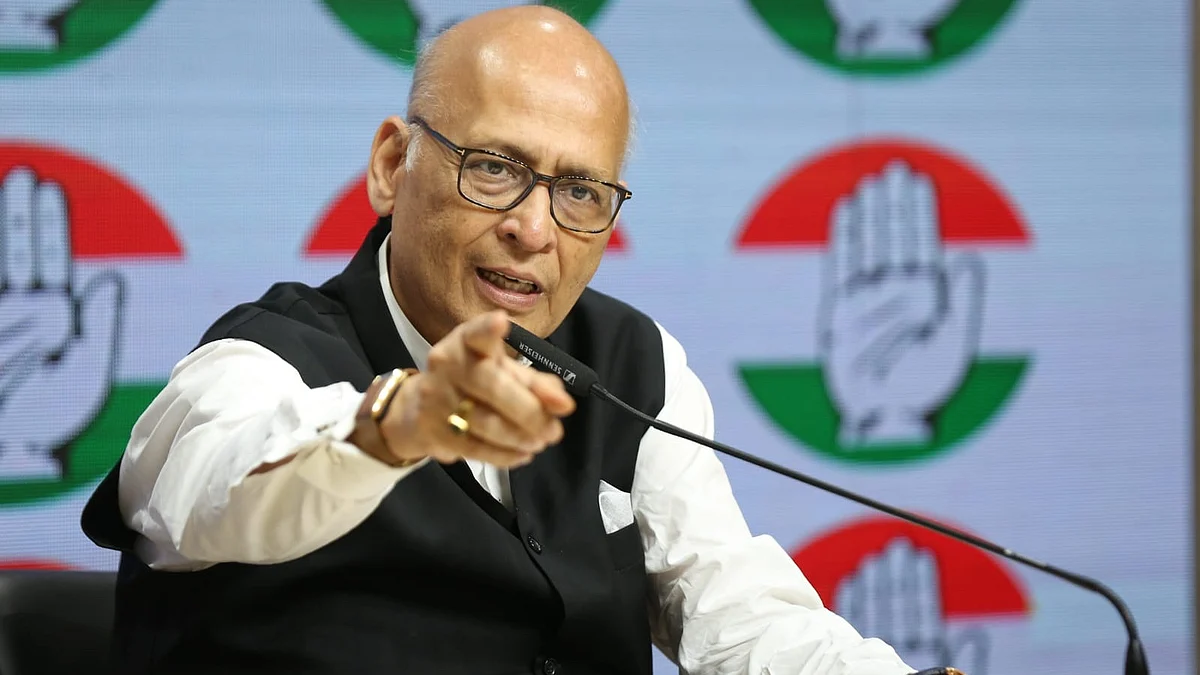


The Supreme Court’s decision to uphold the legality of the Special Intensive Revision (SIR) of electoral rolls in Bihar has drawn sharp criticism from the Congress, which alleged that the Election Commission of India (ECI) conducted the exercise in haste and with significant shortcomings, while the apex court overlooked what it termed “serious democratic and procedural concerns.”
On Wednesday, 27 May, the Supreme Court upheld the ECI’s authority to conduct the SIR exercise under Article 324 of the Constitution, observing that the revision of electoral rolls advances the Constitutional mandate of ensuring free and fair elections.
A Bench comprising Chief Justice Surya Kant and Justice Joymalya Bagchi held that the exercise was undertaken with the objective of ensuring free and fair polls. The Court also said that the ECI can examine citizenship.
However, the verdict has sharpened the Opposition’s apprehensions over the scope, timing and implementation of the exercise, particularly in poll-bound states where concerns over disenfranchisement and exclusion from voter rolls have emerged as politically sensitive issues.
Reacting to the judgment, the Congress said the ruling may have settled the legal validity of the SIR, but had left several larger questions unanswered.
Addressing a press conference, Congress Rajya Sabha MP and its law, human rights and RTI department chairman Abhishek Manu Singhvi said the verdict had raised “as many questions rather than providing answers”.
Singhvi, while raising concerns over the documents permitted by the ECI as proof of citizenship, questioned how nearly 7.5 crore names across several states could allegedly be removed from electoral rolls before any final determination on citizenship or eligibility was made.
He further argued that the Election Commission did not have the authority to effectively deprive citizens of their voting rights without proper adjudicatory safeguards and due process.
The Congress leader alleged that the SIR process was rolled out in haste and suffered from major procedural deficiencies. According to him, several corrective measures were introduced only after interventions by civil society groups, political parties and public interest litigations.
“This means the Election Commission launched a programme hastily, with serious shortcomings. Had civil society, political parties and NGOs not intervened through petitions, these flaws would have continued unchecked. Reforms happened only because institutions demanded them. It is unfortunate that the Supreme Court made no observations on these shortcomings of the Election Commission,” Singhvi said.
The Congress also sought to frame the issue as one of democratic accountability rather than merely administrative procedure, arguing that electoral roll revisions carried direct implications for representation and participation in elections.
Raising concerns over the timeline of the exercise, Singhvi said the time allotted for the revision was “unrealistically short” for an exercise of such magnitude.
“There is a fundamental flaw in the SIR process on which the Supreme Court has made no comment — the extremely short timeline. Four months were given for the SIR in Bihar and five months in West Bengal. Had the exercise been initiated much earlier, these complications would not have arisen,” he said.
He further alleged that the Election Commission had failed to adequately address concerns over deletions from voter rolls before elections were conducted.
“It is unfortunate that the Election Commission has remained silent on this issue. People are first removed from the voter list, decisions come later, and elections take place in between. The Supreme Court has not held the Election Commission accountable for this either,” Singhvi added.
The controversy around the SIR exercise is likely to remain politically contentious in the run-up to coming Assembly elections in 2027, with Opposition parties increasingly projecting the issue as part of a broader debate on electoral transparency, voter rights and institutional accountability.
Join our official telegram channel (@nationalherald) and stay updated with the latest headlines