


The turncoats have landed: Inside Bengal's new cabinet
BJP Bengal's first cabinet rewards defectors, placates RSS loyalists and balances competing power centres
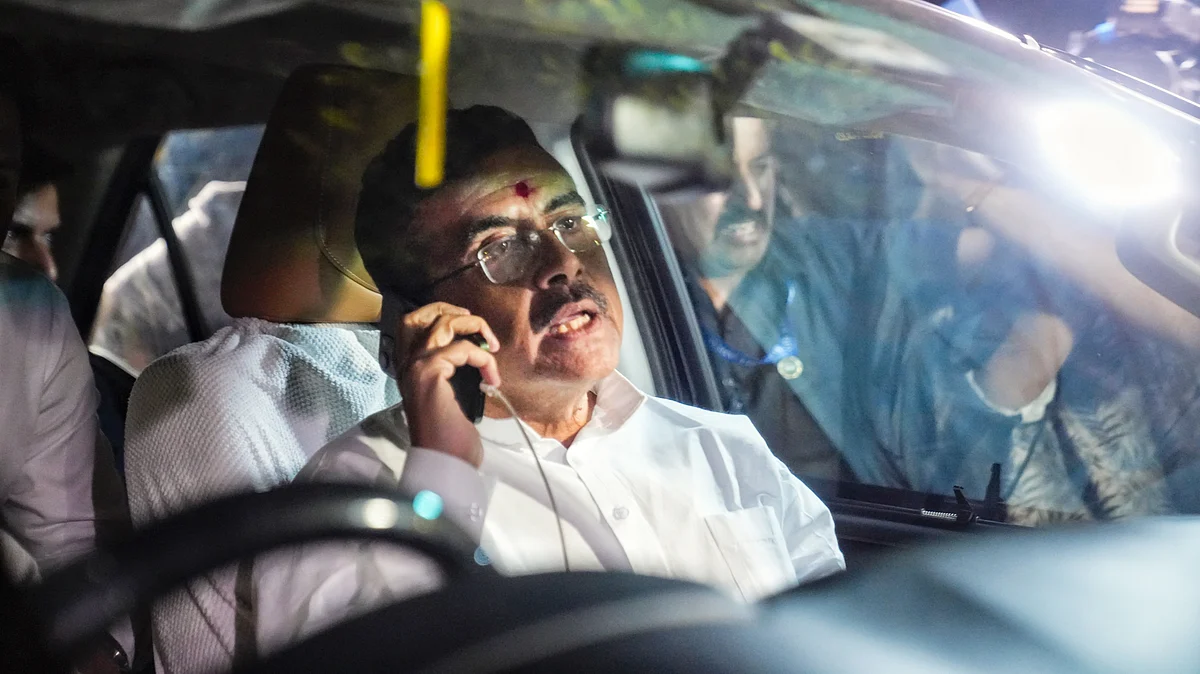


The composition of West Bengal's first BJP government has brought into sharp focus the three distinct power centres that shape the party's politics in the state. While chief minister Suvendu Adhikari sits at the centre of the administration, the cabinet reflects a careful balancing act between leaders loyal to him, veterans associated with former state BJP president Dilip Ghosh, and a powerful bloc of ministers with deep roots in the RSS.
Within the first power centre, several ministers and senior legislators who backed Adhikari during internal organisational battles before the Assembly election have secured important positions in the new government. Leaders such as Arjun Singh, Sharadwat Mukhopadhyay and Shankar Ghosh are widely regarded as being close to the chief minister. Their inclusion underlines Adhikari's seemingly growing influence over the party's organisational and governmental structures.
The second bloc consists of leaders associated with Dilip Ghosh, widely credited with transforming the BJP from a marginal force into a serious electoral challenger in West Bengal. In recent years, the balance of power seems to have shifted away from him somewhat, and his annoyance with the current leadership has not always remained hidden. At one point last year, his public appearances alongside former chief minister Mamata Banerjee even gave rise to speculation that he was ready to switch sides.
The third power centre is made up of leaders with strong RSS backgrounds. This group includes agriculture minister Dudhkumar Mondal and several others who emerged through the Sangh parivar network rather than electoral defections. Kshudiram Tudu is also generally considered part of the long-standing organisational/BJP-RSS ecosystem that Ghosh helped consolidate in north Bengal and the tribal belts.
Despite the presence of three caucuses, however, the new cabinet highlights a striking reality of the Bengal BJP's current politics: many of its most prominent ministers — beginning with the CM himself — are former Trinamool Congress leaders.
As TMC MLA Kunal Ghosh said, “People who built their careers in the Trinamool are now running the government against it,” evidently referring to Adhikari — once TMC supremo Mamata Banerjee's principal deputy before jumping ship in 2020 — without naming him.
Transport and labour minister Arjun Singh is another prominent example. Singh began his political career with the Congress before becoming one of the TMC's earliest leaders, and then going on to become one of the state's most prolific turncoats, routinely shuttling back and forth between the TMC and BJP before finally settling for the latter in 2024.
Industry and commerce minister Tapas Roy is another senior former TMC leader with an important berth in the cabinet. The irony? He has been tasked with driving industrialisation and investment when he once walked alongside Mamata Banerjee protesting the building of a Tata plant in Singur (2008-09), as part of a movement that eventually helped bring Banerjee to power.
"The immediate major objective is to bring the Tata Group back to invest in the state," Roy said after taking charge, displaying not a trace of irony.
Higher education and technical education minister Jagannath Chattopadhyay is another interesting example. Though he has emerged as one of the most vocal critics of the TMC government, Chattopadhyay spent years associating with the TMC and following Mamata Banerjee before moving closer to the BJP.
Also Read: Who’s taking on the BJP in Bengal?
The presence of so many former TMC leaders in what is a 'BJP cabinet' has already given birth to several memes and jokes, particularly since BJP leaders for years publicly argued against admitting anyone from TMC. Most recently, BJP state president Shamik Bhattacharya offered a classic flipflop when he at first categorically announced that the BJP would not be allowing anyone from the TMC to join, before saying the party would reconsider its policy when it came to "good TMC" people.
That contradiction has been thrown into sharper focus ever since the post-electoral 'rebellion' within the TMC, with 58 MLAs and apparently 20 MPs breaking rank and holding meetings with BJP leaders. How many of these will prove to be 'good TMC' remains to be seen.
In 2020, then state BJP president Dilip Ghosh had said the party should not become a refuge for leaders leaving TMC. "We do not need leaders. We need workers," Ghosh repeatedly argued while expressing concerns about the influx of defectors.
Other senior BJP leaders also warned that indiscriminately accepting TMC leaders could damage the party's organisational culture and demoralise long-time workers who had stuck with the BJP during years of political isolation.
Yet, at least in the current cabinet, several key ministries have gone to leaders who spent substantial parts of their political careers in the TMC. How that will play out remains to be seen.
Join our official telegram channel (@nationalherald) and stay updated with the latest headlines