


West Bengal: Is Murshidabad the new Ayodhya?
Is political adventurer Humayun Kabir turning into the BJP's tool to amp up the communal factor in the upcoming elections?
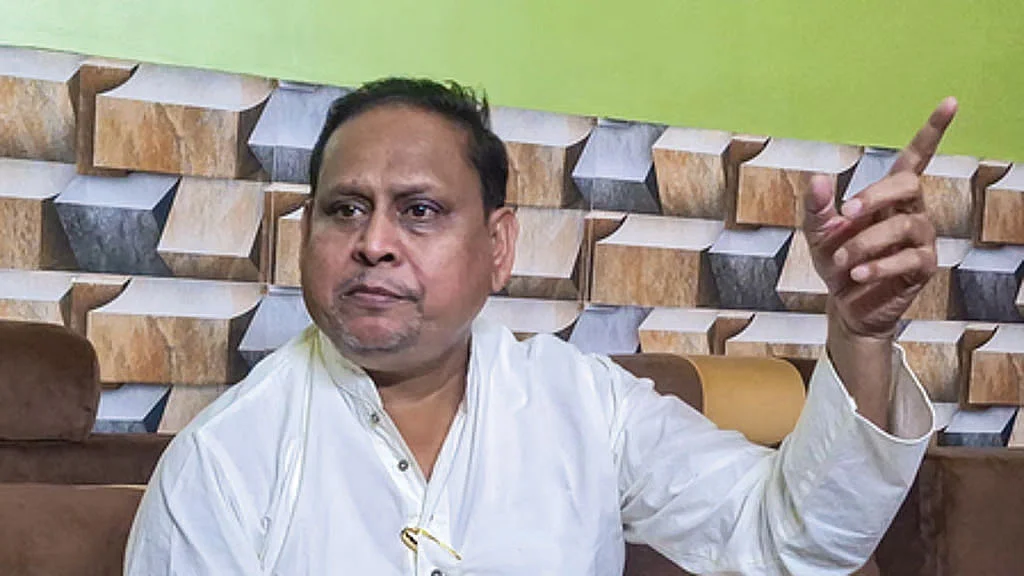


On 6 December, the 33rd anniversary of the demolition of Babri Masjid, suspended TMC legislator Humayun Kabir laid the foundation of a ‘new Babri Masjid’ in Murshidabad’s Beldanga. A political adventurer who has flitted from party to party, Kabir declared he’d fulfilled his promise to begin the work of building a replica in this “prestige battle for Muslims”.
Not to be outdone, the BJP’s Sakharob Sarkar, ex-president of Murshidabad district, performed ‘bhoomi puja’ for a replica of Ayodhya’s Ram Temple in Berhampore. Incidentally, this is Murshidabad’s second such ‘initiative’. In January, the Bangiya Ram Seva Parishad, a charitable trust, installed a replica of Ram Lalla in Alankar, a village that comes under the Sagardighi Assembly segment.
On 7 December, the ‘Gita Paath’ event organised by the Sanatan Sanskriti Sansad saw an estimated five lakh turnout for the choral chant. Of course, the state BJP brass was in full attendance.
“This [TMC] government is pro-Babur,” says BJP state president Samik Bhattacharya. Union minister Sukanta Majumdar says “Hindus in Bengal are gradually becoming outsiders.”
On 8 December, during the Lok Sabha discussion on 150 years of Bankim’s Vande Mataram, Prime Minister Modi hit the same strident note, accusing the Congress of abridging the national song, and linking that decision to Partition under pressure from the Muslim League.
A BJP leader confided, “Humayun Kabir has been egged on by some people in the BJP. They believe Kabir will split the Muslim vote, allowing the BJP to draw Muslim dissidents besides consolidating the Hindu vote.”
****
Kabir has announced that his new party — which he says will be launched on 22 December — will contest 134 seats; Bengal has 294 in its state Assembly. He reckons that his party can become a magnet for the state’s Muslims (27 per cent, as per the 2011 census), giving it the clout to play kingmaker.
The BJP is counting on Mamata’s fading appeal among the state’s Muslims. If Kabir can make a dent in the Muslim-dominated seats (about 90), the BJP will happily cut a deal to seize power. His bait is the dwindling representation of Muslims in the TMC: “In 2011, there were 67 minority MLAs; in 2016, this number decreased to 57; in 2021, it went down to 44.”
The plan has some echoes of the 1941 model, when a coalition of the Hindu Mahasabha, Krishak Praja Party, Muslim League and Forward Bloc formed the government. But the BJP is not the Hindu Mahasabha and Kabir’s yet to be unveiled party is unlikely to be another Muslim League.
Sceptics doubt Kabir’s chances of winning even from his own constituency of Bharatpur or adjacent Rejinagar. Nor are the Hindu votes in West Bengal as polarised as the BJP would like. No wonder the amped up campaigns to stoke communal sentiment through promises of temple construction, mass chanting of the Gita, not to mention the SIR, marketed as a weapon to eject ghuspaithiye (illegal migrants) masquerading as Indian voters.
Given that Kabir is new to the game and his playbook is an attempted revival of the RSS–BJP’s Ram Mandir mobilisation, he is uncertain about going it alone. He has sent out feelers to the AIMIM (All India Majlis-e-Ittehadul Muslimeen), the local Indian Secular Front, the Congress and the Communist Party of India.
This in a state where politics is fiercely competitive, with established parties slugging it out to woo vote banks that tend to be fragmented for multiple reasons. Add to this the BJP’s repeated gaffes, their cluelessness about Bengali culture and an electorate that is still by and large non-communal, and Kabir’s plans begins to look like a pie in the sky.
Join our official telegram channel (@nationalherald) and stay updated with the latest headlines