


The puzzle remains: Why did Modi-Shah risk losing in the Lok Sabha?
The defeat of the Constitution (131st Amendment) Bill was a near foregone conclusion — so what was the BJP's motive?
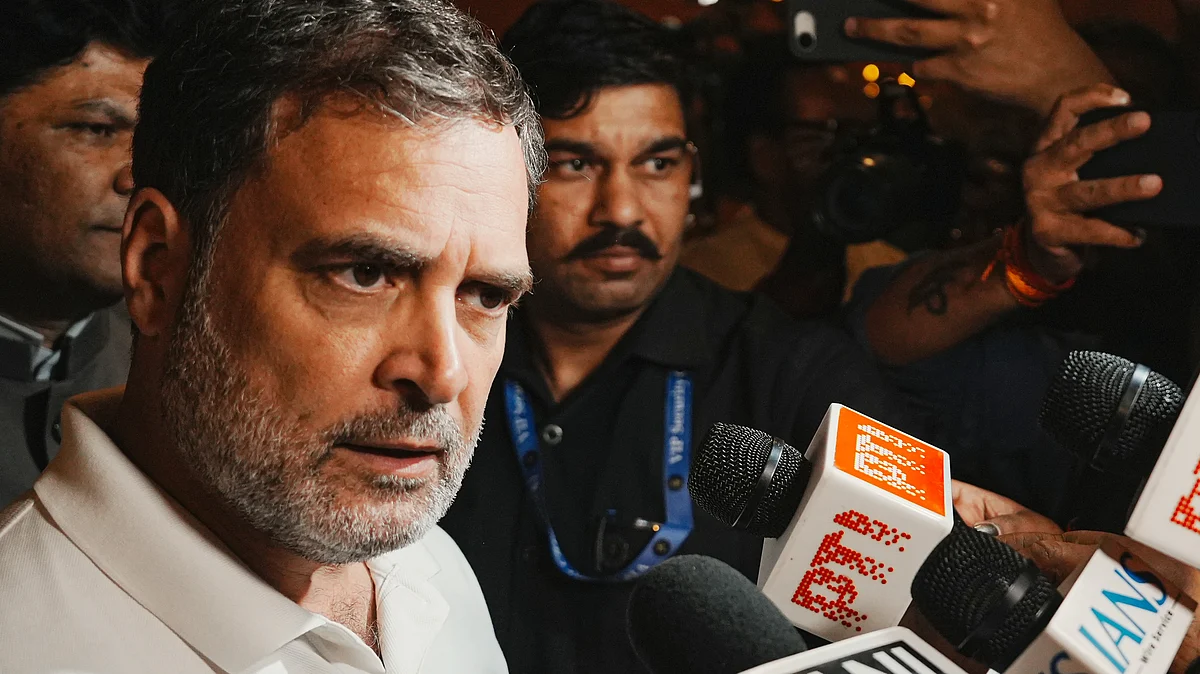


The two-day debate in the Lok Sabha on the women’s reservation Bill failed to answer several critical questions. While the Bill, reintroduced after the 2023 legislation was unanimously passed, failed to secure the ‘special majority’ of 360 votes in a House of 540 (298 MPs voted in favour and 230 against, with no abstentions and 528 MPs present and voting), the two other Bills linked to the proposal — on delimitation of constituencies and increasing the size of the Lok Sabha to 850 — were not taken up for voting.
This is the first time in 12 years that a Constitution amendment Bill introduced by the Modi government has been defeated. It is also the first ‘official’ (government-introduced) Bill to be defeated in the Lok Sabha since 1990 and the first to be defeated in Parliament since 2002. That leaves the mystery of the motive unresolved. The BJP is not stupid, as Lok Sabha Leader of Opposition Rahul Gandhi reminded us during his address to the House. So, what was the plan?
It was at around 7.00 pm on Friday, 17 April that Union home minister Amit Shah offered to move an amendment committing to a 50 per cent increase in the number of Lok Sabha MPs for every state. “Adjourn the House for an hour,” he asked the Speaker, “and I will present the official amendment and serve copies to every member.”
It had been hinted on Thursday that a supplementary list incorporating such a commitment would be introduced by the government on Friday. The Opposition, however, termed the offer too little, too late and rejected it.
Also Read: It’s not really about reservation for women…
That leaves several crucial questions unanswered:
Why did the government risk a loss of face and a serious political defeat when it knew it did not have the numbers? There is no evidence that the government attempted to bring Opposition parties on board or enlist their support.
Despite repeated letters from Congress president Mallikarjun Kharge to the prime minister seeking wider consultations, no all-party meeting was convened. The government kept the three Bills under wraps until the evening of 14 April, uploading drafts for MPs barely 36 hours before introducing them in the Lok Sabha. Did it expect the Opposition to fracture?
Why did the government convene a special session in the middle of electioneering in Tamil Nadu and West Bengal? With the first phase of polling in West Bengal scheduled for 23 April — the same day Tamil Nadu votes — the timing appeared puzzling.
Even if the BJP hoped to claim credit for advancing implementation of women’s reservation to the 2029 general election — after structuring the 2023 law in a way that would likely delay implementation until after 2034 — the window was too narrow for the political dividend to materialise.
There was also no clear explanation from the home minister or parliamentary affairs minister Kiren Rijiju as to why the Women’s Reservation Bill passed in 2023 was re-notified in the Gazette late on 16 April, after the first day’s debate and while discussion on the new Bill remained incomplete.
What, then, did the BJP hope to gain? What was the larger political calculation? Or was the move a high-risk gamble to divert attention from mounting economic pressures and foreign policy challenges?
Hours before the Bill was put to vote, the Indian Express reported that several BJP leaders privately acknowledged the difficulty of securing the required numbers. One leader was quoted as saying, “The Opposition appears united. They do not want to let the Bills pass. In such a situation, we have no option but to become martyrs. As of now, there is no indication of the Bills being withdrawn. That would look bad. The defeat of the Bills can be weaponised politically against the Opposition.”
Hoping that the Opposition would splinter without sustained political outreach would be uncharacteristic of the BJP, a party not known to leave outcomes to chance. Why then disturb the hornet’s nest? As Rahul Gandhi remarked, the BJP is not a party that miscalculates easily.
The Women’s Reservation Bill, as it currently stands, would still require completion of the 2027 Census and a subsequent delimitation exercise before implementation. The Opposition is likely to press for the quota to be operationalised within the existing strength of 543 Lok Sabha seats in time for the 2029 general election. The BJP may have lost this round, but the larger political contest over the shape and timing of women’s reservation is far from settled.
Join our official telegram channel (@nationalherald) and stay updated with the latest headlines
Published: 17 Apr 2026, 9:37 PM