


With Kerala gone, Left stares at historic wipeout; no communist govt for first time since 1977
For decades, even as the Left receded from the Hindi heartland, it retained a firm grip over three key states — West Bengal, Tripura and Kerala
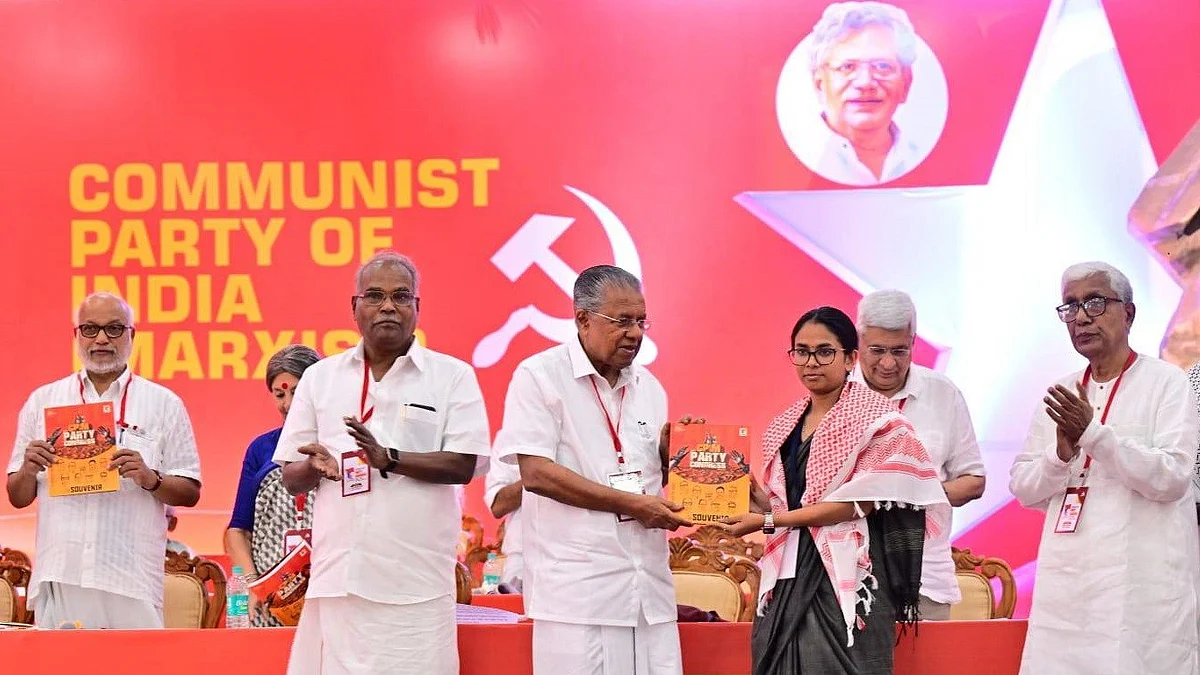


The Communist Party of India (Marxist)-led Left Democratic Front (LDF) is heading towards defeat in Kerala after two consecutive terms, if early trends from Monday’s Assembly election results hold.
After multiple rounds of counting, the Congress-led United Democratic Front (UDF) had surged ahead in 101 of the 140 Assembly seats, while the CPI(M)-led Left Democratic Front (LDF) was trailing with leads in fewer than 40 constituencies. The BJP-led National Democratic Alliance (NDA) was ahead in just two seats, according to television reports.
Even at time of publishing this report, chief minister Pinarayi Vijayan was trailing in the Dharmadam Assembly constituency by 733 votes. Indian National Congress candidate Abdul Rasheed took over Vijayan.
The marks a watershed in Indian politics — the first time since 1977 that no state will have a communist government.
For decades, even as the Left receded from the Hindi heartland, it retained a firm grip over three key states — West Bengal, Tripura and Kerala. What was once a durable, regionally anchored ideological presence has, over the past decade, shrunk into electoral marginality.
The Left’s high noon came in 1977, when the CPI(M), riding an anti-Emergency wave, captured power in West Bengal, ushering in the longest uninterrupted rule by any party in a state.
Under Jyoti Basu, who served as chief minister for over 23 years, and later Buddhadeb Bhattacharya, the Left Front governed for 34 years — a period that reshaped land reforms and rural politics, even as it later drew criticism for industrial stagnation.
In the northeast, Tripura was the Left's other pillar. In 1993, the Left swept the state, with the CPI(M) winning 44 out of 60 seats. After Dasarath Deb, Manik Sarkar presided over two decades of relatively stable governance, building a reputation for clean politics even as economic opportunities remained limited.
The unravelling began in 2011. In West Bengal, Mamata Banerjee’s Trinamool Congress channelled anti-incumbency and anger over land acquisition in Nandigram and Singur to end Left rule, reducing it from a dominant 235 seats in 2006 to just 62.
The defeat was not merely electoral — it marked the collapse of a political ecosystem. Tripura followed in 2018, when the Bharatiya Janata Party breached what was once considered an impregnable Left fortress. The BJP’s 36-seat victory in the 60-member Assembly cut the Left down from 50 seats to 16, signalling a decisive ideological and organisational shift.
Kerala remained the final outpost. The LDF’s return to power in 2016 under Pinarayi Vijayan — and its re-election in 2021, breaking the state’s pattern of alternating governments — had suggested resilience, even renewal. But trends on Monday indicate that this last bastion, too, may be slipping.
The implications will go beyond a routine change of government. It would signal the near-total erosion of the Left as an electoral force in India — from hegemonic power in key states to the margins of the political map.
The deeper question, then, is not just about a lost election, but whether the Left can reinvent itself in a changed political landscape of India where Hindutva has emerged as the strongest ideology, and most winning electoral force.
Join our official telegram channel (@nationalherald) and stay updated with the latest headlines