


“Nobody wins if we let politics spill onto the cricket pitch”
With Bangladesh holding firm and Pakistan keeping the ICC waiting, there may well be an implosion in cricket’s power corridors as former ICC chairman Ehsan Mani explains
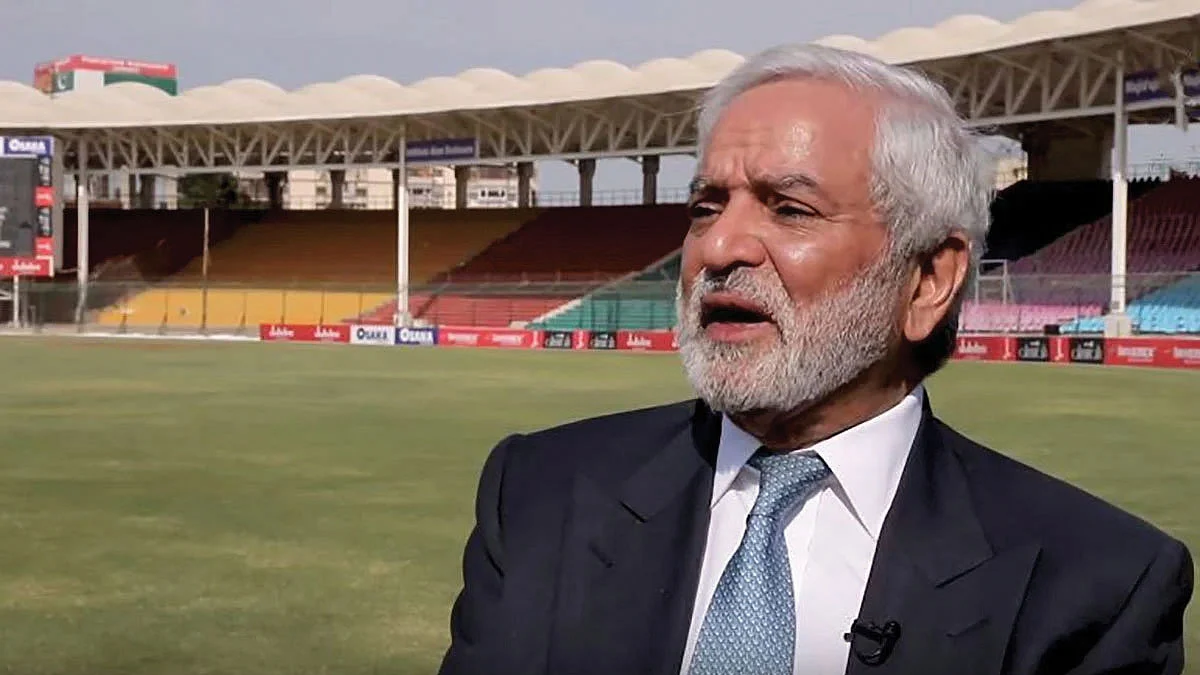


Has the International Cricket Council (ICC), the global governing body for the game, turned into a glorified event manager? The question has acquired a bleeding edge ahead of the T20 World Cup 2026—and it bothers former ICC chairman Ehsan Mani no end.
Now 80, the suave chartered accountant from Pakistan spent his best years as part of a cricketing ecosystem where the big guns of the Indian subcontinent believed in working together to make their voices heard. Mani was ICC chairman between 2003 and 2006, the period when its headquarters shifted to Dubai, and chairman of its finance & commercial affairs committee between 1996 and 2002.
As the Pakistan Cricket Board (PCB) representative from 1989 to 1996, and then 2018–2021—brought back at the behest of Imran Khan, then prime minister of Pakistan—Mani was an influential voice in the ICC boardroom. This January, there’s a sense of déjà vu from last year’s ICC Champions Trophy. Bangladesh, in the thick of it this time, argues that India was given preferential treatment.
When India refused to play in host country Pakistan citing a ‘threat perception,’ it was allowed to play all its matches in Dubai, while other teams had to shuttle between Pakistan and the UAE. When Bangladesh pressed its case after the Mustafizur Rehman row, the ICC refused to budge and voted them out of the tournament.
With Bangladesh holding firm and Pakistan keeping the ICC waiting, there may well be an implosion in cricket’s power corridors unless a semblance of fair play is re-introduced in the way the ICC treats member countries. What would Mani’s recipe be to restore its credibility? Excerpts from a conversation with Gautam Bhattacharyya:
Is the troubled build-up to the T20 World Cup a wake-up call for the ICC, facing allegations of an India bias?
Yes, India’s stranglehold on the ICC’s decision-making process is damaging. There needs to be a serious governance review as all board members are thinking about their own interests rather than the sport. Chairman Jay Shah is in a terribly conflicted position. For neutrality and greater transparency, I feel there is a need for more independent directors.
That’ll require a new constitution, which may not be easy. Can the more powerful boards make a difference if they speak up?
England and Australia are the biggest culprits for letting the status quo prevail. They are frightened of upsetting India as that would mean a huge loss of revenue. The last England versus India Test series was one of the best in recent times—with a great turnout at all venues. Both these countries are in a position to speak their minds, but their boards don’t want to rock the boat.
As someone who ran ICC’s financials for several years, what do you feel about the unequal distribution of funds among member countries?
It’s a valid grouse as the money should go where it’s needed most. What’s the point of giving small amounts to the West Indies, which consists of so many islands, or to South Africa? New Zealand can still manage because they have a small population. Meanwhile, new full member nations like Afghanistan and Ireland don’t even get enough money to give their cricketers full-time professional status. In our time, [Jagmohan] Dalmiya and I insisted that every country should play each other every four years—that doesn’t happen anymore. You only have the creamy layer playing the full five Test series among themselves. No one is looking after cricket; they’re looking after themselves.
Do you think Bangladesh had a strong enough case to pull out?
The ICC should not have allowed it to come to this. That’s why I say a governance review is so critical. First, the BCCI shouldn’t have dropped a player [Mustafizur Rehman] from IPL after accepting him in auction. When India cannot guarantee the security of one player, the question about their team’s safety is certainly relevant. But they made a tactical error—their government should have taken the lead in forbidding the team from going to India, not the Bangladesh Cricket Board (BCB). India did that when they refused to travel to Pakistan for the ICC Champions Trophy. Pakistan insisted on the same rules being applied, and the hybrid model was accepted.
The hybrid model may have defused the crisis of venue selection for India-Pakistan matches till 2027 but is it a permanent solution?
It’s the wrong solution. Cricket should follow the IOC or FIFA model. The host country should be in a position to issue visas and ensure the safety and security of players and officials, or lose the right to host. India and Pakistan have had their share of conflicts. Remember, Kargil happened in 1999. There was a period of five years or so when the two countries didn’t play bilateral series. I engaged with the Indian government and we hosted them in 2004. It was a great series. During our time, be it Sir Clyde Walcott, Dalmiya or myself, we didn’t allow politics to muddy administration.
The ICC ploy to always club India, Pakistan in the same group in major tournaments may be a money-spinner but doesn’t it dilute the importance of other fixtures?
Even the ACC now does the same… True. As PCB chairman, whenever I asked, the ICC would put it on the broadcasters. I told them they needed our permission. If India is taking a major part of the revenue despite Pakistan being an equal stakeholder, what’s in it for us? Rameez (Raja), who succeeded me in the PCB role, didn’t follow through on that.
If all goes well, India and Pakistan will play on 15 February in Colombo. Do you foresee a replay of the handshake row?
Cricketers around the world are a community and respect each other. The kind of adulation Virat Kohli enjoys among the players of Pakistan is no secret. Nobody wins if India–Pakistan politics is allowed to spill onto the cricket turf. That’s why I found (Gautam) Gambhir’s justification of his players’ stance wrong. That kind of thing shouldn’t happen.
Join our official telegram channel (@nationalherald) and stay updated with the latest headlines