


Israel captures strategic castle in deepest Lebanon incursion in 26 years
Crusader-era hilltop fortress overlooking southern Lebanon falls to Israeli troops as offensive expands despite ceasefire and ahead of Washington talks
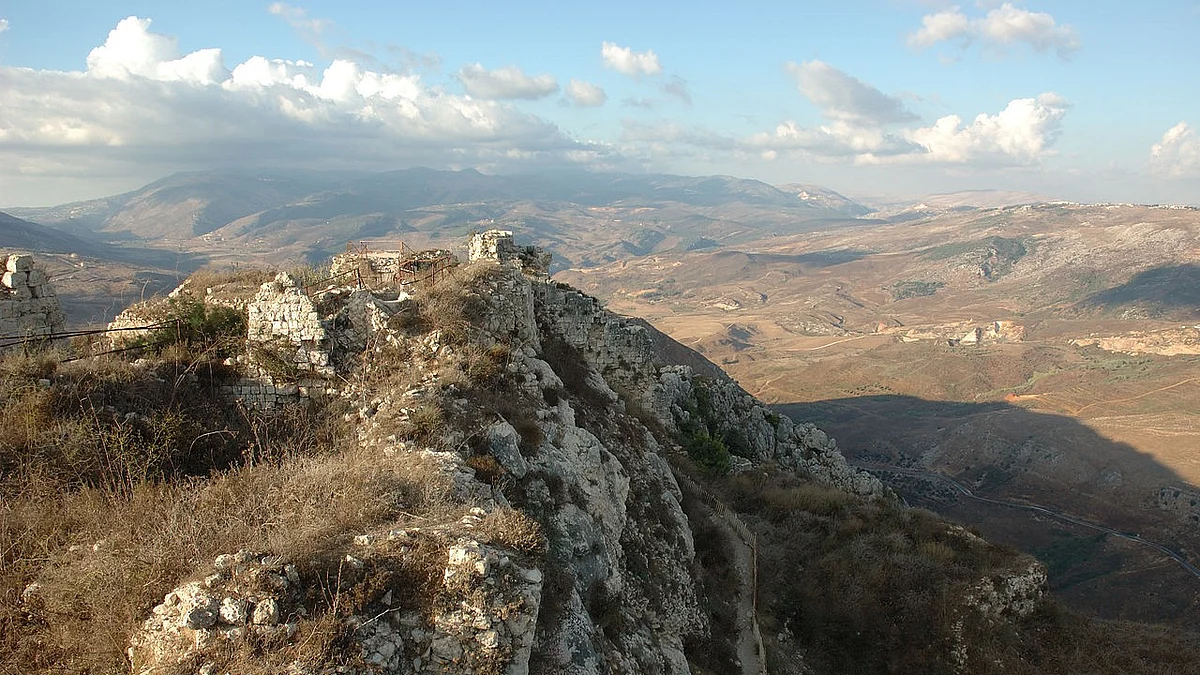


Israeli troops have captured the strategic Beaufort Castle, a Crusader-era fortress perched on a mountain ridge in southern Lebanon, marking Israel's deepest incursion into the country in more than a quarter century, the military said on Sunday.
The capture of the castle, located near the city of Nabatiyeh, follows days of intense fighting and airstrikes in surrounding villages where Israeli forces battled Hezbollah fighters in the rugged terrain.
The development represents a significant territorial gain for Israel in the latest Israel-Hezbollah conflict, which began in March and has continued despite a ceasefire that formally came into effect on 17 April.
The advance also comes just days before a fresh round of direct talks between Israel and Lebanon is scheduled to take place at the US State Department on 2 and 3 June.
Israeli military spokesperson Avichay Adraee posted a photograph on X showing Israeli soldiers outside the fortress, while Defence Minister Israel Katz said troops had raised the Israeli flag over the castle.
The Israeli military said it had launched an operation in recent days in the Beaufort Ridge and the nearby Suluki Valley to dismantle Hezbollah infrastructure and remove what it described as direct threats to Israeli civilians.
“The army is prepared to expand the operation if necessary,” the military said in a statement.
Beaufort Castle occupies one of the most strategic positions in southern Lebanon, overlooking large parts of the surrounding region. Israeli forces had previously seized the fortress during the 1982 Lebanon War and maintained control of it until withdrawing from southern Lebanon in 2000.
Offensive expands beyond Litani River
In recent days, Israeli forces have expanded operations beyond the Litani River, which had long served as a de facto boundary in southern Lebanon.
The military has designated the area between the Litani and Zahrani rivers as a combat zone and has urged residents across large parts of southern Lebanon to evacuate.
Israeli troops advancing from villages south of Beaufort Castle are now reported to be about five kilometres from Nabatiyeh, one of southern Lebanon's largest urban centres.
The military has also called on residents of Nabatiyeh, the coastal city of Tyre and surrounding areas to leave their homes amid escalating military operations.
Although some residents have fled following heavy bombardment in recent days, many remain in towns and villages across the region.
There was no immediate response from Hezbollah or the Lebanese government regarding the capture of the castle.
However, Hezbollah claimed overnight that it carried out two attacks targeting Israeli troops and a Merkava tank in the border town of Bayada. The group has also reported clashes with Israeli forces in several areas north of the Litani River near Nabatiyeh and Beaufort.
In recent weeks, Hezbollah has increasingly relied on hard-to-detect fibre-optic drones to target Israeli troops and communities in northern Israel.
War enters new phase
The current conflict began on 2 March when Hezbollah launched rockets into northern Israel, two days after the United States and Israel attacked Iran, the group's principal backer.
Israel subsequently launched a ground offensive into southern Lebanon, capturing dozens of villages and towns near the border.
According to Lebanese authorities, the fighting has killed around 3,350 people and displaced more than one million residents.
Israeli Prime Minister Benjamin Netanyahu's office has said at least 25 Israeli soldiers and one defence contractor have been killed during operations in or near southern Lebanon, while two civilians have been killed in northern Israel, most of them in drone attacks.
The seizure of Beaufort Castle is likely to strengthen Israel's military position in southern Lebanon, but it also risks further escalating tensions ahead of the upcoming diplomatic talks in Washington.
Join our official telegram channel (@nationalherald) and stay updated with the latest headlines