Advertorial
How Hyundai i20 and Maruti Brezza Fit Different Stages of Car Ownership
Understanding how each model fits into different stages of car ownership helps clarify their respective appeal
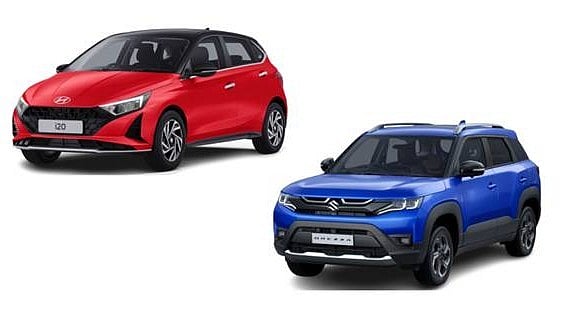
Car ownership often evolves in stages. Buyers may begin with practical, city-focused vehicles and later transition toward larger, more versatile formats as their needs change. The Hyundai i20 and Maruti Brezza represent two different phases within this ownership journey. While the i20 offers refined hatchback efficiency suited to urban commuting, the Brezza signals a move toward compact SUV practicality and broader capability.
Understanding how each model fits into different stages of car ownership helps clarify their respective appeal.
The Early Stage: Urban Independence and Practicality
For first-time buyers or those upgrading from entry-level hatchbacks, ease of driving and efficiency are primary considerations.
The Hyundai i20, measuring 3,995 mm in length with a 2,580 mm wheelbase, offers compact manoeuvrability and predictable handling. Its 1.2L Kappa petrol engine delivers up to 88 PS, providing adequate power for city use without unnecessary complexity.
At this stage, buyers often prioritise:
● Fuel efficiency and manageable running costs
● Comfortable cabin refinement
● Smooth driving dynamics
● Essential safety features
The i20 comes standard with six airbags and integrates connected BlueLink technology, featuring over-the-air updates. These features ensure that even early-stage ownership does not compromise on safety or digital convenience.
For young professionals or small households, a premium hatchback like the i20 offers balance without overwhelming size.
The Transition Phase: Growing Needs and Versatility
As ownership needs evolve—whether due to family growth, longer commutes, or lifestyle changes—buyers may seek greater versatility.
The Maruti Brezza, with its SUV stance and 1,685 mm height, offers a more elevated driving position. Its 1.5L Advanced K-Series engine produces 100.6 PS, supporting highway travel and broader usage patterns.
At this stage, buyers typically look for:
● Increased ground clearance
● Better cargo flexibility
● Higher seating comfort for multiple passengers
● SUV styling and presence
The Brezza provides 328 litres of boot space, making it more accommodating for family travel compared to a hatchback layout.
This transition reflects a shift from compact independence to expanded capability.
Technology as a Marker of Progression
Digital integration often signals advancement in ownership stages.
The Hyundai i20 integrates a 26.03 cm HD touchscreen infotainment system and premium Bose audio, offering a refined cabin environment.
The Brezza introduces features such as a 360-degree camera and head-up display, alongside SmartPlay Pro+ connectivity. These additions align with buyers' increasing expectations for enhanced visibility and convenience.
While both models are technologically equipped, the SUV’s features often emphasise utility and assistance rather than purely refinement.
Safety Across Ownership Stages
Safety expectations also mature over time.
The i20 offers foundational protection with six airbags and Electronic Stability Control, ensuring strong protection in urban settings.
The Brezza similarly integrates six airbags and ESP with Hill Hold Assist, reinforcing SUV stability for varied road conditions.
In both stages, safety remains essential—but the perceived confidence of SUV height and stance may influence some buyers’ psychological comfort as they progress.
Financial Planning and Ownership Longevity
Ownership progression often aligns with financial growth.
Early-stage buyers may prioritise lower purchase cost and operating expenses. The i20’s compact efficiency supports cost-conscious ownership.
As incomes rise and lifestyle demands expand, buyers may accept slightly higher running costs in exchange for added space and flexibility. The Brezza’s mild-hybrid system and CNG variant help manage these costs while offering SUV versatility.
Many buyers today analyse such transitions through structured research. On platforms such as ACKO Drive, where vehicle specifications, safety systems, and ownership features can be compared alongside buying cars online, the shift from hatchback to compact SUV becomes easier to evaluate.
Lifestyle Alignment
Ultimately, the difference between the Hyundai i20 and Maruti Brezza reflects changing life circumstances rather than vehicle superiority.
The i20 suits:
● First-time buyers
● City-focused professionals
● Small households
The Brezza aligns with:
● Expanding families
● Buyers seeking SUV styling and elevated comfort
● Drivers requiring mixed-road versatility
Ownership stages influence priorities just as much as the budget.
Conclusion
The Hyundai i20 and Maruti Brezza illustrate how different vehicles fit distinct stages of car ownership. The i20 offers refined hatchback efficiency ideal for early ownership phases. The Brezza represents a natural progression toward compact SUV practicality and expanded versatility.
Understanding this ownership ladder allows buyers to align present needs with future expectations. In a market defined by segmentation, recognising where a vehicle fits within personal mobility growth ensures long-term satisfaction rather than short-term appeal.
This is an advertorial. The article is published as received.
Join our official telegram channel (@nationalherald) and stay updated with the latest headlines