Advertorial
Is There More to an SUV Than Its Feature List?
Transmission choice can significantly influence everyday driving convenience
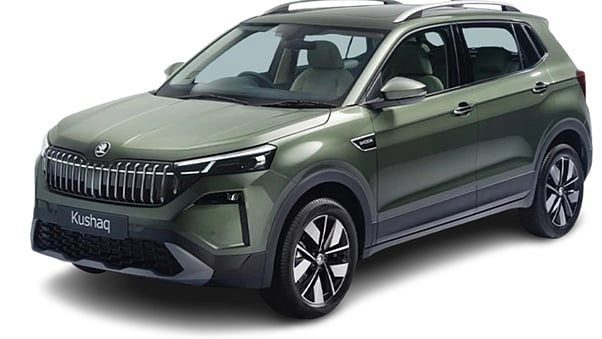
When buying a new SUV, it's easy to get impressed by a long list of features. Large touchscreens, panoramic sunroofs, ventilated seats and connected-car technology often dominate conversations. While these additions can improve the ownership experience, they don't necessarily reveal how well a vehicle will perform in everyday situations.
The Skoda Kushaq and Kia Sonet demonstrate why choosing an SUV involves looking beyond its equipment list. Although they belong to different segments, both offer distinct combinations of performance, comfort, safety and practicality.
Engine Performance Matters Beyond the Numbers
An SUV's driving experience depends on more than its advertised horsepower.
The Skoda Kushaq offers two turbo-petrol engines. The 1.0-litre TSI produces 115 PS and 178 Nm, while the 1.5-litre TSI delivers 150 PS and 250 Nm.
The Kia Sonet offers three engine options: a 1.2-litre petrol, a 1.0-litre turbo-petrol, and a 1.5-litre diesel. Its turbo-petrol engine produces approximately 120 PS and 172 Nm of torque.
These figures provide useful information, but actual performance also depends on vehicle weight, transmission behaviour and engine responsiveness.
A test drive can help buyers understand these characteristics better than specifications alone.
The Right Transmission Changes Everything
Transmission choice can significantly influence everyday driving convenience.
The Kushaq offers a 6-speed manual and an 8-speed torque converter automatic with its 1.0 TSI engine. Its 1.5 TSI engine comes with a 7-speed DSG transmission.
The Kia Sonet offers multiple transmission choices, including a 5-speed manual, 6-speed iMT, 7-speed DCT and 6-speed automatic, depending on the engine.
For frequent city driving, an automatic transmission can reduce the effort involved in stop-and-go traffic. Meanwhile, buyers who prefer greater control may appreciate a manual gearbox.
Understanding these differences is often more valuable than comparing infotainment screens or decorative features.
Features Cannot measure Ride Comfort
An SUV may offer premium upholstery and advanced technology, but its suspension and ride quality play an equally important role in passenger comfort.
The Kushaq uses MacPherson strut front suspension and a twist-beam rear axle. The Sonet also features a MacPherson strut front suspension and a coupled torsion-beam rear suspension.
However, similar suspension layouts don't necessarily produce identical driving experiences.
Ride comfort depends on suspension tuning, tyre specifications, road conditions and vehicle characteristics.
Buyers should evaluate how an SUV handles speed breakers, uneven roads and highway surfaces before making a decision.
Research Beyond the Equipment List
With numerous SUVs offering impressive features, comparing the right information becomes important.
Instead of focusing solely on premium equipment, buyers should consider engine options, transmissions, safety features, dimensions, and prices.
Platforms such as ACKO Drive allow buyers to explore SUVs such as the Skoda Kushaq and Kia Sonet, compare variants, review specifications and research prices online.
Once the preferred vehicle has been selected, buyers can also purchase a new car online through ACKO Drive, making the transition from research to buying more convenient.
This approach helps buyers identify which SUV suits their requirements rather than simply choosing the one with the longest feature list.
Safety Is More Than Advanced Technology
Modern SUVs increasingly offer sophisticated driver-assistance systems, but fundamental safety equipment remains essential.
The Skoda Kushaq provides six airbags, Electronic Stability Control, Multi-Collision Braking and ISOFIX child-seat mounts. It has also achieved a five-star safety rating under the Bharat NCAP and Global NCAP testing programme.
The Kia Sonet offers six airbags as standard, along with Electronic Stability Control, Hill Assist Control and Vehicle Stability Management. Higher variants also feature Level 1 ADAS with 10 driver-assistance functions.
These differences highlight why buyers should consider structural safety, independent crash-test performance and essential protection systems alongside advanced features.
Practicality Depends on Everyday Requirements
An SUV's usefulness isn't determined solely by its exterior dimensions.
The Skoda Kushaq measures 4,229 mm in length and offers a five-seat cabin with flexible luggage arrangements.
The Kia Sonet measures 3,995 mm in length, making its compact proportions potentially convenient for navigating congested streets and parking in limited spaces.
Both SUVs offer five-seat layouts, but their different dimensions and cabin designs address different priorities.
Buyers should consider passenger comfort, luggage requirements and parking conditions rather than assuming a larger vehicle is automatically more practical.
Ownership Experience Deserves Attention
The experience of owning an SUV continues long after the initial purchase.
Service availability, warranty coverage, maintenance requirements and spare-part accessibility can influence long-term satisfaction.
The Kushaq comes with Skoda Super Care, including a four-year or 100,000 km standard warranty, labour-free scheduled services under applicable conditions and roadside assistance.
The Sonet offers a three-year unlimited-kilometre warranty, with optional extended warranty coverage and roadside assistance.
Understanding these provisions helps buyers evaluate the ownership experience beyond the initial equipment and purchase price.
Final Thoughts
A long feature list can make an SUV attractive, but it doesn't necessarily make it the right vehicle for every buyer.
The Skoda Kushaq highlights the importance of engine performance, transmission choices and driving characteristics, while the Kia Sonet demonstrates how a compact SUV can combine multiple powertrain options with modern technology and convenience.
Ultimately, the best SUV isn't necessarily the one offering the most features. It's the one that delivers the right balance of performance, comfort, safety, practicality and ownership convenience for your everyday needs.
Join our official telegram channel (@nationalherald) and stay updated with the latest headlines