Advertorial
Why a Sanctioned Personal Loan Amount and the Final Credit to Your Account Can Differ
Getting a personal loan sanction letter feels like the finish line, until the money that gets credited to your account turns out to be a few thousand rupees short of what you expected
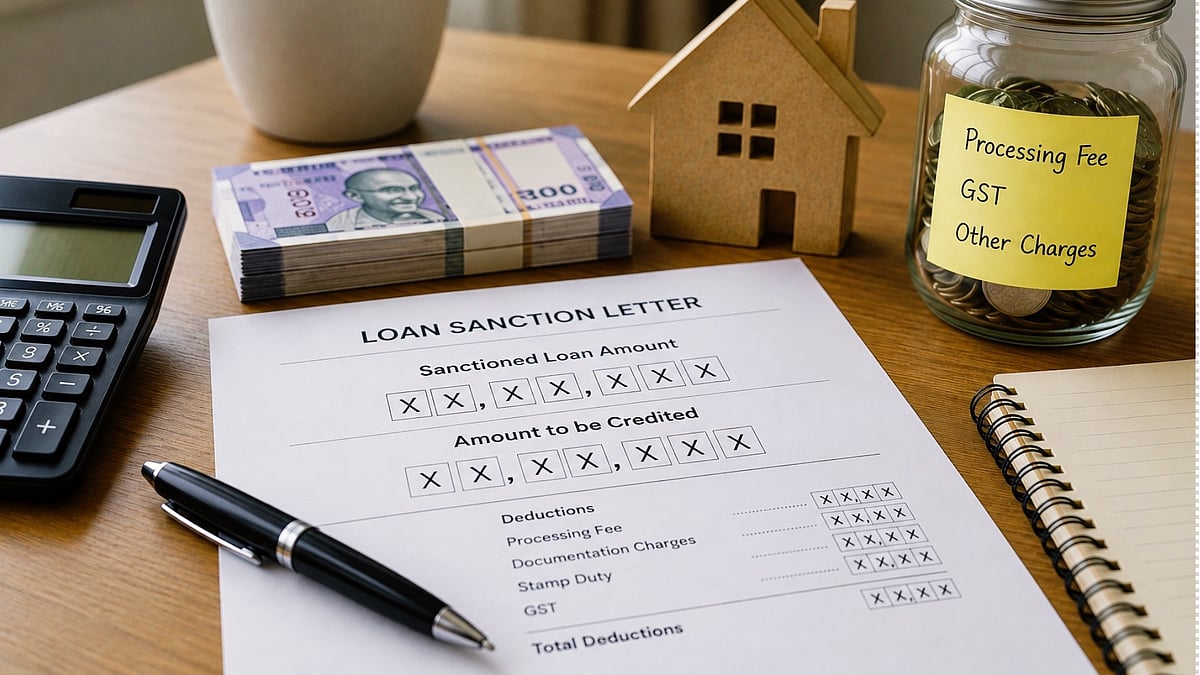
Getting a personal loan sanction letter feels like the finish line, until the money that gets credited to your account turns out to be a few thousand rupees short of what you expected. And most people only find out after the money's already been credited, which isn't really the ideal time to be doing this kind of math.
This isn't random. It happens because of a handful of fees and checks between the day your loan gets approved and the day it shows up in your account, and every one of them is disclosed somewhere in your paperwork if you know what to look for.
What Is the Difference Between a Personal Loan Sanctioned Amount and the Disbursed Amount?
A personal loan amount is the maximum amount a lender is willing to lend, after reviewing the income, credit score, and repayment capacity of a person. In contrast, the amount that gets credited into the borrower's account (minus the applicable fees) is called the disbursed amount.
In short:
The sanctioned amount is the loan amount approved by the lender.
The disbursed amount is the amount you get credited to your bank account.
The lender gives a sanction letter first, outlining the sanctioned loan amount, tenure, and interest rate. Once you agree to the terms and conditions and have completed the other formalities, the disbursal is processed, and that's the stage where fees get deducted.
Here's how the two figures typically compare on a personal loan:
In short, budget around the disbursed, not the sanctioned amount, since that's what you can actually use.
Why Does the Personal Loan Disbursed Amount Differ From the Sanctioned Amount?
The payout comes in lower mainly because lenders deduct processing fees, GST, and sometimes an insurance premium before releasing funds, while your EMI is still calculated on the full sanctioned amount. This gap is standard practice, not a lender error. A few deductions that commonly apply:
Processing fee, generally 0.5% to 5% of the sanctioned amount, deducted upfront
GST on the processing fee, currently 18%, added on top of the base charge
Loan protection insurance premium, if you opted in during application
Adjustment against any prior dues with the same lender, in rare cases
For example: on a ₹5,00,000 sanctioned loan with a 2% processing fee plus GST, the deduction works out to roughly ₹11,800, leaving a disbursed amount closer to ₹4,88,200.
Since October 1, 2024, the RBI has mandated lenders to list all these personal loan fees and charges upfront in the sanction letter under the Key Facts Statement.
Personal Loan Documents Required for Disbursement
These documents typically include identity proof, address proof, income proof, and bank statements, submitted after sanction to confirm nothing has changed since your application. These are re-checked by the lender before disbursement, and thus disbursement does not happen on the same day the loan gets sanctioned.
The personal loan documents required typically include:
Identity proof: PAN and Aadhaar card
Address proof: utility bill, rent agreement, or Aadhaar
Income proof: salary slips, Form 16, or ITR for self-employed applicants
Bank statements: usually the last three to six months
Signed loan agreement and e-mandate for EMI payments
How Does Your Eligibility Affect the Sanctioned Amount?
Your personal loan eligibility depends on your credit profile, built primarily on your CIBIL score, income, and existing debt, and directly decides how large a personal loan sanctioned amount you qualify for. A stronger profile doesn't just improve approval odds; it usually unlocks a bigger loan at a better rate too.
Most lenders prefer a CIBIL score of 750+ for the best terms
Public sector banks generally accept 700-720, though processing takes longer
Private banks often approve 720-740, at a slightly higher rate
Existing EMIs and card dues reduce how much additional loan you're eligible for
How Long Does Personal Loan Disbursement Take After Sanction?
Disbursal after sanction typically takes anywhere from a few hours to seven working days, depending on the lender and the process of formalities to be done after the sanction. Digital lenders and NBFCs can sanction loans in hours for those who have been pre-approved, whereas banks with manual verification steps may take upto a week.
Delays usually trace back to incomplete documentation, a mismatch between application and bank details, or a pending e-signature.
Conclusion
The gap between a personal loan sanctioned amount and the money that reaches your account isn't a red flag; it's a standard deduction of fees built into how personal loans work in India. Reading your sanction letter and Key Facts Statement before signing tells you about the exact disbursed figure in advance.