Business
Nvidia chief Jensen Huang resigns, CFO Colette Kress named interim CEO
The 63-year-old steps down as president, CEO and board member with immediate effect, ending a 33-year association
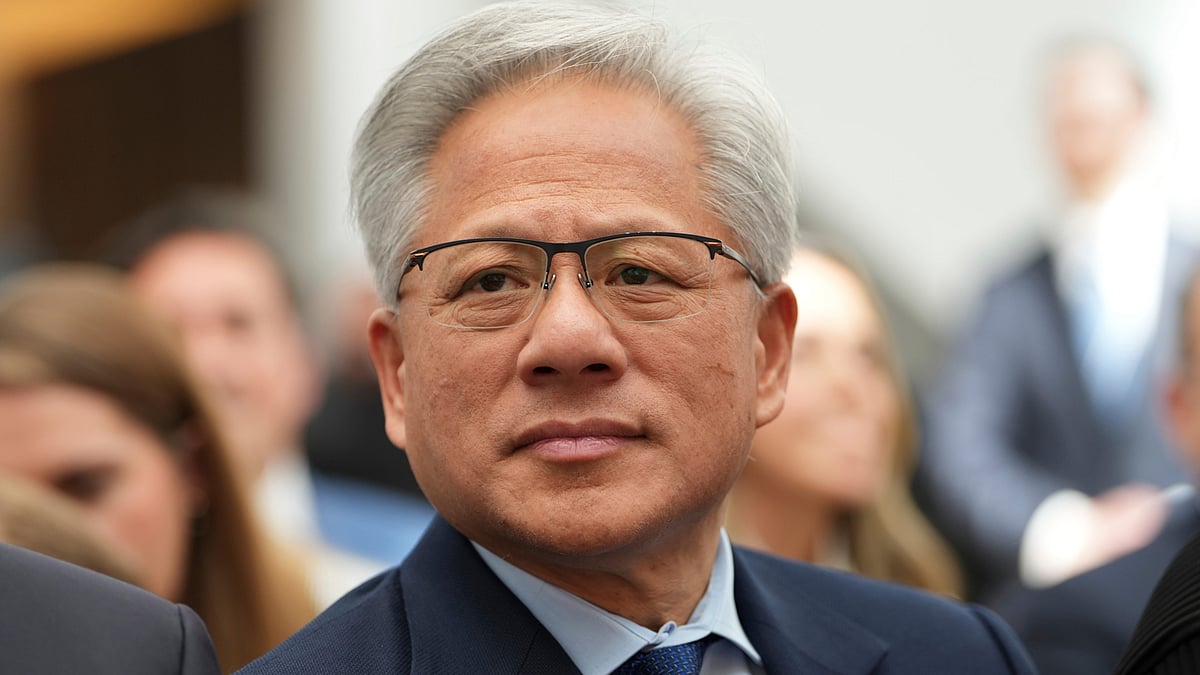
Jensen Huang resigns as Nvidia CEO and board member, ending a 33-year association.
CFO Colette Kress takes interim charge as the board searches for a permanent successor.
Shares fall more than 10 per cent in pre-market trading amid uncertainty over the leadership transition.
Jensen Huang, the co-founder and chief executive of Nvidia, has resigned with immediate effect, bringing an end to his 33-year leadership of the artificial intelligence chipmaker amid a widening controversy over his alleged relationships with two women, one of whom US intelligence agencies suspect of links to Chinese espionage.
Nvidia announced on Thursday that its board had accepted Huang's resignation as president and chief executive officer, as well as his departure from the board. The company appointed executive vice-president and chief financial officer Colette Kress as interim CEO, while beginning a search for a permanent successor.
Kress will continue to hold the CFO position alongside her interim responsibilities until a permanent chief executive is appointed. The board said it would consider both internal and external candidates.
The announcement marks a dramatic turn for the company Huang co-founded in 1993 and transformed from a graphics processing unit (GPU) manufacturer into the world's dominant supplier of advanced chips powering the artificial intelligence boom.
The company also announced the appointment of Harvey C. Jones as its first-ever chair of the board. Jones, a technology executive and venture investor, previously served as chief executive and executive chairman of semiconductor design software company Synopsys.
In its announcement, Nvidia did not specify the reason for Huang's resignation or directly link his departure to the controversy that has engulfed the company in recent days.
The board, however, sought to reassure investors, employees and business partners that the leadership transition would not disrupt operations. Jones said Kress had a deep understanding of the company's business, customers, operations and financial position, adding that the board had full confidence in her and the existing leadership team.
"We expect the company's operations, customer commitments and product roadmap to continue without interruption," he said.
Kress, who joined Nvidia in September 2013, said she was committed to building on the foundation created by Huang over the past 33 years. Before joining Nvidia, she spent nearly 25 years in finance roles at technology companies, including Cisco and Microsoft.
"NVIDIA's strength has always come from its people, and together with our leadership team, I am committed to building on the extraordinary foundation Jensen created over the last 33 years," she said.
Huang's departure follows mounting scrutiny of his personal relationships and their possible implications for corporate governance and US national security. The Nvidia board had reportedly been considering his future after allegations emerged about two extramarital relationships, including one with Alice Huang, a Chinese businesswoman whom US intelligence agencies reportedly suspect of working for Beijing.
The FBI is investigating the matter, with concerns that the businesswoman may have been involved in facilitating shipments of Nvidia chips to Chinese companies in violation of US export restrictions. The precise nature of the alleged intelligence operation and whether any sensitive corporate or national security information was compromised remain unclear.
Huang had acknowledged being unfaithful to his wife in a memo to employees, taking "full responsibility" for his actions. US President Donald Trump had publicly backed the Nvidia chief, saying he believed Huang had no knowledge that the woman was allegedly a Chinese intelligence operative. Beijing has rejected the espionage allegations as unsubstantiated.
The controversy also widened after reports emerged of a second alleged relationship involving Kimberly Powell, Nvidia's vice-president of healthcare. The company has not publicly established any connection between these allegations and its decision to accept Huang's resignation.
Huang, 63, was Nvidia's fourth-largest shareholder, with a stake of approximately 3.61 per cent, according to Reuters. His departure is particularly significant given the extent to which the company's strategy, public identity and relationships across the global AI industry have been built around its founder.
The leadership transition has already unsettled investors. Nvidia shares fell more than 10 per cent in pre-market trading following the announcement, reflecting concerns about the loss of a founder who had been the driving force behind the company's rise and the uncertainty surrounding its succession.
Market analysts have also questioned whether the change could affect Nvidia's extensive financial and commercial relationships across the AI industry, including its investments in smaller companies and its role in financing parts of the data-centre ecosystem. Some have warned that any disruption to these arrangements could have implications for the wider AI investment boom.
The immediate challenge for Kress will be to maintain confidence in Nvidia's business and reassure investors that the company's technological roadmap and commercial commitments remain on track. The board's decision to consider external as well as internal candidates suggests that the interim appointment is not necessarily a precursor to her becoming the permanent chief executive.
Nvidia is scheduled to announce its third-quarter fiscal 2027 results on 17 November, as planned. The earnings announcement will be the first major test of investor confidence following Huang's exit and an opportunity for the company to address questions about its leadership transition and business outlook.
For a company that has had the same leader since its founding, the departure marks the end of an era. Whether Nvidia can sustain its extraordinary momentum without the man who became the public face of the AI revolution is now the question confronting its board, investors and the wider technology industry.