Business
RBI holds repo rate at 5.25% as global risks mount, opts for caution over policy shift
MPC retains neutral stance despite modest improvement in growth and inflation outlook; economists warn uncertainties continue to cloud the outlook
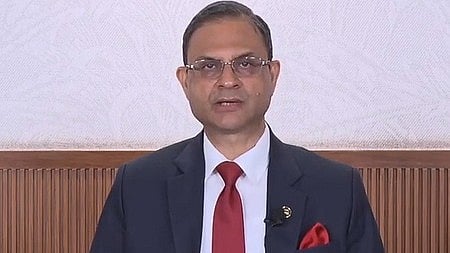
The Reserve Bank of India (RBI) on Wednesday kept the benchmark repo rate unchanged at 5.25 per cent, choosing policy continuity over further easing or tightening as it navigates a challenging mix of geopolitical tensions, inflation risks and an uncertain global economy.
Announcing the Monetary Policy Committee's (MPC) decision, RBI Governor Sanjay Malhotra said the committee had unanimously voted to retain both the policy rate and its neutral stance, allowing the central bank to remain flexible as fresh economic data emerges.
The Standing Deposit Facility (SDF) rate was also left unchanged at 5 per cent, while the Marginal Standing Facility (MSF) rate and the Bank Rate remain at 5.25 per cent.
Although the RBI marginally upgraded its macroeconomic outlook compared with its June review, raising its growth projection by 10 basis points and lowering its inflation forecast by a similar margin, the central bank stopped short of signalling any near-term policy shift.
The decision reflects the MPC's assessment that while the domestic economy remains resilient, the external environment continues to present significant risks. Retail inflation moved back above the RBI's 4 per cent target in June, driven largely by higher crude oil and commodity prices and an unfavourable base effect. However, relatively subdued core inflation suggests broader demand-driven price pressures remain limited.
Economic activity has also held up better than expected, supported by robust domestic demand and healthy corporate and banking sector balance sheets. Even so, economists expect growth to slow to around 6.6 per cent this financial year from 7.7 per cent last year as elevated oil prices, weather-related disruptions and weaker global demand begin to weigh on activity.
The RBI's decision was broadly in line with market expectations, with analysts anticipating that policymakers would avoid making any abrupt move while uncertainty remains elevated.
The biggest concerns continue to be the trajectory of global crude oil prices and the progress of the south-west monsoon, particularly with El Niño conditions posing risks to agricultural output and food inflation. At the same time, major central banks across the world remain cautious on inflation, with some continuing to tighten monetary policy while others have paused.
Economists said these factors leave the RBI with little room to adopt either a dovish or hawkish stance, making policy flexibility the central bank's primary objective.
Another factor providing support has been robust inflows under the Foreign Currency Non-Resident (Bank), or FCNR(B), deposit scheme, which has strengthened India's external position and helped stabilise the rupee after earlier pressure in the foreign exchange market.
While the stable policy stance was welcomed by the real estate industry, developers acknowledged that unchanged borrowing costs alone are unlikely to revive demand in the affordable housing segment, where affordability remains under pressure.
Industry leaders said predictable interest rates would nevertheless support buyer confidence, provide greater certainty for developers planning new launches and sustain investment momentum across residential and commercial real estate. However, they cautioned that the broader outlook would continue to depend on inflation, oil prices and the global economic environment rather than interest rates alone.
With agency inputs
Join our official telegram channel (@nationalherald) and stay updated with the latest headlines