Cricket
Lanka vs England: Are the 400-plus chases saving or killing the ODIs?
Gautam Gambhir’s call for a ‘bit more contest between bat and ball’ last month sounds relevant again
When South Africa famously chased down a target of 438 against Australia in a historic ODI in 2006, the feat was considered an aberration. Sri Lanka also chased down a 400-plus target against India in 2009, but another successful chase of that magnitude did not come until last month.
Twice in the space of a month, cricket fans have witnessed more than 800 runs being scored in a single match. These remarkable batting displays came first during the India-West Indies game in Guwahati and then in the Sri Lanka-England clash in Rawalpindi on Thursday. However, they have also reignited the debate over whether such high-scoring thrillers are saving or killing the 50-over game.
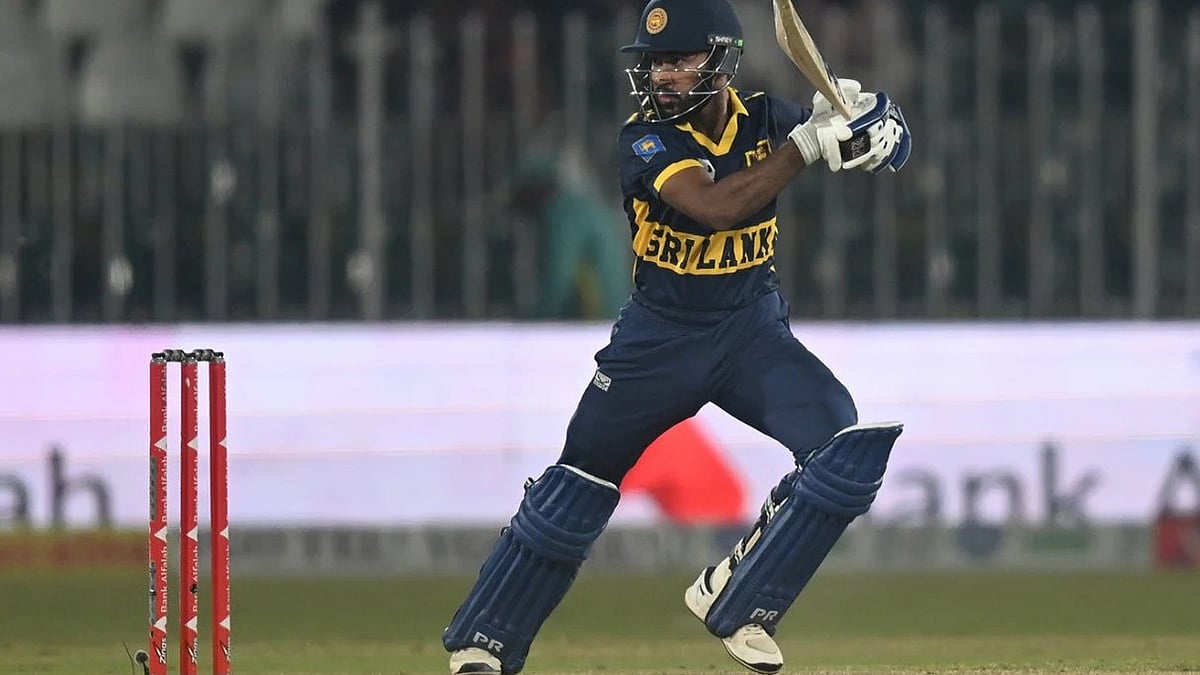
It is true that such mammoth chases have a place in cricket history, built around epic batting performances that demand a free-flowing approach, influenced by the T20 format, exceptional stamina and physical fitness — all within a span of 300 deliveries. While England skipper Harry Brook smashed a double century on Thursday, with Sri Lanka’s Pavan Rathnayake responding with a sublime 130, India’s Shubman Gill had enthralled the Guwahati crowd with his class in late September.
However, there is no denying that both matches were played on such flat pitches that even the relentless hitting began to feel exhausting after a point. The 50-over format, already under pressure from the shortest version of the game, is supposed to feature periods of rebuilding in the middle overs, tactical phases of spin bowling and defensive field placements, giving it the feel of a strategic battle. However, these one-sided contests offered none of that.
Just look at the bowling figures of two bowlers from last night’s game: Ehsan Malinga (10-0-91-0) and Sam Curran (9-0-103-2). Such a spell is an ordeal no bowler wants to endure. The experience also prompted India’s head coach, Gautam Gambhir, an advocate of so-called fearless cricket, to call for “a bit more contest between bat and ball” after his team successfully chased down a record 406-run target.
“Look, if I have to be absolutely honest, I feel there has to be a bit more contest between bat and ball. Because you talk about cricket, but this is not cricket; this is only batting,” Gambhir told the broadcasters. “Imagine a young bowler bowling on this wicket, with the opposition scoring 400, and then we go on to chase 400. Obviously, for the records, it’s outstanding; for the crowd, it’s outstanding; for the broadcaster, it’s outstanding. But if you ask me as a genuine cricket fan and as a coach, I have to have sympathy for the bowlers as well.”
‘’When you bowl on this kind of a wicket, it’s not fair for the bowlers. So we’ve got to give something to the bowlers so there’s at least something which the bowlers can work with,’’ he had observed.
Interestingly enough, Gambhir seems to have no prejudice about the 400-plus totals as such – all he wants is to give the bowlers a fighting chance so that there is a bit more balance in the action. There is this perennial debate about what makes for an ideal 50-overs contest: one of India’s biggest ODI wins came in the early part of the new millennium when the likes of Mohammed Kaif and Yuvraj Singh took them over the line to overhaul a 325-run target against England in the 2002 Natwest Trophy final at the Lord’s. Cut to the 2011 ICC World Cup final at the Wankhede, where Mahendra Singh Dhoni & Co held their nerves to chase down a 272-run target against the Lankans.
Hence, there can be no caveat on the benchmark of totals. A certain school of thought believes that such no-holds-barred, aggressive batsmanship is necessary to keep the format marketable and culturally relevant to a generation raised on high-scoring T20s. Point taken, but do you really need 859 aggregate runs scored on a featherbed (Sri Lanka-England) to keep the excitement alive of it can be counterproductive?
It remains to be seen whether such high-scoring chases, often aided by dew that favours the chasing side, can sustain audience interest over nearly eight hours. However, things could look quite different a year from now, during the 2027 ICC Cricket World Cup in South Africa, where one hopes to see pitches offering steep bounce and good carry. Only time will tell!
Join our official telegram channel (@nationalherald) and stay updated with the latest headlines