Economy
After ‘Naxal’ tag, UP govt flags ‘Pakistan link’ in Noida protests as worker unions condemn police atrocity
Police cite external elements and social media handles; labour groups say wage issues, crackdown behind unrest
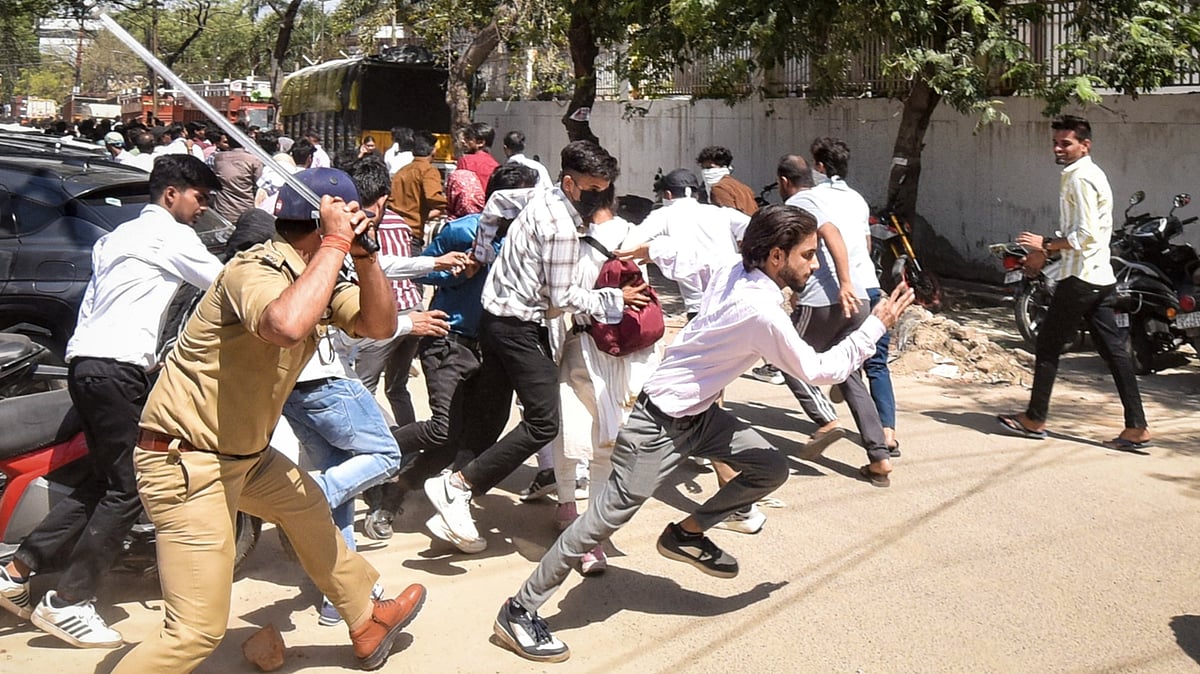
A day after Uttar Pradesh Chief Minister Yogi Adityanath linked the Noida workers’ protest to 'Naxal elements', authorities have now pointed to a 'Pakistan angle', drawing criticism from labour groups who allege a pattern of shifting narratives while core worker grievances remain unaddressed.
Police in Gautam Buddh Nagar said they have identified three key accused in the protests that turned violent earlier this week, and also flagged the role of two X (formerly Twitter) handles 'operating from Pakistan' for allegedly spreading misleading information and attempting to disrupt law and order.
Gautam Buddh Nagar Police Commissioner Laxmi Singh said FIRs have been registered and investigations are underway. Officials claimed the accused mobilised workers through WhatsApp groups and delivered 'provocative speeches' ahead of the April 13 protest.
According to police, the accused called for road blockades and coordinated mobilisation across industrial units. A total of 13 FIRs have been registered and 62 people arrested so far.
Authorities maintained that the situation has returned to normal, with industrial activity resuming. The government also highlighted steps such as a minimum wage increase and the formation of a wage board.
Unions question ‘external conspiracy’ narrative
Labour organisations have strongly contested the framing of the protests as externally instigated, calling it an attempt to divert attention from economic distress and workplace issues.
In a statement, the Centre of Indian Trade Unions said protests were driven by demands for fair wages, overtime compensation and better working conditions.
CITU Haryana general secretary Jai Bhagwan said earlier protests in Manesar had forced the government to raise minimum wages from Rs 11,274 to Rs 15,220, but termed the increase inadequate.
He said the revised wage level was insufficient for a family’s basic needs and pointed out that a committee had recommended a significantly higher minimum wage of Rs 23,196.
Allegations of police action
The union also alleged police excesses during recent labour protests.
It said a lathi-charge was carried out on April 9 in Manesar and around 61 workers and trade union members were arrested in connection with the agitation.
Labour groups warned that anger among contract and temporary workers was rising due to issues such as unpaid overtime, job insecurity and restrictions on unionisation.
Unions also criticised attempts to label the protests as the result of external influence, saying such claims undermine legitimate worker demands.
They said portraying labour unrest as a “conspiracy” risks delegitimising genuine grievances of workers facing rising living costs and stagnant wages.
Govt stance and wider tensions
Authorities have defended their actions as necessary to maintain law and order and prevent escalation of violence, citing incidents of stone-pelting, arson and damage to property during the protests.
However, the shift in narrative—from alleged “Naxal links” to a “Pakistan angle”—has intensified the debate over accountability, with critics arguing that the focus is moving away from labour conditions.
The Noida protests disrupted traffic and industrial operations earlier this week, prompting a heavy police response.
With unions calling for further mobilisation on May 1, International Workers’ Day, the developments point to a broader confrontation between official claims of external instigation and labour groups’ assertion of systemic economic distress driving worker unrest.
Join our official telegram channel (@nationalherald) and stay updated with the latest headlines