Economy
Oil surges past $126 — highest since 2022 amid reports of fresh US military plans
Markets rattled by Axios report of possible American strikes and plans involving Strait of Hormuz
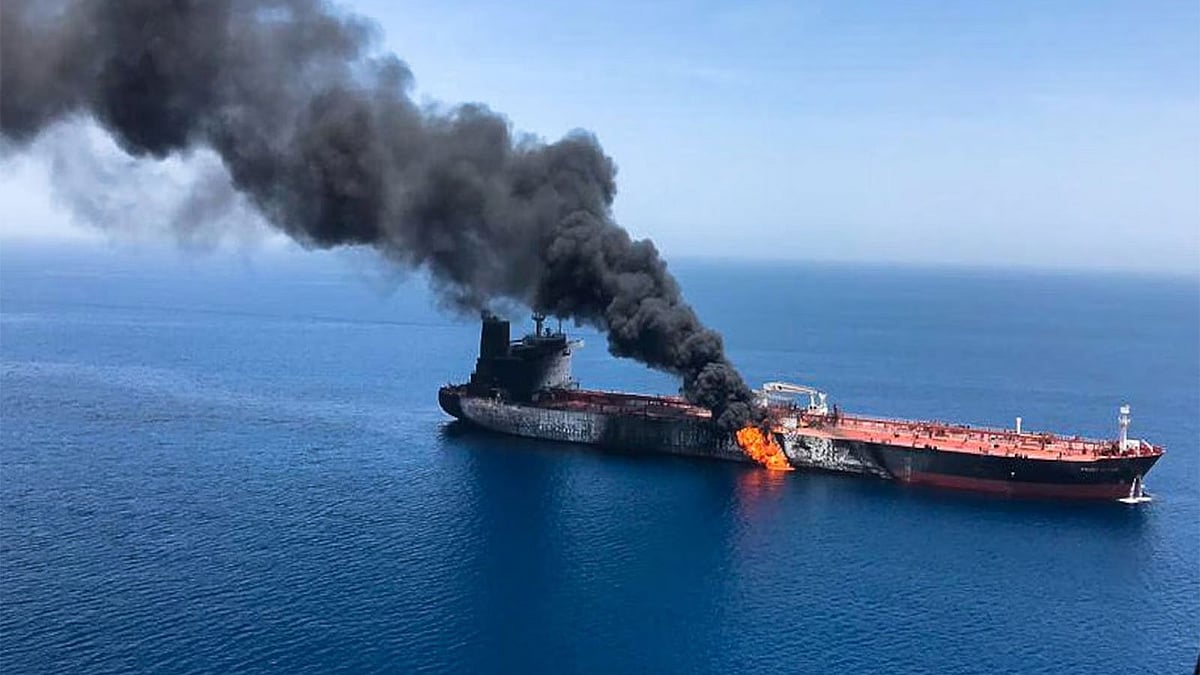
Global oil prices surged to their highest levels since 2022 after reports that the United States Central Command is preparing fresh military options for Donald Trump amid the escalating Iran conflict.
According to a report by Axios, US military officials are set to brief Trump on plans involving a wave of “short and powerful” strikes on Iran aimed at breaking the deadlock in negotiations with Tehran.
Brent crude crosses $126
The possibility of further escalation in the Gulf sent oil markets sharply higher.
Brent crude briefly surged nearly seven per cent to $126.31 per barrel during Asian trading — the highest level since Russia’s full-scale invasion of Ukraine in 2022.
Prices later eased slightly to around $122 per barrel in European trading.
US benchmark West Texas Intermediate crude also rose, trading around $108 per barrel.
Strait of Hormuz fears intensify
Energy markets remain on edge because of disruptions linked to the Strait of Hormuz, through which roughly one-fifth of global oil and energy shipments normally pass.
The waterway remains effectively closed after Iran threatened vessels attempting to use the route in retaliation for US-Israeli strikes.
Washington has responded by maintaining a blockade on Iranian ports.
Axios report details military options
The Axios report, citing anonymous sources, said one US option under consideration involves strikes on Iranian infrastructure targets.
Another reported proposal focuses on securing and reopening parts of the Strait of Hormuz for commercial shipping, potentially involving deployment of ground troops.
Neither the White House nor US Central Command immediately commented publicly on the report.
Markets fear wider escalation
Analysts said oil traders reacted rapidly because even limited escalation could severely disrupt global energy supplies.
Economics professor Yeow Hwee Chua of Nanyang Technological University said even a small chance of expanded conflict carries “outsized implications” for world energy markets.
Oil analyst Naveen Das said markets were increasingly worried the conflict could intensify again.
“It does seem as though escalation in the war is back on the table,” he said.
Das warned that oil prices nearing $125 per barrel are levels at which governments and businesses “start to get a bit more jittery”.
Inflation fears return
Analysts warned that sustained high oil prices could trigger broader inflationary pressure globally.
“We might start seeing maybe more headlines of trying to de-escalate again,” Das said, adding that rising oil prices affect fuel, transport, manufacturing and everyday consumer costs.
The BBC also reported that senior energy executives recently met Trump to discuss ways of limiting the economic impact of the war on US consumers.
Will Walker-Arnott of Raymond James said investors were increasingly concerned about inflationary fallout.
“People are really beginning to worry about the inflationary impact coming through from the rise in the oil price,” he said.
Global markets weaken
Asian stock markets closed lower amid the uncertainty.
Japan’s Nikkei 225 fell 1.1 per cent, while South Korea’s KOSPI dropped 1.4 per cent.
In Europe, Germany’s DAX and France’s CAC 40 also declined in early trading.
Oil markets have remained volatile since the outbreak of the Iran-US-Israel conflict, with investors closely monitoring developments around the Strait of Hormuz, one of the world’s most strategically important energy chokepoints.
Join our official telegram channel (@nationalherald) and stay updated with the latest headlines