Environment
Earth accumulating heat at accelerating rate, ushering in ‘new age of climate extremes’: WMO
UN weather agency warns that rising heat accumulation will intensify heatwaves, droughts and tropical cyclones as the COP31 climate summit begins in Turkey
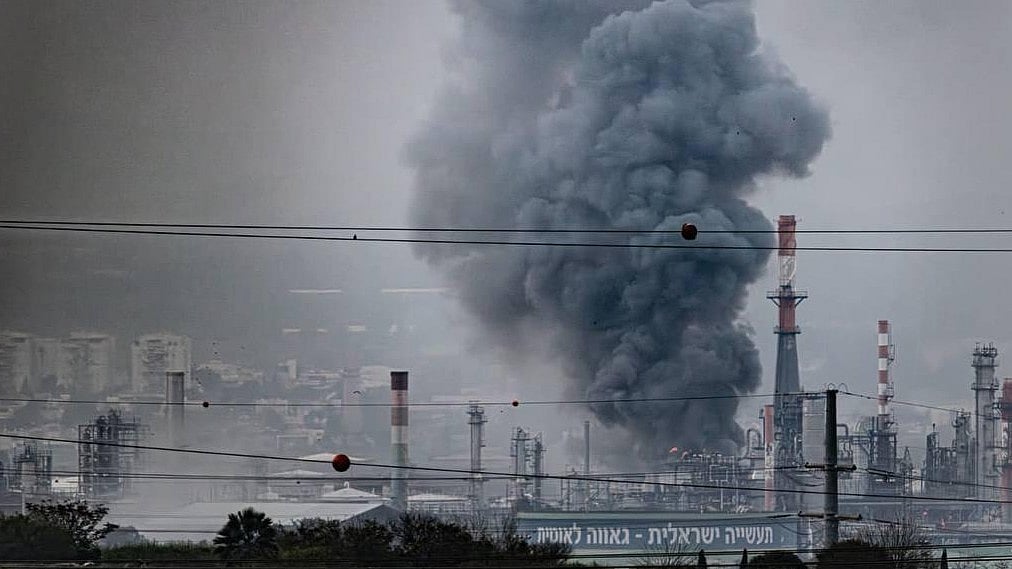
Earth’s energy imbalance has reached its highest level since monitoring began, the WMO says.
2026 is on track to be among the four warmest years on record.
Rising ocean heat, sea levels and shrinking ice are intensifying concerns over climate extremes.
The Earth is accumulating heat at an accelerating rate, with the imbalance between incoming solar energy and the heat escaping into space reaching its highest level since monitoring began, the World Meteorological Organization (WMO) has said.
In its State of the Global Climate update, released as the COP31 climate summit began in Turkey on Monday, the UN agency warned that rising heat accumulation would intensify extreme weather events, including heatwaves, droughts and tropical cyclones.
Global average surface temperatures between January and September 2026 were about 1.47 degrees Celsius above the pre-industrial average, the WMO said. The year is on track to be among the four warmest on record, making 2023 to 2026 the four warmest years since records began.
UN Secretary-General António Guterres described the developments as the beginning of a “new age of climate extremes”.
“A supersized El Niño is colliding with a planet already superheated by manmade climate change. Climate records keep falling. The human costs keep rising. And those least responsible are suffering first and worst,” he said.
Diplomats and world leaders are meeting in Antalya, Turkey, for the 31st Conference of the Parties (COP31) to the UN Framework Convention on Climate Change.
The WMO said atmospheric carbon dioxide concentrations rose from 356.42 parts per million (ppm) in 1992, when the convention was signed, to 426.8 ppm in 2025. Since 1750, the concentration has increased by 53%.
The agency reported that the rate of increase in Earth's energy imbalance, estimated using ocean heat content, rose to 0.3 watts per square metre per decade during 2001–2025, compared with 0.13 watts per square metre per decade over the longer period from 1960 to 2025.
The oceans, which absorb around 90% of the excess heat trapped by greenhouse gases, continued to register record temperatures. Sea surface temperatures reached monthly records, while sea levels were the highest since observations began. The year 2026 is on track to mark the 10th consecutive year of record ocean heat.
Heat content in the upper 2,000 metres of the oceans reached its highest level in the observed record in 2025, with the rate of warming accelerating, the WMO said. It warned that this warming would continue and represented a change that was irreversible on timescales ranging from centuries to millennia.
The year began with La Niña conditions in the Pacific, which typically lower global temperatures by around 0.1 to 0.2 degrees Celsius. However, an emerging El Niño, which tends to raise global temperatures, could push the final average for 2026 above the 1.47-degree level recorded for January to September.
The report also highlighted continued losses in the polar regions and glaciers. Antarctic sea ice reached its third-lowest annual maximum on record in 2026, while the Arctic recorded its lowest or second-lowest maximum.
Glaciers lost more than 400 gigatonnes of mass, marking the fourth consecutive year in which all 19 glacierised regions worldwide experienced mass loss, the WMO said.
Bill McGuire, professor emeritus of geophysical and climate hazards at University College London, said the findings showed that indicators including global temperatures, sea-level rise and sea ice extent pointed to worsening climate change.
He said the growing imbalance between incoming solar energy and heat leaving the planet was particularly concerning, as increasing greenhouse gas concentrations meant more heat was being retained in Earth's systems.
McGuire said natural feedback mechanisms were also contributing to faster warming. Citing recent research, he said the world could permanently cross the 1.5-degree Celsius threshold in 2028 and exceed 2 degrees in the late 2030s if the current rate of warming continued.
He also argued that projections of global warming reaching 2.6 to 2.8 degrees by the end of the century could prove overly optimistic.
Join our official telegram channel (@nationalherald) and stay updated with the latest headlines