Environment
Jairam Ramesh cites 2010 letter, questions PM Modi's credit for GIB conservation initiative
Congress leader cites 2010 letter to Narendra Modi; Centre highlights recent breakthrough under Project GIB
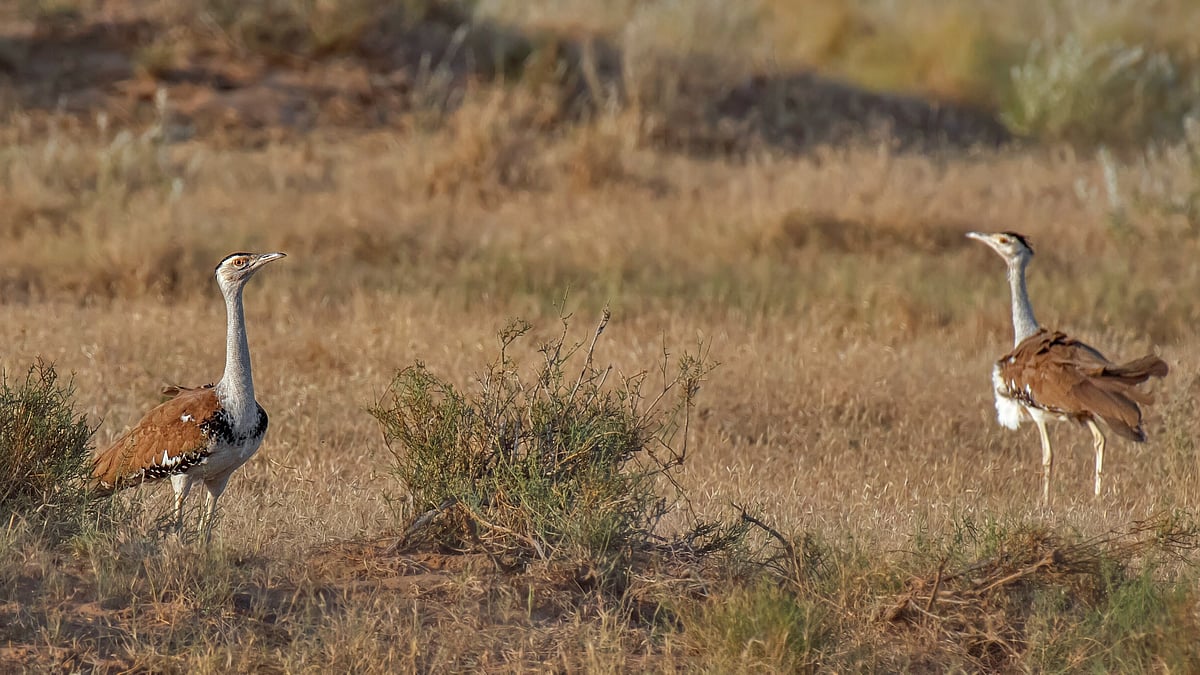
Congress leader Jairam Ramesh on 29 March criticised the Centre for attributing credit to Prime Minister Narendra Modi for conservation efforts related to the Great Indian Bustard (GIB), citing earlier initiatives undertaken during his tenure as environment minister.
In a post on X, Ramesh said he had written on 9 June 2010 to then Gujarat chief minister Narendra Modi, urging steps to conserve the species in the grasslands of Kutch.
“As usual, all credit is being given to the PM for the initiative… It is being put out that he thought of this idea in 2011,” Ramesh said, adding that professionals in the field were aware of the earlier efforts.
Ramesh, who served as Union environment minister between May 2009 and July 2011, said his letter had called for preventing diversion of grazing land and strengthening local conservation initiatives to protect the species, which he described as highly endangered.
Centre highlights recent conservation success
The remarks come a day after Union Environment Minister Bhupender Yadav announced the birth of a GIB chick in Gujarat’s Kutch region through a conservation method termed the “jump-start approach”.
According to Yadav, the initiative was coordinated by the environment ministry along with state forest departments of Rajasthan and Gujarat and the Wildlife Institute of India.
He said the conservation programme was envisioned in 2011 and formalised under Project GIB, launched in 2016, to protect the species in its natural habitat.
Officials said the latest development marked the first successful interstate “jump-start” initiative for the species in the country.
Translocation effort and breeding programme
According to the ministry, conservationists transported a captive-bred GIB egg over a distance of about 770 km from Rajasthan’s Sam to Naliya in Gujarat in a controlled environment using a portable incubator.
The egg was placed in the nest of a tagged female GIB in Kutch on 22 March. The chick hatched on 26 March and is currently being reared in its natural habitat under monitoring.
Officials said only three female GIBs remain in Gujarat’s Kutch grasslands, making natural breeding difficult due to the absence of males.
The ministry added that conservation breeding centres at Sam and Ramdevra in Rajasthan now house 73 birds, including five chicks added during the current breeding season.
Historical context and species decline
Ramesh also referred to historical discussions on the species, noting that ornithologist Salim Ali had advocated in 1961 for the GIB to be declared India’s national bird due to its declining population.
He said the Indian Board of Wildlife later chose the peacock in 1963 citing cultural and historical reasons.
The Great Indian Bustard is one of the most critically endangered bird species in India, with its population declining sharply due to habitat loss, infrastructure development and other ecological pressures.
Policy debate continues
The exchange between Ramesh and the Centre reflects a broader political debate over attribution of conservation initiatives, even as experts emphasise the urgency of coordinated efforts to prevent further decline of the species.
Officials said long-term plans include rewilding efforts and strengthening breeding programmes, as India attempts to stabilise and revive GIB populations across its remaining habitats.
Join our official telegram channel (@nationalherald) and stay updated with the latest headlines