


Environmental impact should outweigh strategic interest in Great Nicobar project: Litigant after NGT ruling
Debi Goenka questions tribunal’s “balanced approach”; Centre maintains project vital for maritime security and trade
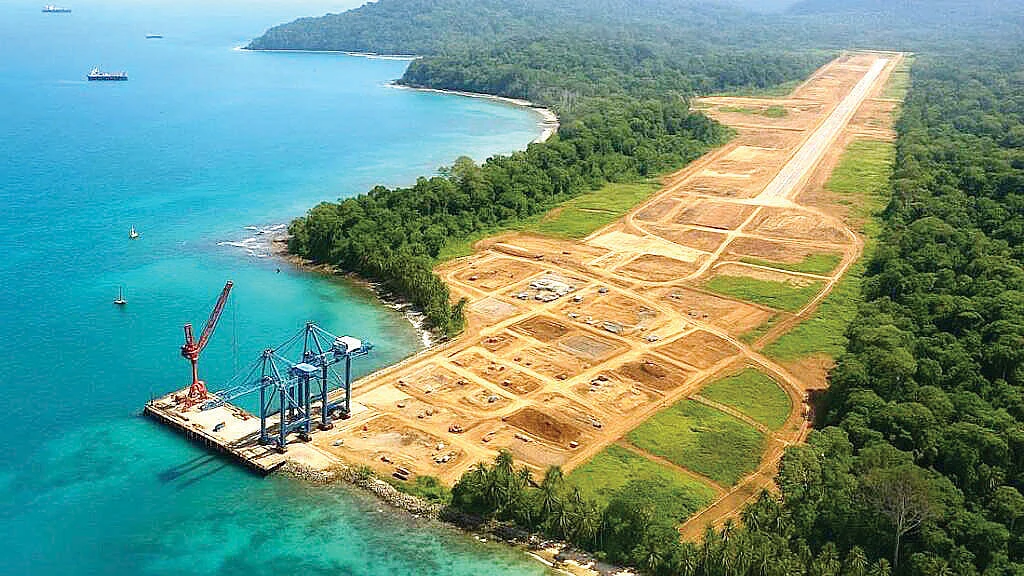


Days after the National Green Tribunal (NGT) cleared the way for the Rs 81,000-crore Great Nicobar mega infrastructure project, environmentalist Debi Goenka said the ruling should have placed greater emphasis on ecological concerns rather than strategic considerations.
Goenka, executive trustee of the Mumbai-based Conservation Action Trust (CAT), which was part of earlier litigation challenging the project’s environmental clearance (EC), said the tribunal’s approach reflected a broader pattern in cases involving government-backed infrastructure.
“The NGT and even the Supreme Court are not willing to stay a project which impacts the environment if the government has a significant interest in it,” Goenka said.
The tribunal’s 16 February order came in response to a second round of litigation reviewing findings of a High-Powered Committee constituted in 2023 to examine coral conservation, environmental data adequacy and zoning issues. The NGT adopted what it described as a “balanced approach”, weighing environmental safeguards against the project’s strategic importance.
“There is already a defence establishment on the island that the armed forces have used for decades. I do not see how a commercial port enhances defence. Also, the NGT was meant to protect the environment. If it is more concerned with strategic interest than the environment, we do not need an environmental tribunal,” Goenka said.
The project, spread across about 166 sq km on Great Nicobar island, proposes a transshipment port, an integrated township, a dual-use civil and military airport, and a 450-MVA gas- and solar-based power plant. The Centre has argued that its location near the Malacca Strait — a key international shipping route — would strengthen India’s maritime trade and strategic presence.
Environmental groups, however, have raised concerns about the ecological impact. They claim parts of the project fall within CRZ-IA, the most ecologically sensitive category under Coastal Regulation Zone rules, particularly around Galathea Bay — a nesting ground for giant leatherback turtles and a habitat for corals, mangroves and endangered Nicobar megapodes.
“The project will destroy 130 sq km of pristine forest. We do not even know what endemic or endangered species these forests contain or their biodiversity value to mankind. The project will impact the corals in the area, and also destroy nesting sites of turtles,” Goenka said.
In its order, the NGT accepted the Centre’s position that a site inspection by the National Centre for Sustainable Coastal Management found no CRZ-I violations. The tribunal also relied on findings of the Zoological Survey of India that only “scattered” coral colonies existed in the project area and could be protected through translocation.
Goenka further warned that indigenous communities, particularly the Shompen tribe, could face adverse consequences. “The Shompen are a small group existing only on this island… If the project destroys this forest, which is part of their territory, nobody knows the full impact, but it certainly will not be positive,” he said.
While the tribunal noted that tribal habitats would not be disturbed and rights under the Forest Rights Act would be protected, Goenka questioned enforcement of safeguards. “How will one monitor if the authorities are complying with these conditions?… if six years later I go to the NGT and say… that the leatherback turtle's nesting ground has been destroyed, will the tribunal stop the project? I really doubt that,” he said.
Wider debate over development and indigenous concerns
The Great Nicobar project has generated broader debate among environmentalists, activists and sections of civil society, who argue that large-scale infrastructure in fragile island ecosystems could carry significant ecological and social costs.
Critics have pointed to alleged pressures on local tribal bodies and concerns about forest diversion, indigenous rights and the scale of proposed population growth in the region — issues that authorities have said will be addressed through safeguards and statutory compliance.
Environmentalists have also highlighted the biodiversity significance of the Andaman and Nicobar Islands, recognised under UNESCO’s Man and Biosphere Programme, and questioned whether compensatory afforestation outside the islands can offset ecological loss.
The government, however, maintains that the project is strategically important due to the islands’ proximity to major shipping lanes and existing defence infrastructure.
The NGT, in its ruling, directed authorities to ensure “full and strict” compliance with conditions attached to the environmental clearance as the project moves forward.
Join our official telegram channel (@nationalherald) and stay updated with the latest headlines