Environment
We saw stubble burning during Covid, so why was air clearer, asks Justice Suryakant
Farm fires dip, but PM2.5, NO₂ and CO from vehicles and local sources keep air in ‘very poor–severe’ zone
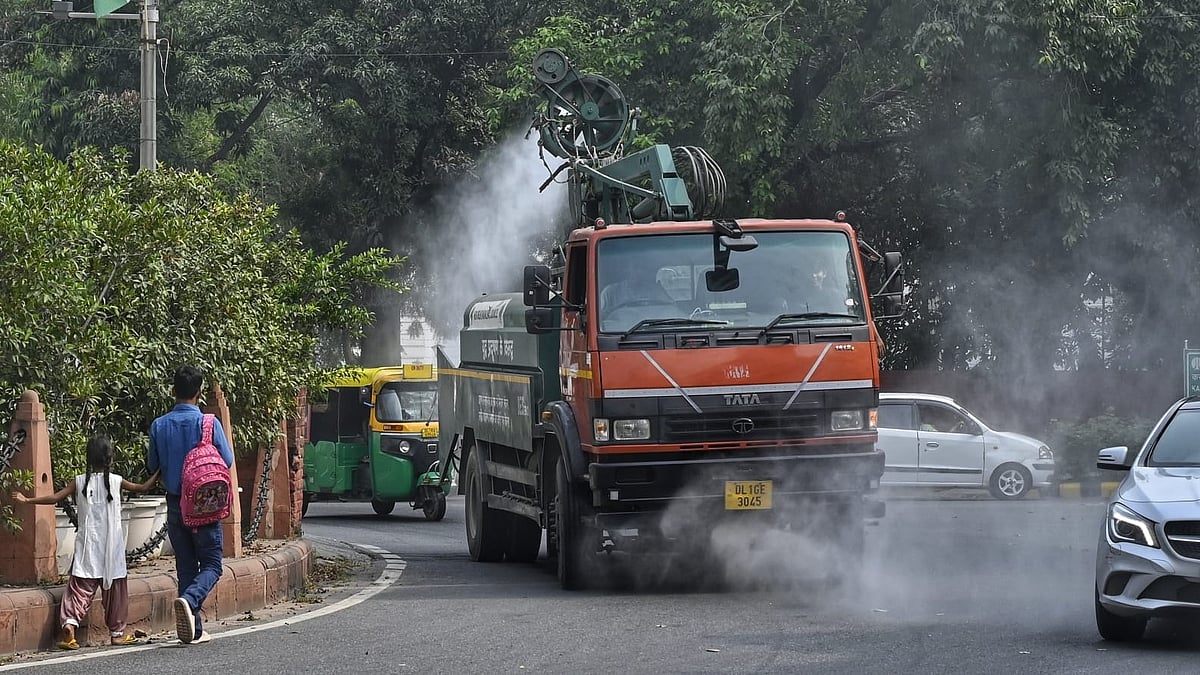
Even as stubble burning dropped to a multi-year low this season, Delhi-NCR’s air quality remained locked in the ‘very poor’ to ‘severe’ categories through most of October and November, driven overwhelmingly by local emissions — particularly from vehicles.
A new analysis by the CSE (Centre for Science and Environment) shows that a “toxic cocktail” of PM2.5, nitrogen dioxide (NO₂) and carbon monoxide (CO) has dominated early-winter pollution.
The report, based on CPCB data, found that 22 monitoring stations breached CO limits on more than 30 of the 59 days analysed, with Dwarka Sector 8 logging the most violations (55 days), followed by Jahangirpuri and Delhi University’s North Campus (50 days each).
New and expanding pollution hotspots
Delhi’s pollution hotspots have expanded drastically. From 13 hotspots officially identified in 2018, many more locations now record far worse pollution than the city average.
Jahangirpuri emerged as the most polluted hotspot with an annual PM2.5 average of 119 µg/m³, followed by Bawana and Wazirpur (113 µg/m³), Anand Vihar (111 µg/m³), and Mundka, Rohini and Ashok Vihar (101–103 µg/m³).
New hotspots include Vivek Vihar, Alipur, Nehru Nagar, Siri Fort, Dwarka Sector 8 and Patparganj.
Smaller NCR towns also saw prolonged smog episodes. Bahadurgarh recorded a 10-day continuous smog event from November 9 to 18, underscoring that Delhi-NCR increasingly functions as a single, polluted airshed.
Vehicular emissions driving synchronized spikes
CSE’s analysis found that PM2.5 levels rose and fell almost simultaneously with NO₂ during peak traffic hours — 7–10 am and 6–9 pm — as emissions accumulated under shallow winter boundary layers.
CO breaches also rose sharply across the city.
“This synchronised pattern reinforces that particulate pollution spikes are being fuelled daily by traffic-related emissions of NO₂ and CO, especially under low-dispersion conditions,” said Anumita Roychowdhury, Executive Director (Research & Advocacy), CSE.
She added, “Yet, winter control efforts remain dominated by dust measures, with weak action on vehicles, industry, waste burning and solid fuels.”
Stubble burning lowest in years — but little relief
Flood-related disruptions in Punjab and Haryana contributed to a subdued stubble-burning season.
Fires contributed below 5% to Delhi’s pollution during most of early winter,
rising to 5–15% on some days and
peaking at 22% on November 12–13.
But the report notes that low farm-fire contribution did not meaningfully improve Delhi’s daily air quality, as local emissions continued to dominate.
PM2.5 levels for October–November were nine per cent lower than last year, yet nearly unchanged from the three-year baseline. Annual averages have stagnated at high levels since 2021–22, with 2024 recording a sharp rise to 104.7 µg/m³ — undoing earlier post-pandemic gains.
The report calls for deep, long-term measures, including:
accelerated electrification of vehicles,
scrapping older vehicles,
expanded public transport and last-mile connectivity,
better pedestrian and cycling networks,
congestion taxes and parking caps,
cleaner industrial fuels and lower gas taxes,
elimination of waste burning, improved segregation, and dump-site remediation.
On Monday, Delhi’s AQI at 3 PM stood at 303 (‘very poor’).
Air pollution crisis not customary winter formality
The Supreme Court on Monday signalled a major shift in how Delhi–NCR’s air pollution crisis will be handled, stressing that the issue cannot be treated as a “customary” winter formality and must instead be monitored round the year.
A bench led by Chief Justice Surya Kant said it will now take up the matter twice every month to track both short- and long-term mitigation plans. Crucially, the Court questioned the long-standing narrative that blames stubble burning as the primary cause of Delhi’s foul air.
Pointing to the clear blue skies witnessed during the COVID-19 lockdowns — despite stubble burning continuing as usual — the CJI said this “suggests other factors are at play,” including unplanned urban expansion, soaring vehicle ownership, construction dust and biomass burning.
He also emphasised that stubble burning must not become a political or ego issue, noting that farmers “are hardly represented in this court.”
The bench directed the Centre, CAQM and CPCB to submit a detailed report within a week on immediate and long-term action across all major pollution sources.
The Court underlined that Indian cities were never designed to handle such dense populations and high vehicular loads, and warned that urban development should not come at the cost of deteriorating quality of life.
Join our official telegram channel (@nationalherald) and stay updated with the latest headlines