Environment
Traffic pollution made Gurugram children miss 95,000 school days in 2025: Study
Road traffic caused one in four pollution-linked new asthma cases among children and adolescents, study finds
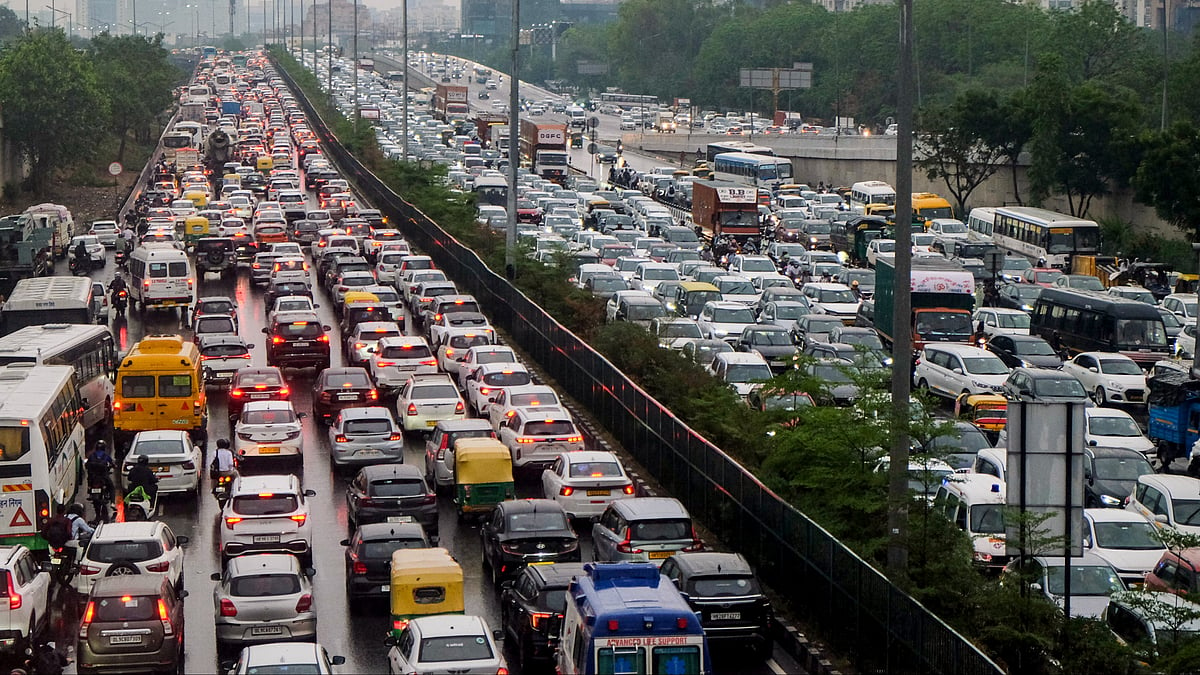
Exhaust emissions from vehicles on Gurugram’s roads contributed to one in four new asthma cases linked to air pollution among children and teenagers in 2025 and caused an estimated 94,859 school days to be missed because of illness, according to a study by the International Council on Clean Transportation (ICCT).
The missed school days are equivalent to a full academic year for 431 students, the study, released on 5 October, found.
Private cars were the largest source of traffic emissions in the city. Gurugram has 323 cars for every 1,000 residents, among the highest rates in India, according to the ICCT.
The study found that more than 80 per cent of vehicle emissions came from newer BS-IV and BS-VI vehicles, suggesting that age-based restrictions on older vehicles have limited scope to deliver further reductions.
The findings come as vehicle registrations in Gurugram reached a seven-year high, while electric vehicles accounted for only 4.3 per cent of new vehicle sales.
The research found that switching every vehicle registered in Gurugram to electric would deliver three-quarters of the potential health benefits. The remaining benefits would depend on reducing emissions from around 500,000 vehicles that enter the city every day from Delhi and other parts of the National Capital Region.
Gurugram is among India's most polluted cities, but the ICCT said it had not previously been the subject of an official study examining the sources of its pollution.
“Children are particularly vulnerable to health impacts of air pollution, with road transport an important contributor,” said Moorthy Nair, researcher at ICCT and co-author of the study.
He said Gurugram could build on existing transport-emission control measures by accelerating the shift away from internal combustion engine vehicles and addressing emissions from vehicles entering the city from neighbouring regions.
Rajesh Verma, chairperson of the Commission for Air Quality Management (CAQM), said vehicles were the “number one source of pollution” in Delhi-NCR, both directly and through secondary pollution.
“Addressing Delhi NCR's air pollution will require a concerted, coordinated solution,” he said, adding that CAQM had directed states to introduce incentives to promote electric vehicles.
Former G20 sherpa Amitabh Kant said air pollution did not respect state boundaries and that Delhi's air quality was affected by emissions from Gurugram, Faridabad, Noida, Ghaziabad, Sonipat and other parts of the NCR.
“The future of transport is electric. The question for India is not whether it electrifies, but whether we lead this transformation or follow it,” Kant said.
The ICCT researchers said the transition to zero-emission vehicles would need to cover all vehicle segments, including two- and three-wheelers and school buses. They also stressed the need to address emissions from vehicles entering and operating within Gurugram to achieve the full potential health benefits of cleaner transport.
“For transport, the vision is clear: we have to get there through zero tailpipe emissions. The health impacts of air pollution on children can no longer be ignored,” said Amit Bhatt, India managing director of ICCT.
Join our official telegram channel (@nationalherald) and stay updated with the latest headlines