Environment
Tree cover in Indian Himalayan region down by 2.2 per cent in two years: Govt
Data shows decline across Himalayan states, raising alarms over climate, biodiversity and water security
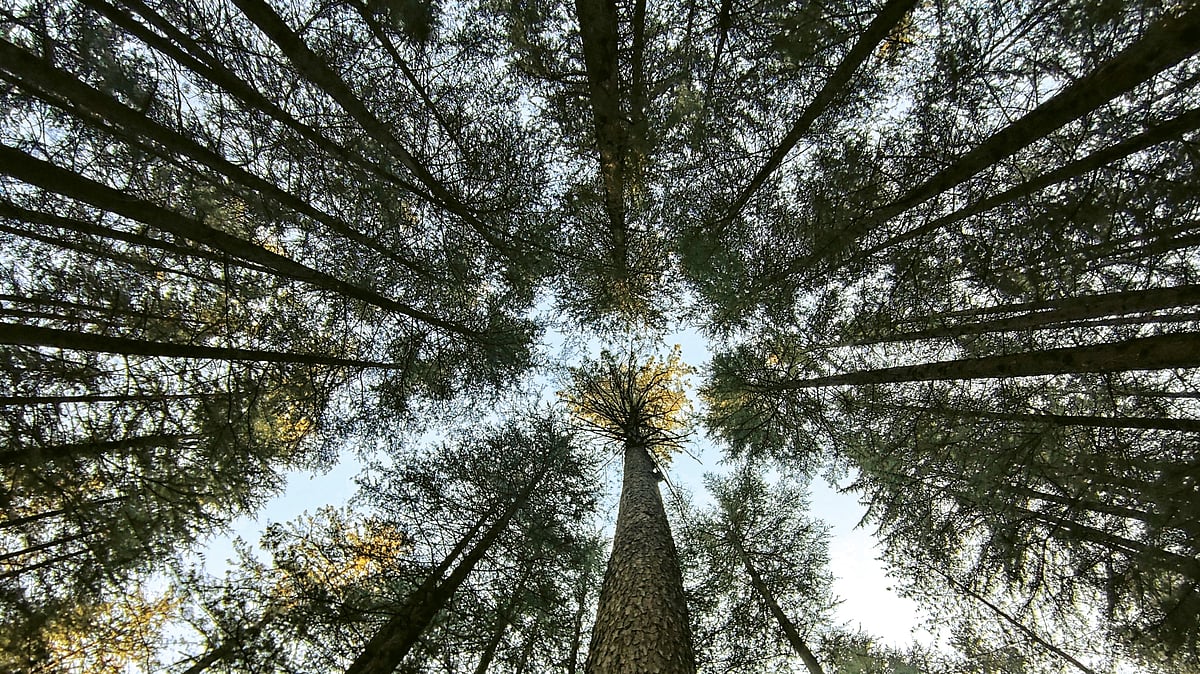
Tree cover across India’s ecologically fragile Himalayan belt has declined by 2.27 per cent in just two years, according to figures cited by the Union government, a development that underscores mounting environmental stress in one of the planet’s most sensitive mountain ecosystems.
Responding to a question in the Rajya Sabha on Friday, Union minister Kirti Vardhan Singh said tree cover in the Indian Himalayan region fell from 15,427.11 sq. km in 2021 to 15,075.5 sq. km in 2023, based on findings from the India State of Forest Report (ISFR) 2023.
While the numerical decline may appear modest at first glance, environmental experts say the loss is significant given the Himalayas’ already fragile ecology and the accelerating pace of climate-driven changes across the region.
The Indian Himalayan region spans 13 states and Union Territories — Jammu and Kashmir, Ladakh, Himachal Pradesh, Uttarakhand, Arunachal Pradesh, Sikkim, Assam, West Bengal, Manipur, Meghalaya, Mizoram, Nagaland and Tripura — forming a vast mountainous system that plays a critical role in regulating South Asia’s climate, water cycles and biodiversity.
Often described as the 'water tower of Asia', the Himalayas feed major river systems including the Ganga, Brahmaputra and Indus, which sustain hundreds of millions of people downstream. Declining tree cover in this landscape threatens not only wildlife habitats but also slope stability, rainfall patterns and water availability.
The minister’s response also highlighted the carbon storage capacity of the Himalayan forests. According to the ISFR 2023, the total carbon stock in forests across the region was estimated at 3,273.10 million tonnes in 2023, only marginally higher than the 3,272.68 million tonnes recorded in 2021.
While the numbers suggest that carbon storage has remained broadly stable, scientists warn that shrinking tree cover and increasing ecological stress could weaken the forests’ ability to act as long-term carbon sinks — a crucial factor as India attempts to meet its climate commitments under the Paris Agreement.
The Himalayas are already experiencing the effects of climate change at an alarming pace. Rising temperatures, rapidly retreating glaciers, erratic rainfall and increasingly frequent landslides and floods have transformed large parts of the mountain chain into environmental hotspots of risk.
In recent years, devastating disasters — from glacial lake outburst floods to landslides triggered by intense rainfall — have repeatedly struck Himalayan states, raising concerns about the cumulative impact of deforestation, unregulated construction, hydropower expansion and road building.
Singh told the Upper House that forest health cannot be assessed solely through satellite-based measurements of green cover. “Forest health is influenced by multiple ecological and biophysical parameters and not merely by the greenness of forest areas,” he said in his written reply.
According to the minister, the Forest Survey of India (FSI) collects a wide range of data to assess the condition of forests beyond simple canopy coverage. These include indicators such as soil depth, soil erosion patterns, the structure and composition of forest vegetation and the presence of threats ranging from human activity to environmental degradation.
“These characteristics interact with each other and determine the state of forests at a given time and have been published in ISFR 2023,” Singh said.
However, environmental observers caution that even small reductions in tree cover in mountainous ecosystems can have disproportionate consequences. The Himalayas’ steep slopes, fragile soils and intense rainfall patterns mean that forests play a critical role in preventing erosion, stabilising terrain and protecting communities from landslides.
As climate pressures intensify and development projects expand deeper into the mountains, the latest government data is likely to intensify calls for stronger conservation policies and more careful environmental oversight across the Himalayan region.
With PTI inputs
Join our official telegram channel (@nationalherald) and stay updated with the latest headlines