Football
Did AIFF commit a financial harakiri by hosting the Brazil friendlies?
I didn’t feel the urge to go as these matches were of no consequence, says former India skipper Bhaichung Bhutia
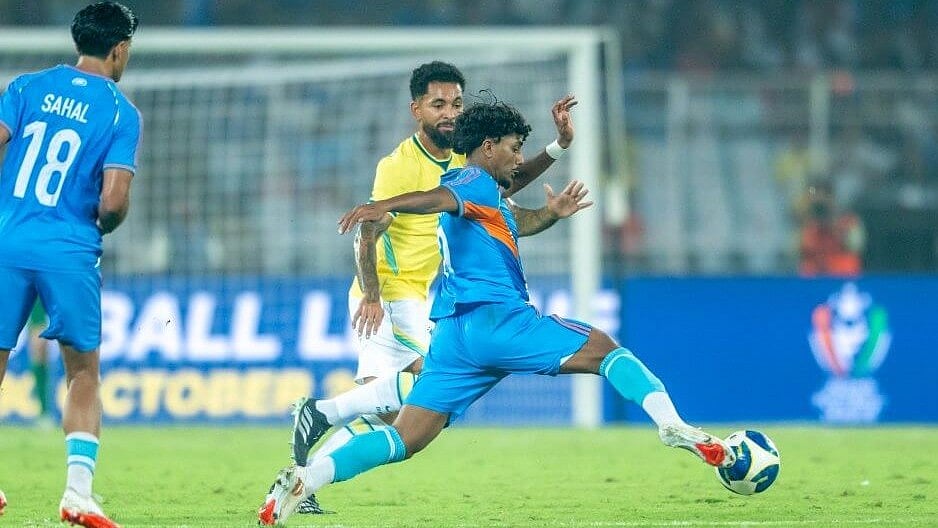
The morning after the three-match jamboree against Brazil, Uruguay and Panama ended on Tuesday, reality must have hit the AIFF hard. It’s not about the Blue Tigers’ performance — Khalid Jamil’s boys have done their best within their limitations — but the financial fallout makes the whole exercise look like a misadventure of sorts.
Just ponder this: it did not take serious math for one of the ExCo members to quiz AIFF president Kalyan Chaubey on how the cash-strapped federation would cope with the losses following the extremely poor response to gate sales and the underwhelming response from corporate sponsors. The total project cost of hosting the three games, according to a conservative estimate, would amount to approximately Rs 80 crore, while the AIFF is expected to be in the red by around Rs 25-30 crore.
A beleaguered Choubey, who faces an election for a second term on December 20, committed before members of the working committee that whatever losses were incurred on the ambitious project “would not be taken out of the AIFF coffers.” The million-dollar question is: who will bail the federation out of such a prohibitive loss? There are also questions about what happens to his promise if Choubey, who prevailed in the 2022 election with the backing of the BJP government, is not re-elected — and why would any incumbent be saddled with such a liability?
Interestingly enough, the decision to enter into a tie-up with a Madrid-based sports management company to bring the marquee teams to India two months ago has sharply polarised the Indian football community. While no official figures are available, informed sources put the appearance fee at anywhere between Rs 35-40 crore for Brazil, around Rs 12 crore for Uruguay and another Rs 5 crore for Panama — along with a reported cost of Rs 6 crore for the chartered jet for the five-time world champions, besides hotel and other logistical expenses.
For someone like Bhaichung Bhutia, it was a colossal “waste of money”, and the former India captain and one of the biggest brands in Indian football still stands by that assessment despite the Blue Tigers’ spirited performance in patches.
Speaking to the National Herald in an exclusive chat, Bhutia explained why he did not come down from the hills to watch either the Brazil or Uruguay match in Kolkata.
“I didn’t feel the urge to go as these matches were of no consequence to Indian football in the long run. If you ask me, Brazil dished out a half-hearted performance and were technically horrible. It’s not only me who is saying it; the Brazilian media are tearing them apart for choosing to play an opponent so many rungs below them in the pecking order,” said Bhutia, who once stepped out of his comfort zone to test himself with Bury FC in the English Championship.
If breaking the bank for Brazil was one aspect that peeved Bhutia, he was also critical of the “exorbitant pricing” of the tickets. The official attendance figure for the marquee game was put at 51,000-plus, but there are conflicting views about the actual number of tickets sold.
“The genuine football lovers were deprived in the bargain as it turned out to be an affair for VIPs and corporates. Then, when tickets were not sold, one of the sponsors was offering free one-to-one tickets, while complimentary tickets were being doled out at random,” he pointed out.
The genuine football lovers were deprived in the bargain as it turned to be an affair for VIPs and corporates. Then when tickets are not sold, one of the sponsors were offering free one-to-one tickets while complimentaries were being doled out at randomBaichung Bhutia
There are a number of influential stakeholders within the AIFF who also pointed to a transgression of norms in the way the matches were approved. The AIFF constitution mandates that any expenditure above Rs 5 crore requires the sanction of the governing body — but most of the members apparently came to know about the venture through the media.
They also pointed out that the timing of the matches was faulty, as it came at the expense of India turning down an invitation to participate in the ASEAN Cup, while the national team was not cleared by the Union Sports Ministry and the federation’s marquee product, the Indian Super League (ISL), was preparing for a reboot with a new title sponsor after three years.
Asked for his assessment of the entire exercise, Anirban Dutta, secretary of the Indian Football Association (IFA) — the oldest umbrella state body in the country, based in Bengal — felt the project could have been handled better.
“Was any cost analysis done before such a venture? Getting India to play a one-off match against Brazil would be of no consequence to their development, as they would again go back to playing countries from our region and around our ranking,” said Dutta.
Interestingly enough, Dutta doesn’t buy the argument that ticket pricing kept buyers away from the Brazil game.
“Believe me, the new generation of professionals working in the city has the wherewithal to buy such tickets, as they do spend this kind of money on concerts and other events. No efforts were made to create any hype, whereas the faces of Vinicius Jr and Co should have been adorning buses, metros and everywhere else,” the official observed.
Not many critics of the project are laying the blame at the door of Gurpreet Singh Sandhu’s men, despite them conceding 11 goals in three matches, 10 of which came against the South American giants. There is only so much they could have done — perhaps concede a few goals fewer at best — but they will now have to start from scratch as they get down to playing regional tournaments or take the qualifying route in continental competitions.
Aloke Mukherjee, one of India’s finest wing-backs of the 1980s, however, raises a pertinent question.
“When we played Enzo Francescoli’s Uruguay in the Nehru Gold Cup in Kolkata in 1982, we lost 3-1, with Manash Bhattacharya scoring the lone goal for us. More than four decades later, the margin of defeat has only increased, despite the boys receiving much better exposure and facilities. Where have we progressed, then?” he said.
Looking back, it’s been a reality check for Indian football, but one that has come at a heavy cost. There had been talk of the sports management company that pulled off the Brazil coup bringing world champions Spain next year for a similar kind of engagement. One wonders whether they will be emboldened enough to go ahead after this recent experience!
Join our official telegram channel (@nationalherald) and stay updated with the latest headlines