World
10-year-old boy killed in Gaza as Israeli fire continues despite ceasefire
Two Palestinians killed near Khan Younis; Israeli strikes also wound 10 in Nuseirat as UN warns most of Gaza remains inaccessible
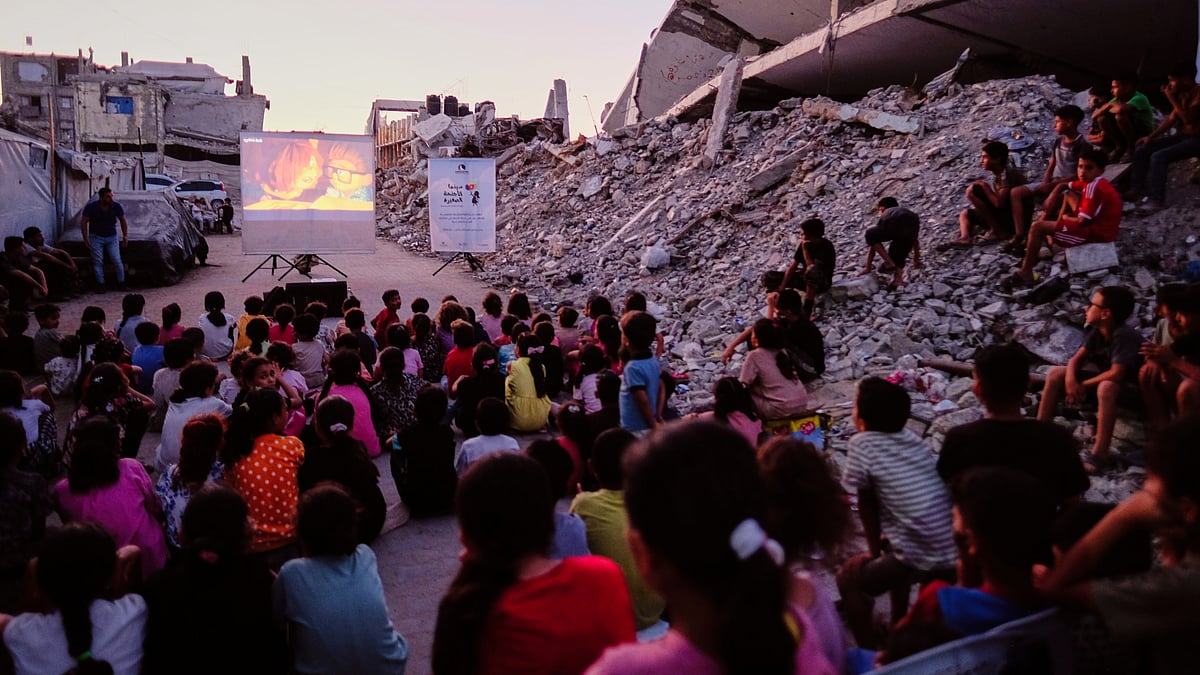
A 10-year-old boy and a 69-year-old man were killed by Israeli troops in separate incidents in southern Gaza on Tuesday, 8 September according to hospital officials, as violence continued despite a ceasefire that has largely halted the full-scale war but not Israeli military operations in the territory.
The boy was killed when Israeli forces opened fire near tents housing displaced Palestinians east of Khan Younis, Nasser Hospital said. The 69-year-old man was killed south of Khan Younis. Hospital officials said both were on the Palestinian side of the ‘yellow line’, the de facto boundary marking areas where Israeli troops remain deployed.
The line has become a particularly dangerous area for Palestinians. UN officials say Israeli forces have used lethal force to enforce access restrictions around it, with the UN Human Rights Office verifying the deaths of 196 Palestinians, including 43 children, in Israeli attacks near the line between October 2025 and early April 2026.
Separately, an Israeli strike on a tent sheltering displaced Palestinians in Nuseirat refugee camp wounded 10 people, Al-Awda Hospital said. Residents in several areas reported receiving evacuation warnings followed by strikes in Khan Younis, Bureij refugee camp and Gaza City. The Israeli military did not immediately comment on the reported attacks.
The latest violence comes despite the ceasefire agreement that took effect in October 2025. The truce has stopped the kind of sustained Israeli ground and air campaign that devastated Gaza during the earlier phase of the war, but Israeli strikes and shootings have continued. Gaza health authorities say more than 1,300 Palestinians have been killed since the ceasefire began.
The humanitarian situation remains critical. Most of Gaza's roughly 2.1 million people remain displaced, many living in overcrowded tents and damaged buildings, while access to food, water, healthcare and sanitation remains severely constrained. The UN has warned that the approaching rainy season could worsen conditions in displacement sites, with flooding and disease risks compounded by damaged water and sanitation infrastructure.
Access to much of the territory is also restricted. UN humanitarian officials estimate that about 65 per cent of Gaza is now subject to tighter Israeli access restrictions, while most of the population is confined to the remaining areas. The yellow line, initially presented as the boundary of a temporary Israeli military deployment under the ceasefire arrangement, has effectively become a dividing line between areas under Israeli military control and the densely populated areas where Palestinians have been pushed.
The ceasefire has therefore produced a reduction in the intensity of the war rather than an end to violence. Israel says its military operations are aimed at Hamas and has maintained that it will continue until the group is disarmed and Gaza is demilitarised. Prime Minister Benjamin Netanyahu said last week that Israel had gained control over the areas in Gaza where its forces are operating and that military operations would continue until Hamas was fully disarmed.
At the same time, political pressure around Gaza remains intense. Far-right members of Netanyahu's government have renewed calls for the mass ‘voluntary emigration’ of Palestinians from the territory, although US Ambassador to Israel Mike Huckabee said on Saturday that there was no US-backed plan to force Palestinians out of Gaza.
The physical destruction is also staggering. The UN estimates that Israel's military campaign since October 2023 has generated about 61 million tonnes of rubble and debris, while thousands of people are believed to remain buried beneath it. A UN expert has warned that clearing the rubble without first documenting it could destroy evidence and impede the recovery and identification of human remains.
With AP/PTI inputs
Join our official telegram channel (@nationalherald) and stay updated with the latest headlines