World
A country running out of people: Ukraine on brink of demographic collapse
Empty wards, mass emigration and mounting casualties leave Ukraine facing a population cliff, Reuters reports
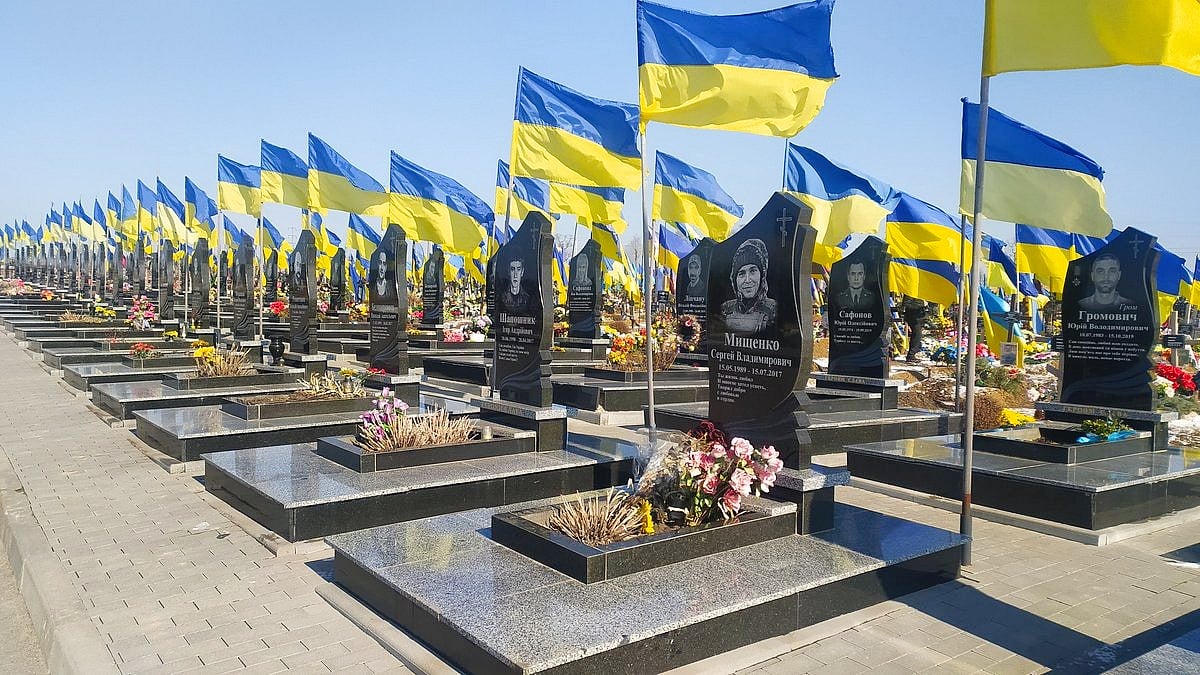
After nearly four years of full-scale war, Ukraine is asking a bleak question: when the fighting ends, who will be left to rebuild? The demographic crisis is becoming impossible to ignore. While hospitals closer to the front struggle with a constant flow of wounded soldiers, a maternity ward in the western town of Hoshcha stands almost empty — a stark illustration of a country running out of people, as a Reuters report found.
The hospital has recorded only 139 births this year, down from 164 in 2024, and nowhere near the more than 400 births it saw annually a decade ago, local officials told Reuters. “Many young men have died,” said gynaecologist Yevhen Hekkel. “Men who, bluntly speaking, should have helped replenish Ukraine’s gene pool.”
The emptiness of Hoshcha’s ward mirrors a national emergency. Hundreds of thousands have been killed or wounded, millions have fled abroad, and births have collapsed. In a nearby village, a school once filled with more than 200 pupils has already closed. “We had only nine children left,” said Mykola Panchuk, the town council chief, speaking to Reuters.
Ukraine’s pre-war population of 42 million has fallen below 36 million, according to the National Academy of Sciences. Demographers forecast a further plunge to 25 million by 2051. Independent UN projections published in 2024 paint an even darker future: by 2100, Ukraine could have as few as 9 million people.
War-related mortality, mass emigration and record-low fertility have converged brutally. The CIA World Factbook estimates Ukraine now suffers both the highest death rate and lowest birth rate in the world — roughly three deaths for every birth. Male life expectancy has dropped from 65.2 years pre-invasion to 57.3 in 2024; for women, from 74.4 to 70.9.
The government acknowledges the scale of the disaster. Kyiv’s 2040 demographic strategy warns of a looming 4.5-million worker shortfall, and urges improved housing, infrastructure and education to coax Ukrainians home while also attracting foreign workers where shortages persist. Even under optimistic scenarios, the population is projected to reach only 34 million by 2040.
In Hoshcha, portraits of local men killed in the war line the path to the town hall — 141 residents from the district of 24,000 have died since the 2022 invasion, with 11 more killed in fighting in eastern Ukraine since 2014. Elderly residents stop to lay flowers, while the town’s streets grow quieter each year.
Schools tell a similar story. Headteacher Marianna Khrypa says the number of first-year pupils is falling, and that around 10 per cent of school leavers now depart the country. “Parents take their children abroad before they turn 18,” she said — a response to Kyiv’s wartime rule barring most men aged 18–22 from leaving.
Even before Russia’s full-scale invasion, Ukraine was losing population at speed. Millions left in the 2000s and 2010s to escape poor wages and corruption. The war dramatically accelerated the exodus. According to a March study by the Centre for Economic Strategy, 5.2 million Ukrainians who fled after the invasion remain abroad, mostly in Europe. Between 1.7 and 2.7 million are expected never to return, with more men likely to join them when martial-law restrictions end.
Younger women have also emigrated in disproportionate numbers, further eroding Ukraine’s reproductive base, demographers told Reuters.
Hoshcha’s maternity ward lost government funding in 2023 after missing the annual target of 170 births. “We were one birth short — a child arrived 15 minutes too late,” said Panchuk. The unit now survives on what the local council can spare.
For many families, war has made parenthood impossible to contemplate. Inna Antoniuk, who runs the ward, says around a third of patients have husbands at the front — some dead, some missing. In the nearby village of Duliby, nine men have been mobilised despite fewer than 200 residents remaining. One of them, the husband of local woman Oksana Formanchuk, has been missing since July. She worries her two adult sons will be drafted next. “What would I do without them?” she asked.
Young adults voice the same anxiety. “There is no stability, nothing to build on,” said 21-year-old Anastasiia Yushchuk, serving coffee from a van on Hoshcha’s high street. The war has pushed up rents and living costs, making home ownership a distant dream. “We need financial stability before having children. Everything changes every month.”
Others find hope where they can. Anastasiia Tabekova, deputy head of the town council, cradles her two-year-old son. Her husband was mobilised days after she learnt she was pregnant. “They gave him leave for the birth,” she said. “He left with tears in his eyes.” Children, she added, give many women the strength to endure the uncertainty of husbands who may never come home.
Join our official telegram channel (@nationalherald) and stay updated with the latest headlines