World
Activists alarmed as Syria's progressive Rojava movement faces existential threat from al-Sharaa regime
Concerns raised over attacks on Rojava region, alleged violence against women and blockade of Kobane
Indian social activist Shabnam Hashmi, issued a statement on 31 January, expressing solidarity with the DAANES (Democratic Autonomous Administration of North and East Syria), also known as the Rojava administration, raising concerns over renewed violence in the region and its impact on women and civilians.
In a statement signed by 221 members of the civil society—including academics, scientists, writers, film-makers and journalists—Hashmi stated that the autonomous administration, which has been in effect for over a decade, had established a democratic model of governance based on ethnic and religious coexistence and played a key role in combating the Islamic State in Syria.
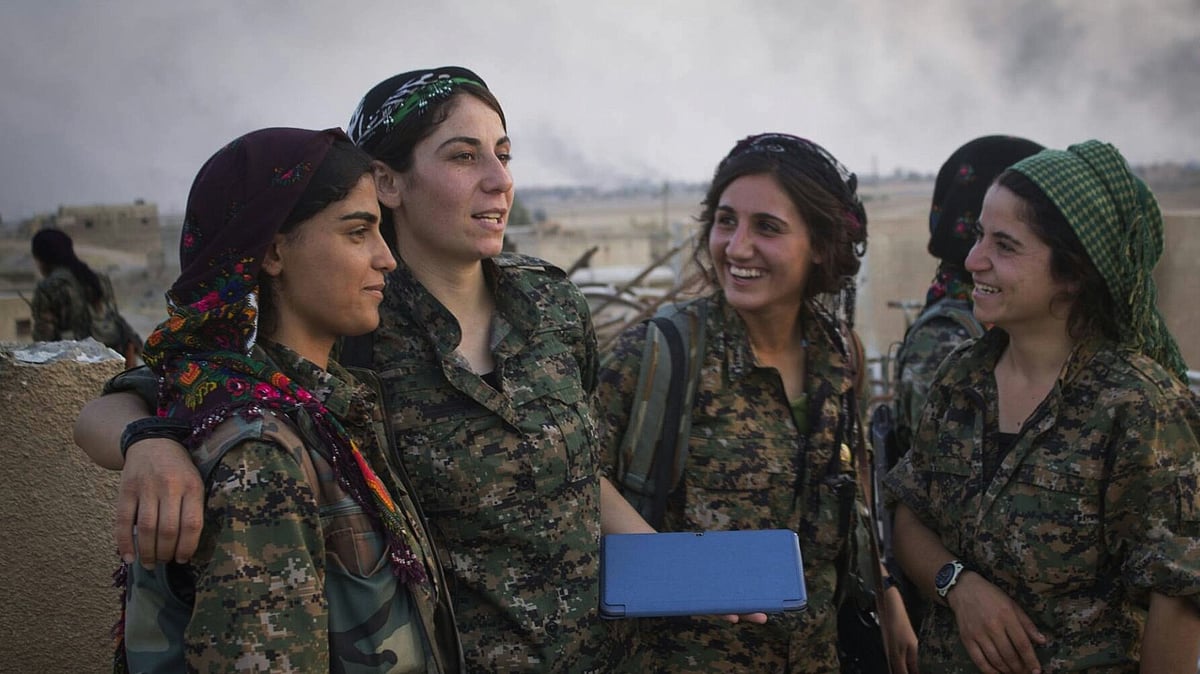
The Democratic Autonomous Administration of North and East Syria, often referred to as the Rojava administration, is a self-governing system established during the Syrian civil war across predominantly Kurdish areas of northern and eastern Syria. What makes it distinctive is its bottom-up model of governance, built around local councils, communal decision-making and power-sharing among ethnic and religious groups including Kurds, Arabs, Assyrians and others. A defining feature of this administration is the central role of women.
Every governing body, from village councils to regional administrations, follows a mandatory co-chair system, requiring one woman and one man to jointly hold leadership positions. Women also operate their own councils, courts, cooperatives and academies, giving them an institutional voice in politics, justice, education and the economy. Through these structures, women are not merely symbolic participants but active decision-makers, shaping laws, social policy and conflict resolution, making the administration one of the most gender-inclusive governance experiments in the region.
In the statement, activists highlighted that the political system in the region was built around women’s leadership, citing mechanisms such as a co-chair system mandating joint male and female leadership at all administrative levels, women-run cooperatives aimed at economic independence, and educational institutions including women’s academies and organisations such as Kongra Star and the Arab Women’s Union Zenobiya.
"Today, this beacon of women's rights is facing a genocidal campaign of destruction. The Syrian Interim Government, under interim president al-Shaara [Ahmed al-Sharaa], has effectively declared war on this democratic project. Since January 6, the situation has escalated dramatically. After militias launched military attacks on Kurdish neighborhoods in Aleppo—forcing hundreds of thousands to flee and committing brutal massacres—they have turned their sights on North and East Syria, surrounding the region on all sides," Hashmi mentioned in a press statement.
Renewed threats for progressive administration
The statement alleged that the region is now facing renewed military threats, claiming that forces aligned with the Syrian Interim Government have launched attacks on Kurdish neighbourhoods in Aleppo since early January and have surrounded areas of North and East Syria.
According to the statement, armed groups have targeted women through abductions and sexual violence, describing these acts as part of a broader pattern of intimidation aimed at dismantling women’s political and social participation. The claims could not be independently verified.
Drawing parallels with earlier atrocities committed by the Islamic State, including the 2014 violence against the Yazidi community, the statement said the destruction of symbols associated with women fighters, including a statue of a female combatant in Tebqa, reflected attempts to erase women from public life.
The statement also raised concern over the situation in Kobane, alleging that the city had been placed under siege, with electricity, water, food and medical supplies cut off. It claimed that the blockade, combined with winter conditions, had led to the deaths of five children.
Additionally, it alleged that prisons holding former Islamic State members in areas now under the control of armed groups were being breached, potentially allowing extremists to re-enter the region.
Calling for international solidarity, particularly from women’s groups in India, the statement stated the developments in North and East Syria had implications for global struggles for women’s rights and democratic governance.
Join our official telegram channel (@nationalherald) and stay updated with the latest headlines