World
Audi chief faces backlash in Germany after appearing at Trump rally
IG Metall chief accuses Gernot Döllner of breaching political neutrality rules as proposed US plant exposes tensions over jobs
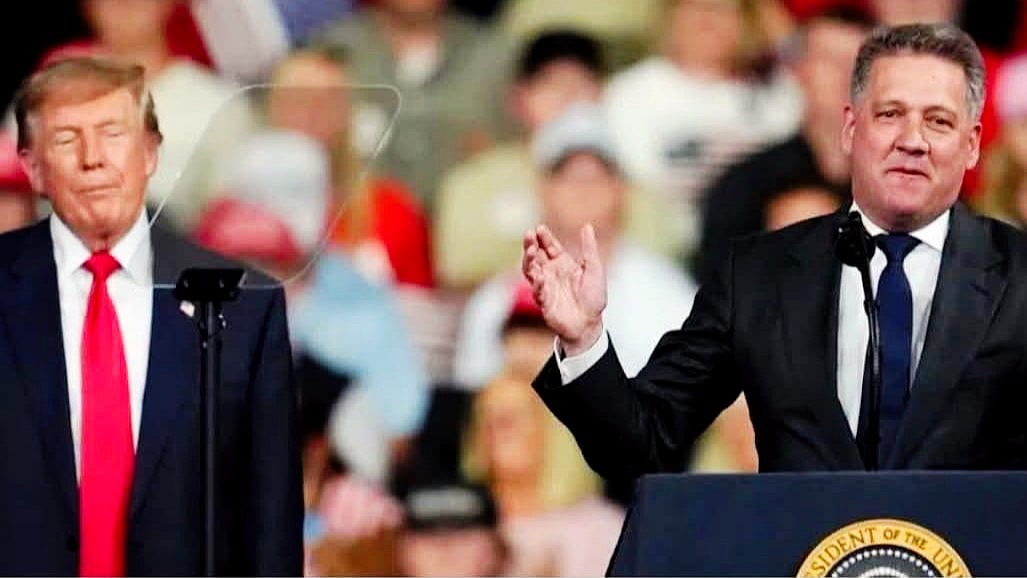
IG Metall chief accuses Audi CEO Gernot Döllner of violating political neutrality rules at Trump's Georgia rally.
Proposed $4 billion US plant awaits Volkswagen supervisory board approval.
German union leaders seek job guarantees amid Volkswagen's restructuring and domestic capacity cuts.
Audi chief executive Gernot Döllner has drawn sharp criticism from Germany’s largest trade union after appearing alongside US President Donald Trump at a campaign rally in Georgia, where the two announced plans for a proposed $4 billion vehicle assembly plant.
Christiane Benner, president of IG Metall and deputy chair of Volkswagen’s supervisory board, accused Döllner of violating Audi’s political neutrality guidelines by sharing the stage with Trump at the event in Perry, near Macon, on Saturday, 24 October.
In a statement on Monday, Benner described the appearance as “deeply embarrassing, politically unacceptable and unworthy of the company”. She said the episode was particularly offensive to Audi’s employees and accused the chief executive of disregarding the company’s own rules on political neutrality.
According to Reuters, Trump used the rally to announce Audi’s proposed investment in Georgia, where the German luxury carmaker plans to establish its first assembly plant in the United States. The facility is expected to produce around 200,000 sport utility vehicles (SUVs) annually, although the proposal still requires approval from Volkswagen’s supervisory board.
The controversy comes at a difficult time for Volkswagen, which is undertaking a sweeping restructuring programme involving substantial job cuts and reductions in production capacity in Germany as it grapples with mounting costs, tariffs and intensifying competition in China.
Audi’s proposed American expansion has also revived concerns among German workers over the future of domestic manufacturing. Employee representatives have been pressing the company to provide firm assurances about jobs at its German facilities while setting out a clear strategy for the North American market.
Benner acknowledged the importance of the US market to Volkswagen’s future but insisted that the proposed investment must be assessed alongside its implications for workers in Germany.
She said the final decision rested with Volkswagen’s supervisory board, which includes employee representatives, and that the company’s management needed to provide binding commitments on the future of its domestic plants.
Audi’s internal code of conduct requires political neutrality in the three months leading up to an election. It prohibits public engagements with political parties or politicians standing for election, as well as sponsorship of related events.
The midterm elections in the United States are approaching, making Döllner’s appearance particularly contentious. Trump has previously voiced support for Germany’s far-right Alternative for Germany (AfD) party, adding to the political sensitivities surrounding his relationship with German corporate leaders.
Reuters reported that Audi has been considering establishing a manufacturing base in the US for several years, partly to mitigate the impact of import tariffs. The company incurred around 1.2 billion euros in costs from US tariffs last year, as it imports vehicles for the American market from Europe and Mexico.
Trump has repeatedly promoted tariffs as a means of bringing manufacturing jobs to the US. His administration’s trade policies have placed pressure on foreign automakers to expand domestic production, even as the additional costs and uncertainty have complicated investment decisions.
For Audi, a US factory could provide greater access to one of its most important markets and reduce its exposure to import duties. The company has indicated that the proposed facility would manufacture its larger, premium SUVs for American customers.
Döllner defended the investment after the rally, saying the decision followed months of planning and negotiations. He also defended his participation in the event, arguing that accepting an invitation from the US president was a matter of respect for the office and the country in which Audi intended to invest.
He maintained that the proposed plant was not a move against Germany, arguing that strengthening Audi’s global business could ultimately help protect employment at home. He declined to disclose the full details of the investment arrangements, including whether the company had secured any specific concessions on tariffs.
The proposed expansion nevertheless highlights the competing pressures facing Volkswagen. While the group is seeking to strengthen its position in the US, it is also cutting costs and reducing excess capacity amid weaker performance in China, trade-related expenses and the costly transition to electric vehicles.
Volkswagen has been considering deep cuts to its workforce, with German production facilities facing particular pressure to improve efficiency. Audi’s Neckarsulm plant is among the sites whose longer-term future has come under scrutiny.
Join our official telegram channel (@nationalherald) and stay updated with the latest headlines