World
Bangladesh: Climate change, industrial pollution worsening healthcare crisis
Low-lying and flood-prone, Bangladesh is among the countries most vulnerable to climate change, scientists warn
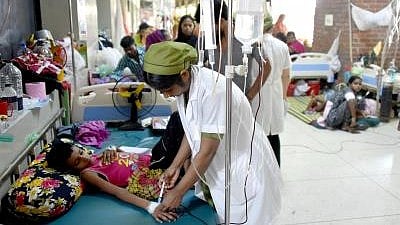
Climate change and unchecked industrial pollution are steadily tightening their grip on Bangladesh, pushing an already strained healthcare system towards the brink, according to a report by The Irish Times.
Though Bangladesh contributes barely 0.3 per cent of global carbon dioxide emissions from combustible fuels, its capital, Dhaka, repeatedly ranks among the most polluted cities in the world. The choking air has become a silent but relentless killer, fuelling a surge in respiratory illnesses including asthma, lung cancer, bronchitis, pneumonia and chronic obstructive pulmonary disease.
Perched on low-lying, flood-prone land, Bangladesh is among the countries most vulnerable to the ravages of climate change, climate scientists warn. Home to nearly 174 million people, the country faces immense demographic pressure, with a recent UN report cautioning that by 2050 it could rank among the world’s most densely populated urban centres.
Doctors on the frontlines say the consequences are already stark. “If pollution continues at this pace, our health system could completely break down,” said Dr Mustafijur Rahman of Dhaka’s National Institute of Diseases of the Chest and Hospital. He pointed to sprawling slums clustered around industrial zones, where inadequate sewage systems and overcrowding allow infections to spread unchecked.
The report paints a grim picture of an urban ecosystem under siege. Brick kilns encircle Dhaka, while garment factories and tanneries pump fumes into the air and dump toxic waste into rivers, poisoning both water and soil. For the city’s poorest residents, exposure is constant and inescapable.
The toll extends beyond health. Soaring medical costs are pushing families into debt, forcing many to seek work abroad — often through dangerous and illegal routes across the Mediterranean in search of survival.
“The political unrest in our country is making this even harder,” said Dr Md Safiun Islam, an assistant professor of respiratory medicine. He said patient numbers at his hospital have risen “exponentially” over the past five years, with as many as 20 to 30 critically ill patients at times waiting for a bed in the intensive care unit.
For physicians, the message is urgent. “Controlling pollution-producing sectors is an emergency,” Islam said.
As Bangladesh heads into elections on 12 February — the first since long-time prime minister Sheikh Hasina was ousted in August 2024 — doctors and experts are calling for decisive action. Rahman urged the next government to separate industrial and residential zones, strengthen sanitation and hygiene awareness, and adopt long-term urban planning.
“Proper planning is essential,” he said, stressing the need to ensure that “the right person is in the right place” as the country confronts a crisis where polluted air, rising illness and fragile healthcare systems collide.
With IANS inputs
Join our official telegram channel (@nationalherald) and stay updated with the latest headlines