World
Bangladesh continues to grapple with violence, attacks on cultural heritage
The death of Sharif Osman Hadi sparks nationwide unrest, violent attacks on iconic cultural centers and growing communal strife ahead of the 2026 national elections
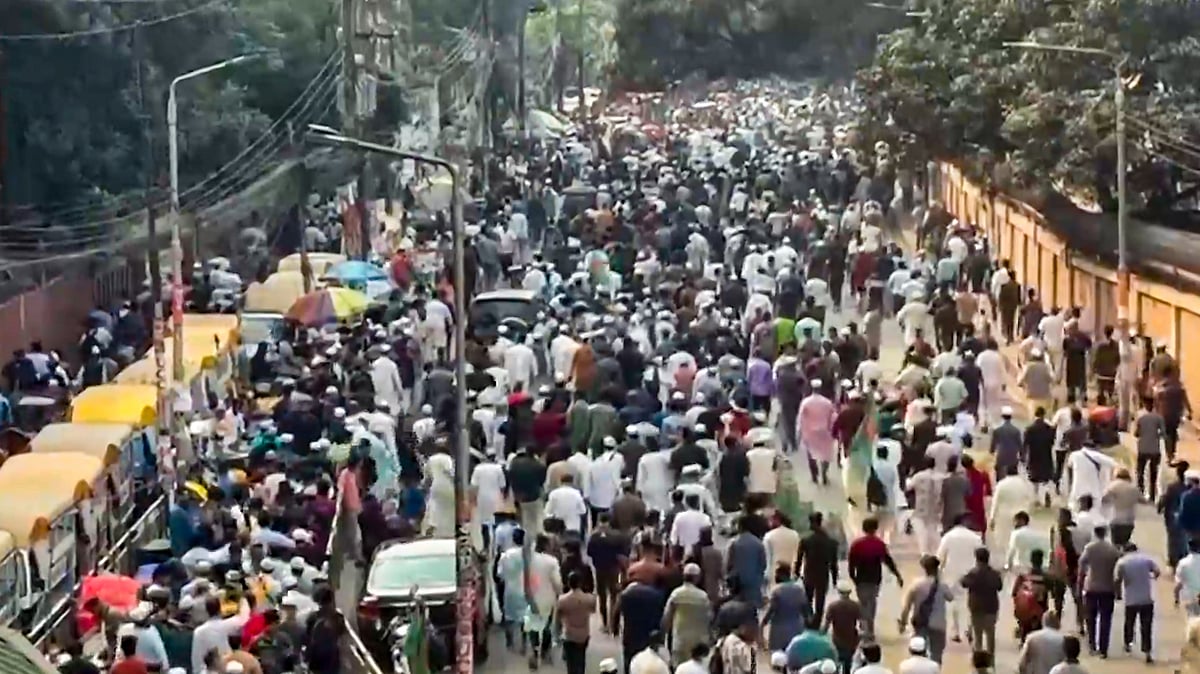
Bangladesh remains engulfed in turmoil following the killing of Sharif Osman Hadi, a prominent leader of the July uprising, who died from gunshot wounds on 12 December 2025. His death, occurring amidst escalating political tensions ahead of the scheduled national elections on 12 February 2026, has triggered widespread unrest across the country.
Hadi’s mortal remains were flown back on Friday night from Singapore where he was taken for treatment and laid to rest on Saturday, 20 December. Hundreds of thousands gathered in Dhaka to bid farewell to Hadi, who was laid to rest beside national poet Kazi Nazrul Islam near the Dhaka University Central Mosque. The government declared the day as a national day of mourning amid tight security around the parliament complex.
Muhammad Yunus, chief advisor of Bangladesh’s interim government, was present on the occasion. “Hadi, you will not fade. No one will forget you. You will stay with us for generations,” Yunus said in his tribute to the slain leader, adding that Hadi would continue to remain a source of inspiration.
After the funeral, a section of mourners were seen swarming towards the Jatiya Sansad building. They were pushed back by security forces deployed in the area.
Meanwhile, Dhaka continued to witness fresh incidents of violence. The violence appears to be concentrated around Dhaka and other urban centres. The rural areas have reported lesser incidents of violence. Cultural institutions, symbols of Bangladesh’s rich heritage and identity, have become primary targets.
Early on 20 December unknown assailants attacked and set fire to Chhayanot, one of Bangladesh’s most renowned cultural organisations dedicated to promoting Bengali music and traditions since 1961. The attack devastated 55 years’ worth of cultural archives and equipment, raising grave concerns about the safety of cultural and public institutions amid the unrest. Due to its historical and ongoing promotion of a strong, independent Bengali identity, Chhayanot is perceived as being aligned with the Awami League. However, the organisation has so far focused on cultural education and advocacy while maintaining a non-partisan profile.
Eyewitnesses reported that the attackers wore helmets and concealed their faces, chanting religious slogans as they vandalised the premises. Army and police forces were deployed to restore order.The attack has been widely condemned by cultural groups, political leaders, and educational advisers, who view it as a direct assault on Bangladesh’s progressive cultural movement and pluralistic values.
Bangladesh’s Education Adviser Dr C.R. Abrar has condemned the attacks on Bangladesh’s iconic cultural institutions, media establishments and journalists.
The Bangladesh Udichi Shilpigoshthi also took out a procession in Dhaka to condemn the attack on its central office on 19 December.
The attack on Chhayanot took place despite National Citizen’s Party (NCP) convenor Nahid Islam’s repeated appeal to remain calm. “We stand firmly against any violence or destructive acts. Ensure no reckless group uses public anger to cause damage or arson,” Islam said.
Meanwhile, the Rapid Action Battalion (RAB) carried out operations at different locations and arrested seven people in connection with the lynching of a Hindu youth, Dipu Chandra Das, in Bhaluka, Mymensingh. According to the police, a mob accused Das of committing blasphemy and beat him to death on 18 December.
The deteriorating law and order and attacks on iconic cultural institutions have entered the political narrative in India. The Communist Party of India (Marxist) has expressed concern over the attacks on minorities, cultural institutions, and media outlets in Bangladesh. It described the attack on Chhayanot and Udichi as "dastardly".
With the February elections approaching, Bangladesh faces a critical juncture as political violence and communal divisions deepen. The fate of its cultural heritage, democratic institutions and social harmony hang in balance.
(Sourabh Sen is a Kolkata-based independent writer and commentator on politics, human rights and foreign affairs)
Join our official telegram channel (@nationalherald) and stay updated with the latest headlines