World
Ceuta calms, but migrant surge leaves Spain deeply divided
Spanish enclave grapples with humanitarian toll, renewed immigration debate and growing political polarisation
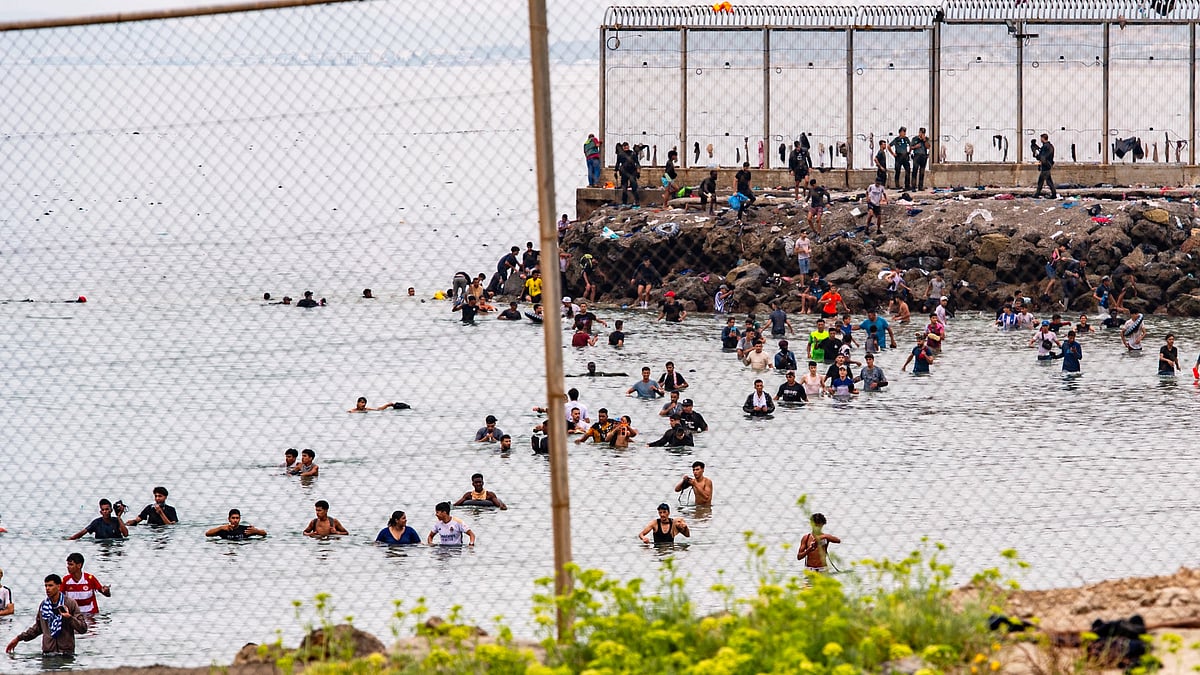
Ceuta no longer looked like a city on edge over the weekend, but the extraordinary events of the past week remained fresh in the minds of residents.
Most of the estimated 50,000-60,000 migrants who swam, climbed and later charged into the tiny Spanish enclave in North Africa had returned to Morocco by Sunday, 2 August, while others tried to blend into the local population and remain in the city. Spanish Civil Guard vessels continued searching coastal waters for bodies near the urban beach where the unprecedented influx unfolded days earlier.
With shops reopening and residents and tourists once again filling open-air cafés, restaurants and terraces, the city of around 84,000 people was gradually returning to normal.
But the border surge has left deep divisions in Ceuta, a city that prides itself on the peaceful coexistence of its Christian, Muslim, Jewish and Hindu communities. Residents remain split over what triggered the mass crossing and who should be held responsible.
Spanish authorities said at least 72 migrants died during the crisis. Some drowned while attempting the crossing, while others were killed in a stampede near a breakwater barrier.
The tragedy has reignited debate over immigration in Spain and across Europe. "It's not the young men's fault," said Mohamad Abdelkader Driss, a 44-year-old waiter at a fried fish restaurant in Ceuta. "If you open the border, of course everyone comes in. The young men aren't to blame. The authorities are responsible."
Several migrants who returned to Morocco said the border had been effectively left open and claimed security forces did little to stop thousands of people from crossing.
The arrival of tens of thousands of mostly young men over Thursday and Friday temporarily increased Ceuta's population by more than half. Abdelkader said the situation could have turned out much worse, noting that most migrants behaved peacefully despite the chaos.
The border crisis also drew far-right politicians and influential right-wing commentators to Ceuta over the weekend, prompting counter-protests involving many members of the city's sizeable Muslim community, many of whom are of Moroccan origin.
Alvise Pérez, a far-right Spanish politician and member of the European Parliament, called for all remaining migrants to be expelled during a rally on Saturday, 1 August. His remarks drew angry protests, forcing him to take shelter inside a bar until police escorted him away.
Among those protesting against Pérez was 20-year-old student Noor Ahmed, who accused him of exploiting the humanitarian crisis for political gain. "They just want to take advantage of the humanitarian crisis Ceuta is currently experiencing," she said.
Vox leader Santiago Abascal visited the enclave on Sunday and blamed Spain's government for what he described as an invasion. "The frontiers of Ceuta and Melilla are the walls of our home and homeland, and they are not being protected by a corrupt and traitorous government," he said.
For many residents, the events of the past week have raised uncomfortable questions about the future of Ceuta's long-standing tradition of coexistence among its diverse communities.
Eva Barrientos, who works at a logistics company, attended Saturday's protest to hear what Pérez and other right-wing leaders had to say. While describing Ceuta as a city where different communities have long lived together peacefully, she said recent events had changed her outlook.
"In Ceuta, we have always lived together. We have four cultures living very well, without any problems," she said. "But the only thing we are realising now is that there is an enemy within." She also accused some foreign-born residents of feeling greater loyalty towards Morocco than Spain.
Pope Leo XIV also expressed concern over the developments, saying on Sunday that he was "following with concern the alarming situation in Ceuta" and praying that "solutions of peace, stability and justice may be found".
Migration has been one of Pope Leo's key priorities. He recently underlined the issue during a visit to Spain's Canary Islands, another major entry point for migrants seeking to reach Europe.
With AP/PTI inputs
Join our official telegram channel (@nationalherald) and stay updated with the latest headlines