World
Christa Pike critical after failed execution; Tennessee governor orders review
Death-row prisoner survived two doses of pentobarbital, prompting a halt to further executions this year and renewed calls for her sentence to be commuted
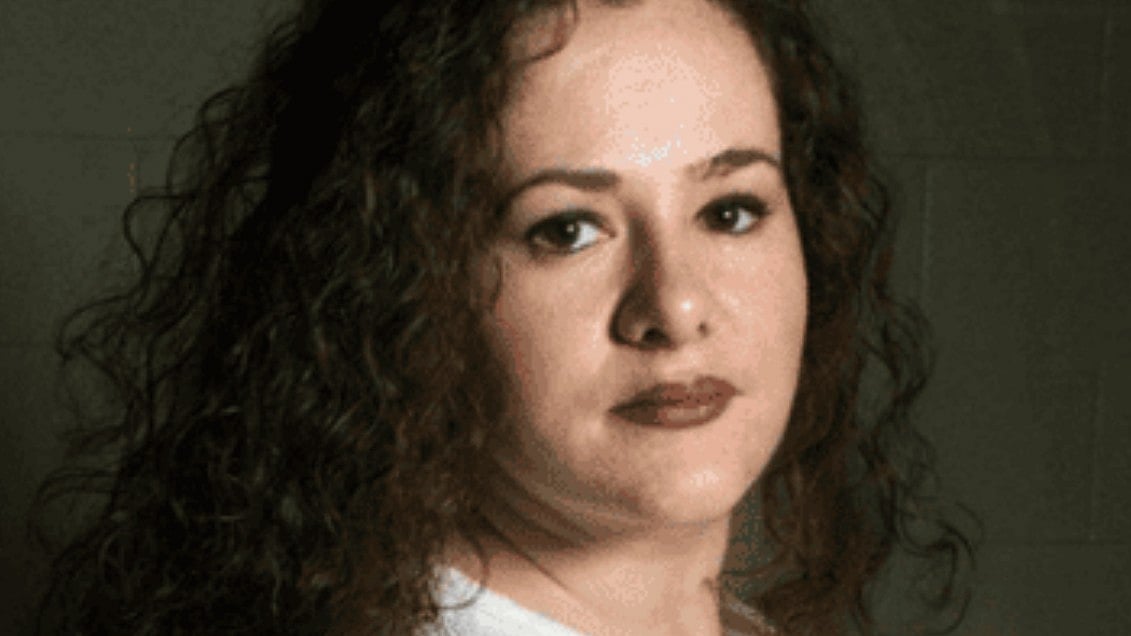
Christa Pike, 50, is receiving life-saving hospital care after Tennessee’s attempt to execute her on September 30 failed
Governor Bill Lee has ordered an independent review and postponed Pike’s execution indefinitely, along with the state’s remaining execution scheduled for this year
Her lawyers have questioned the administration of the lethal drugs and sought commutation; prison officials say they followed the approved protocol
Christa Pike remained in critical condition on Thursday after surviving two doses of a lethal injection drug during an execution attempt in Tennessee, prompting Governor Bill Lee to suspend further executions this year and order an independent investigation.
Pike, 50, was taken to a hospital on Wednesday night after officials at Riverbend Maximum Security Institution in Nashville failed to carry out her death sentence. Her lawyers said she was receiving life-saving care, but they had little information about her prognosis.
The attempt lasted more than 90 minutes in the death chamber, according to her legal team. Witnesses described Pike speaking, moving and later snoring as officials administered an initial dose of pentobarbital followed by a backup dose.
Lee described the incident as deeply disturbing and ordered a third-party review to establish what happened. He indefinitely postponed Pike’s execution and the other execution scheduled for the remainder of the year.
The Tennessee Attorney General’s office supported the investigation, saying the circumstances needed to be established. The Department of Correction maintained that its staff had followed every stage of the state’s approved execution procedure.
Lawyers question IV access and drug delivery
Pike’s attorneys said the execution team spent about an hour attempting to establish an intravenous line. Lawyer Randy Spivey said he counted at least seven needles in her left arm and recalled Pike suggesting other places where staff might find a vein.
Another lawyer, Stephen Ferrell, said Pike had a lifelong blood disorder and had repeatedly experienced difficulties having blood drawn. Her legal team said she had feared a prolonged and painful execution because of those problems.
Ferrell suggested that an improperly placed IV line could have allowed the drug to enter surrounding tissue rather than her bloodstream. The lawyers also raised concerns about damaged veins, potentially degraded pentobarbital and the availability of emergency medical care.
None of those possible explanations has yet been established as the cause of the failure.
Her attorneys said Pike complained about discomfort in her arm during the procedure. They also expressed concern about possible brain damage from oxygen deprivation, although they had no confirmed medical assessment.
Spivey described the attempt as cruel and torturous and said witnessing it had left him haunted. Ferrell said no member of the legal team had seen Pike in hospital and declined to speculate about her condition.
Witnesses describe prolonged uncertainty
Journalists selected to observe the execution said they struggled to understand what was happening, particularly when blinds separating them from the death chamber were lowered.
According to a timeline provided by WKRN reporter Tori Gessner, witnesses entered the viewing area at 6.41 p.m. The blinds opened at 7.26 p.m., when Pike delivered her final statement.
Pike said she felt at peace and was ready to be free. At about 7.34 p.m., however, she complained that her arm felt as though it might burst. Gessner reported that Pike continued talking, breathing, moaning and snoring during the following minutes.
The blinds closed at 7.46 p.m. and reopened three minutes later. They were lowered again at 8.05 p.m. and remained closed until witnesses were escorted out at 8.53 p.m.
Witness accounts indicated that a second dose was administered roughly an hour after the blinds first opened. Pike could still be heard snoring behind the closed blinds before the microphone was switched off.
WPLN reporter Catherine Sweeney, who had witnessed other Tennessee executions, said the procedure was unlike any she had previously observed. Other journalists stressed that much of the attempt took place outside their view.
Pike’s lawyers filed an emergency motion with the Tennessee Supreme Court during the attempt, seeking an immediate halt on the grounds that she was suffering unnecessarily and that the procedure violated constitutional protections against cruel and unusual punishment.
Prison department says protocol was followed
The Tennessee Department of Correction said the execution team complied with the established procedure approved by the Attorney General’s office. It said the protocol did not authorise additional procedures beyond those carried out and confirmed Pike’s transfer to an outside medical facility.
Lee also said it appeared that prison staff had followed the prescribed process.
Tennessee’s 44-page lethal injection protocol permits a single-drug method using pentobarbital, a barbiturate. It specifies a primary dose of five grams, prepared as 100 millilitres of a 50-milligram-per-millilitre solution, and a backup dose if the prisoner does not die.
The document requires checks of the drug’s contents and expiry dates 30 days before an execution. It bars departures from the procedure without an order from the correction commissioner but does not specify what should happen if the backup dose also fails.
Pentobarbital has been used in executions by several US states and the federal government, although concerns persist about pain and suffering during its administration.
Dr Ervin Yen, an Oklahoma City anaesthetist who was not involved in Pike’s case, said injections into a small vein could cause burning, depending on the vein and the speed of administration. His comments offered a possible explanation for discomfort, rather than a finding about this execution.
Defence seeks commutation
Pike’s lawyers are now asking Lee to commute her death sentence. She would have been the first woman executed in Tennessee in more than 200 years.
Her execution had initially been scheduled for Wednesday morning. A federal appeals court granted a last-minute stay to consider her claim that significant evidence of childhood abuse had not been considered at sentencing. The US Supreme Court later lifted the stay, allowing the execution to proceed that evening.
The failure was Tennessee’s second unsuccessful execution attempt this year. In the earlier case, officials could not establish a suitable IV line and did not administer the drugs.
Lee previously suspended executions in 2022 after learning that required testing procedures for lethal injection drugs had not been followed.
Death penalty opponents called for a wider halt following Pike’s case. Laura Porter, executive director of the US Campaign to End the Death Penalty, said Tennessee’s handling of executions undermined human dignity and the rule of law.
University of Richmond law professor Corinna Barrett Lain said lethal injection combines the precision required of a medical procedure with problems involving drug quality, personnel and difficult vein access.
Amherst College professor Austin Sarat described survival after an execution involving drug administration as exceptionally rare. He regarded Pike’s case as potentially unprecedented, although whether the drugs properly entered her bloodstream remains unresolved.
One historical case involved Willie Francis, who survived an attempted electrocution in Louisiana about 80 years ago before being executed in a second attempt.
The murder behind the death sentence
Pike was 18 when Colleen Slemmer, a 19-year-old fellow student at a Job Corps vocational training centre in Knoxville, was killed on 12 January 1995.
Court records state that Pike, her boyfriend Tadaryl Shipp and another student, Shadolla Peterson, took Slemmer to a wooded area. Slemmer was attacked for between 30 and 45 minutes with sharp implements and a rock. A pentagram carved into her body contributed to intense publicity surrounding the case.
Prosecutors linked the killing partly to Pike’s belief that Slemmer was pursuing her boyfriend and insulting her. Evidence presented in court included a confession and testimony that Pike had spoken beforehand about intending to kill Slemmer.
Pike was convicted of first-degree murder and conspiracy to commit murder and sentenced to death in 1996, when she was 20. Her sentence survived successive appeals, leaving her on death row for roughly three decades.
Shipp, who was 17 at the time of the crime, received life imprisonment with the possibility of parole, alongside a conspiracy sentence. Peterson received a different sentence. Pike was the only participant sentenced to death.
Her defence has not disputed her involvement in the killing. Its arguments for a life sentence have focused on her age, alleged severe childhood sexual abuse, neglect and abandonment, and diagnoses of bipolar disorder and post-traumatic stress disorder.
Tennessee has maintained that the evidence justified the sentence and that the case underwent extensive judicial review.
Slemmer’s mother, May Martinez, travelled to Nashville to witness the execution. She said she saw Pike remain awake and move after both injections and expressed distress that the attempt had failed to deliver the justice she sought for her daughter.
With agency inputs
Join our official telegram channel (@nationalherald) and stay updated with the latest headlines