World
Death toll rises to 61 as powerful quake devastates southern Philippines
As many as 40 people remain missing and over 1,400 have been injured, according to National Disaster Risk Reduction and Management Council
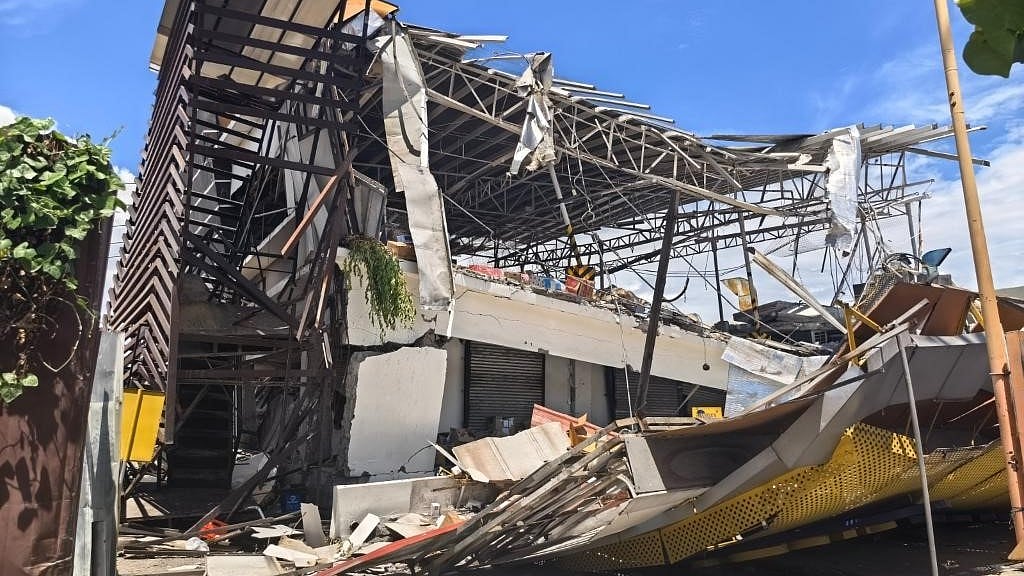
The death toll from the powerful magnitude 7.8 earthquake that struck off the southern coast of Mindanao in the Philippines on June 8 has climbed to 61, while 40 people remain missing and more than 1,400 others have been injured, according to the National Disaster Risk Reduction and Management Council (NDRRMC).
The disaster has left a trail of destruction across southern Philippines, affecting more than 346,000 people from over 75,300 households. Authorities said over 45,000 residents have been displaced from their homes, while at least 12,600 houses suffered damage ranging from cracked walls to complete collapse.
The earthquake triggered 45 related incidents, most of them landslides, further hampering rescue and relief efforts in affected areas.
According to the Philippine Institute of Volcanology and Seismology, the tectonic earthquake struck at 7:37 am local time at a depth of 33 kilometres. Its epicentre was located about 32 kilometres southwest of Maasim town in Sarangani province on Mindanao Island.
The deaths were attributed to falling debris, landslides and collapsing structures. Among the worst-hit areas was General Santos City, a major port city in South Cotabato province, where multiple fatalities and injuries were reported. Authorities continue to search for missing persons as rescue operations remain underway.
One of the most alarming incidents involved the collapse of a two-storey school building in General Santos, with reports indicating that students may have been trapped inside. Officials said details of the incident were still being verified.
Videos circulating online showed scenes of devastation, including collapsed university and commercial buildings, damaged restaurants and streets littered with debris. Several business establishments suffered structural damage, with shattered windows, fallen signboards and cracked walls forcing evacuations.
The impact on public infrastructure has also been severe. The NDRRMC said the earthquake disrupted operations on 45 road sections and eight bridges, while one airport and two seaports were affected. Significant losses were also reported in agriculture, livestock and fisheries.
Power outages hit 48 cities and municipalities in the aftermath of the quake, complicating communication and emergency response efforts.
The disaster struck just as schools across the Philippines were reopening after the summer break. Surveillance footage from educational institutions captured moments of panic as classrooms shook violently. Teachers rushed students to safety, while others sheltered under desks as the tremors intensified.
The Department of Education reported that 8,642 schools across 43 divisions in six regions have been affected, raising concerns about disruptions to the academic calendar and the safety of school infrastructure.
As rescue teams continue searching for survivors and authorities assess the full scale of the damage, the earthquake stands as one of the deadliest natural disasters to hit the Philippines in recent years, leaving thousands displaced and entire communities struggling to rebuild.
With IANS inputs
Join our official telegram channel (@nationalherald) and stay updated with the latest headlines