World
Does Bangladesh need it? Hasina questions Dhaka’s fighter jet deal with China
Former PM urges Dhaka to maintain balanced ties with India, China, the US and other global powers, avoiding geopolitical rivalries
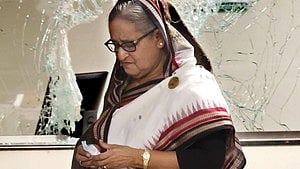
Sheikh Hasina questions Bangladesh’s reported China fighter jet deal, citing concerns over affordability, necessity, transparency and regional security
She urges Dhaka to maintain balanced ties with India, China, the US and other global powers, avoiding geopolitical rivalries
Hasina flags Bangladesh’s economic slowdown, banking sector difficulties and business challenges, calling for caution over major defence spending
Former Bangladesh prime minister Sheikh Hasina has called for greater scrutiny of Dhaka’s reported deal to procure J-10CE fighter aircraft from China, questioning its affordability, necessity and potential impact on regional security.
In an exclusive audio interview with IANS, Hasina said Bangladesh had every right to modernise its armed forces but stressed that major defence purchases must be guided by practical requirements, financial capacity and transparency.
“Bangladesh has every right to modernise its armed forces. I have always supported that,” Hasina said, noting that her government had also invested in defence modernisation while maintaining military cooperation with several countries, including China.
However, she questioned whether the proposed aircraft were necessary and whether Bangladesh could afford the purchase amid its current economic difficulties.
“Does Bangladesh need the equipment? Can the country afford it? Was the decision taken transparently, and have the wider regional implications been considered?” she asked.
Hasina also highlighted the importance of maintaining regional balance, arguing that defence procurement decisions should be assessed beyond immediate military requirements.
Addressing Bangladesh’s growing defence engagement with China, Hasina stressed that Dhaka must maintain constructive relations with major global powers without becoming caught in geopolitical rivalries.
She described India as Bangladesh’s closest neighbour and China as an important defence and development partner.
Hasina also highlighted the importance of Bangladesh’s relations with the United States, Japan, Middle Eastern countries, Gulf nations and African states.
“During our government, we maintained cooperation with all of them. We never believed that friendship with one country required hostility towards another,” she said.
She added that Bangladesh should pursue its national interests independently and avoid becoming a battleground for competition among larger powers.
The former prime minister also expressed concern over what she described as Bangladesh’s deteriorating economic situation, contrasting the country's current challenges with the growth achieved during her tenure.
She said her government had overseen rapid economic expansion, poverty reduction and improvements in electricity, healthcare and infrastructure.
“Look, I wish I could say that things are getting better. Unfortunately, the situation in Bangladesh is getting worse with each passing day, in almost every aspect of people's lives,” Hasina told IANS.
Pointing to the International Monetary Fund's growth projection, she said Bangladesh's economy was now facing a difficult period, with the IMF projecting growth of just 3.2 per cent for the current fiscal year.
Hasina also raised concerns over difficulties in the banking sector and mounting pressure on businesses.
She argued that the economic situation made it particularly important for Bangladesh to carefully assess the financial implications of major defence purchases.
Hasina's remarks come amid reported plans by Bangladesh to procure Chinese-made J-10CE fighter aircraft as part of efforts to strengthen its air force.
While supporting the need for military modernisation, she emphasised that defence spending must be aligned with the country's economic realities and long-term national priorities.
Her comments also underline the importance of balancing Bangladesh's defence partnerships with China against its longstanding geographical, economic and diplomatic relationship with India.
The former prime minister maintained that Bangladesh's foreign policy should remain independent, inclusive and focused on national interests rather than the competing strategic ambitions of major powers.
With IANS inputs
Join our official telegram channel (@nationalherald) and stay updated with the latest headlines