World
Trump asks his negotiating team to pursue long-term deal in Ukraine: Official
Senior officials say talks have coalesced into a trilateral format with Ukraine and Russia, facilitated by US
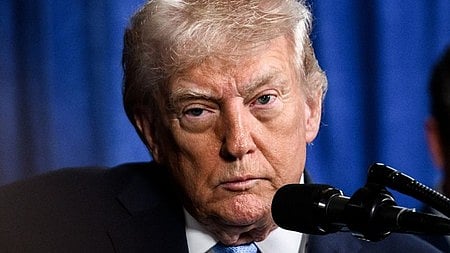
US President Donald Trump has instructed his negotiating team to chase a durable peace in Ukraine, directing them to craft a long-term agreement aimed at ensuring the war does not return, senior administration officials said after what they described as a series of unusually productive engagements involving Ukrainian President Volodymyr Zelenskyy and Russian President Vladimir Putin.
From the snowy corridors of Davos to discreet meeting rooms in Abu Dhabi and extended talks in Russia, recent diplomatic efforts have focused on resolving the last and most sensitive questions of the conflict — security guarantees, economic reconstruction, frozen assets, territorial arrangements and de-escalation. Senior officials said these discussions have now converged on a trilateral negotiating format bringing Ukraine and Russia to the table, with the United States acting as facilitator.
A senior administration official said Trump reviewed months of diplomatic progress during a meeting with Zelenskyy on the sidelines of the World Economic Forum in Davos, an encounter that prompted fresh instructions to the US negotiating team. That was followed by talks in Abu Dhabi and a four-hour meeting with Putin in Russia, engagements US officials described as “very, very productive”.
The Abu Dhabi discussions, officials said, marked a turning point, ushering in a new phase of negotiations after weeks of behind-the-scenes effort to assemble a trilateral framework. Ukrainian and Russian leaders agreed to sit together only once they were convinced that talks had advanced far enough to warrant detailed technical discussions.
The two-day trilateral meeting brought together both political and military representatives, including senior Ukrainian officials, and unfolded through formal sessions and extended informal exchanges. Negotiators focused heavily on de-escalation, probing ways to reassure both sides that the guns would not resume firing once the war ends.
According to officials, Trump is determined to secure an agreement built to last — not merely a ceasefire, but a framework that establishes a new paradigm for stability and sharply reduces the risk of renewed conflict.
The talks ranged widely, spanning security arrangements and economic questions, underscoring the breadth and complexity of the negotiations. Officials highlighted the notably constructive tone, saying it was striking to see Ukrainian and Russian representatives engage directly and respectfully after a prolonged rupture in contacts. The atmosphere, they said, allowed both sides to air concerns and ideas openly, creating what they described as a fluid and productive exchange.
More meetings are expected in the coming days, with Ukrainian and Russian officials set to return to Abu Dhabi to push forward ceasefire efforts. These talks, officials said, marked the first time representatives from all three countries have sat face to face to attempt to hammer out a ceasefire. The discussions touched on both economic and military issues, including fraught territorial questions over which areas Russia would retain — among the most sensitive and unresolved matters.
Trump’s special envoy Steve Witkoff and Jared Kushner led the diplomatic push, meeting Zelenskyy in Switzerland before travelling to Moscow for talks with Putin. Senior US military leaders, including the commander of US European Command and NATO forces, later joined the discussions.
One of the thorniest issues remains post-war security guarantees for Ukraine. While European nations have floated the idea of a limited troop presence to monitor a ceasefire, US officials have indicated Washington’s role would centre on intelligence-sharing, surveillance and logistical support rather than deploying American troops on the ground.
Economic questions also loomed large, including the fate of Ukraine’s Zaporizhzhia nuclear power plant, Europe’s largest, now under Russian control. Although no agreement was reached, officials said proposals were aired for Ukraine and Russia to share electricity generated by the facility.
With IANS inputs
Join our official telegram channel (@nationalherald) and stay updated with the latest headlines