World
Trump hints at ‘friendly takeover of Cuba' coming out of talks with Havana
US president’s remarks stir fresh uncertainty amid tensions, sanctions and armed clash at sea
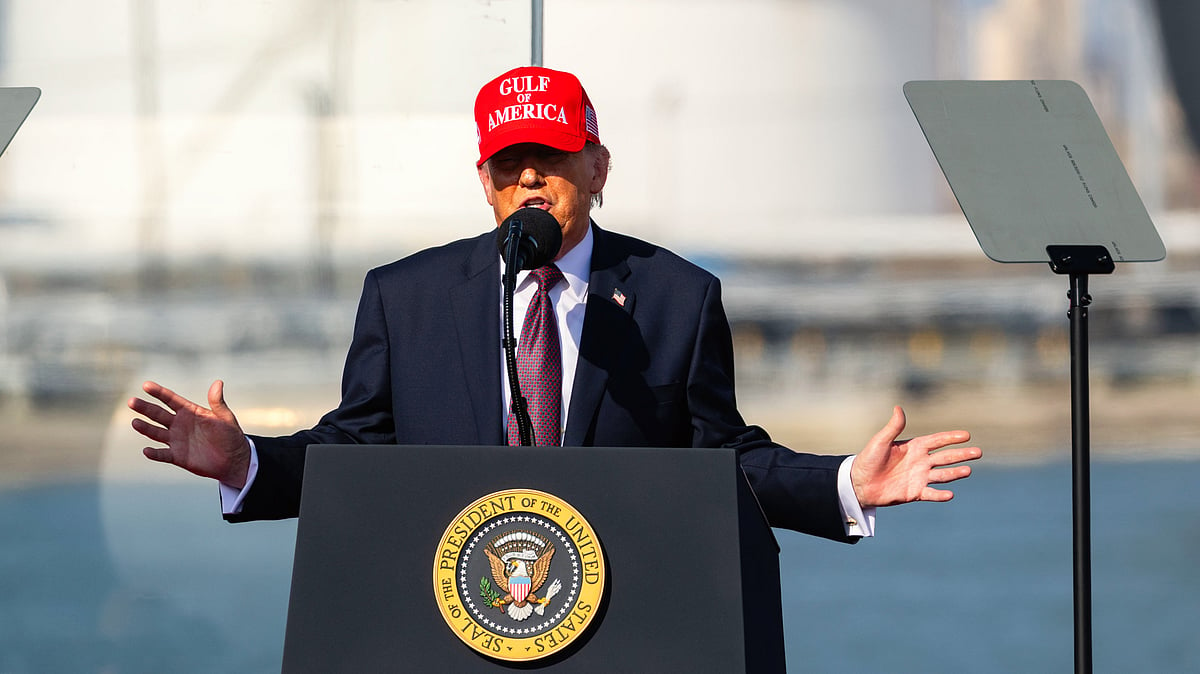
US President Donald Trump on Friday said Washington is engaged in talks with Havana and raised the prospect of what he described as a “friendly takeover of Cuba”, without clarifying what such an outcome would entail.
Speaking to reporters outside the White House before departing for Texas, Trump said Secretary of State Marco Rubio was in discussions with Cuban leaders “at a very high level.”
“The Cuban government is talking with us,” Trump said. “They have no money. They have no anything right now. But they're talking to us, and maybe we'll have a friendly takeover of Cuba.” He added: “We could very well end up having a friendly takeover of Cuba.”
The president did not elaborate on the remark but indicated that developments in Cuba — long governed by a communist system and historically one of Washington’s staunchest adversaries — may be reaching a turning point. The White House did not respond to requests for further clarification.
Trump’s comments came two days after Cuban authorities reported that a Florida-registered speedboat carrying 10 armed Cubans from the United States opened fire on soldiers off the island’s north coast. According to Havana, four of the attackers were killed and six injured in retaliatory fire, while one Cuban official was also wounded.
Cuba has featured prominently in Trump’s recent foreign policy outlook, particularly after US forces in early January ousted Venezuelan socialist President Nicolás Maduro, one of Havana’s closest allies.
In the aftermath, Trump suggested that military intervention in Cuba might be unnecessary, arguing that the island’s fragile economy — weakened further by the halt in Venezuelan oil shipments following Maduro’s capture — could collapse on its own.
“We've had a lot of years of dealing with Cuba. I've been hearing about Cuba since I'm a little boy. But they're in big trouble,” Trump said Friday.
Referring to Cuban exile communities in the United States, he hinted at potential developments that could be “very positive for the people that were expelled, or worse, from Cuba and live here,” without providing details.
The United States has maintained a trade embargo against Cuba since 1962, following the failed CIA-backed Bay of Pigs invasion. Despite this, Trump indicated earlier this month that dialogue with Cuban officials had begun.
Havana confirmed earlier this week that it was in contact with US authorities after the maritime shooting incident. Rubio has said the department of homeland security and the coast guard are investigating the episode.
An executive order signed by Trump in late January threatening tariffs on countries supplying oil to Cuba has heightened pressure on the island, already grappling with a severe energy crisis. US officials have since clarified that Venezuelan oil could still be sold to Cuban private-sector entities under certain conditions.
Carlos Fernández de Cossío, Cuba’s deputy foreign minister, said Friday that “the US maintains its fuel embargo against Cuba in full force, and its impact as a form of collective punishment is unwavering.”
“Nothing announced in recent days changes this reality,” he wrote on X. “The possibility of conditional sales to the private sector already existed and does not alleviate the impact on the Cuban population.”
Meanwhile, more than 40 US civil society organisations wrote to Congress urging lawmakers to “press the Trump administration to reverse its aggressive policy towards Cuba”, warning that efforts to curb oil supplies could trigger a humanitarian crisis. Signatories included the Alliance of Baptists, ActionAid USA and the Presbyterian Church.
“Policies that deliberately impose hunger and mass hardship on millions of civilians constitute a form of collective punishment, and as such are a grave violation of international humanitarian law,” the letter said.
With AP/PTI inputs
Join our official telegram channel (@nationalherald) and stay updated with the latest headlines