World
Donald Trump raises metal tariffs to 50%, slaps 100% duty on patented drugs
Officials say the revised framework closes loopholes, simplifies compliance, and pushes capacity use toward 80%
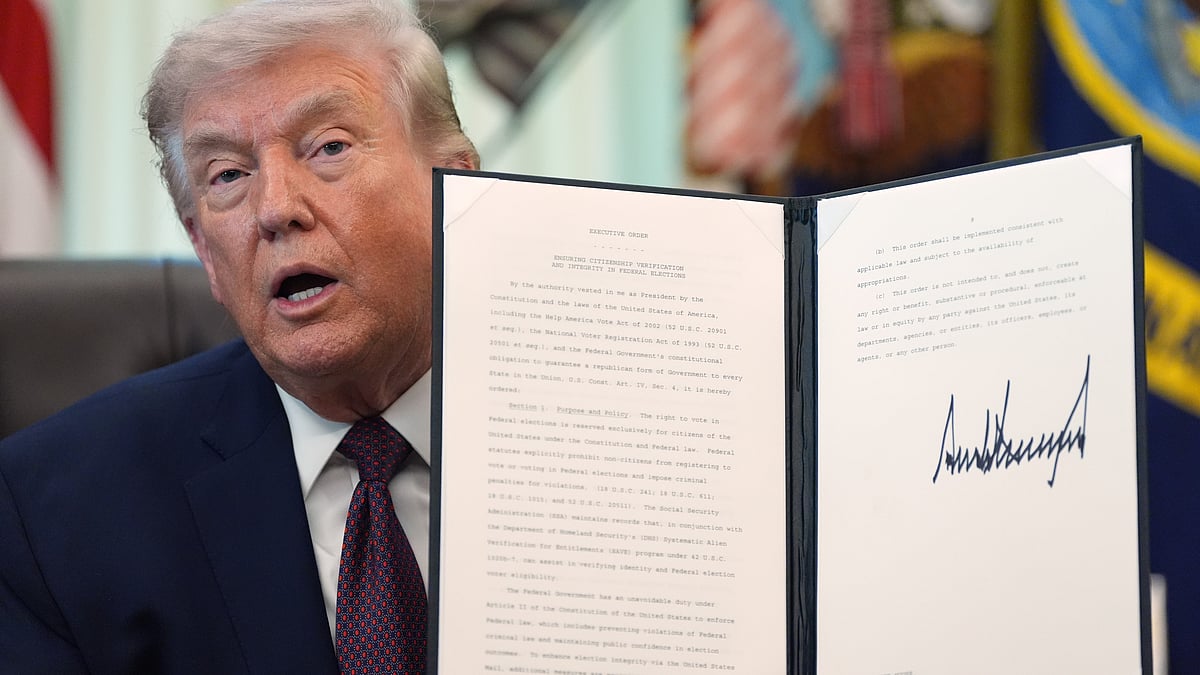
In a sweeping escalation of trade policy, US President Donald Trump has announced sharp tariff hikes on key industrial metals while unveiling a separate plan to impose up to 100 per cent duties on imported patented pharmaceuticals, citing national security concerns and supply chain vulnerabilities.
Under a new proclamation, imports of steel, aluminium and copper will face significantly higher duties, with primary metal products attracting a 50 per cent ad valorem tariff and certain derivative goods subject to a 25 per cent levy. The administration has also revised valuation rules, mandating tariffs be calculated on the full customs value to curb under-invoicing and pricing distortions by exporters.
Officials said the move builds on earlier actions under Section 232 of the Trade Expansion Act, which allows import restrictions on national security grounds. The revised framework aims to close loopholes, simplify compliance, and push domestic capacity utilisation closer to the targeted 80 per cent.
The tariffs, effective 6 April, will also allow US authorities to expand the list of covered products on a rolling basis if imports are found to undermine domestic industry.
In a parallel move, the administration announced tariffs of up to 100 per cent on imported patented pharmaceuticals and active pharmaceutical ingredients, marking a major expansion of trade restrictions into the healthcare sector.
The proclamation warns that heavy reliance on foreign drug manufacturing could jeopardise access to critical medicines during crises. While most patented drugs will face the full tariff, companies shifting production to the US will receive temporary relief with a 20 per cent duty, rising to 100 per cent after four years.
Certain allies — including the European Union, Japan, South Korea and Switzerland — will face lower tariffs of around 15 per cent, while exemptions have been granted for specialised categories such as orphan drugs, nuclear medicines and gene therapies. Generic drugs and biosimilars have been excluded for now.
US trade representative Jamieson Greer said the policy is part of a broader push to rebuild domestic manufacturing capacity, adding that companies are already investing in US-based pharmaceutical facilities.
The pharmaceutical tariffs will be rolled out in phases starting 31 July 2026.
The twin measures are expected to have far-reaching implications for global trade, particularly for major drug and raw material exporters such as India and China, even as Washington insists the changes will strengthen supply chains without significantly impacting consumer prices.
With IANS inputs
Join our official telegram channel (@nationalherald) and stay updated with the latest headlines