World
Trump threatens Colombia and hints at further US action in Latin America
President’s remarks after Venezuela raid spark regional backlash and revive fears of renewed interventionism
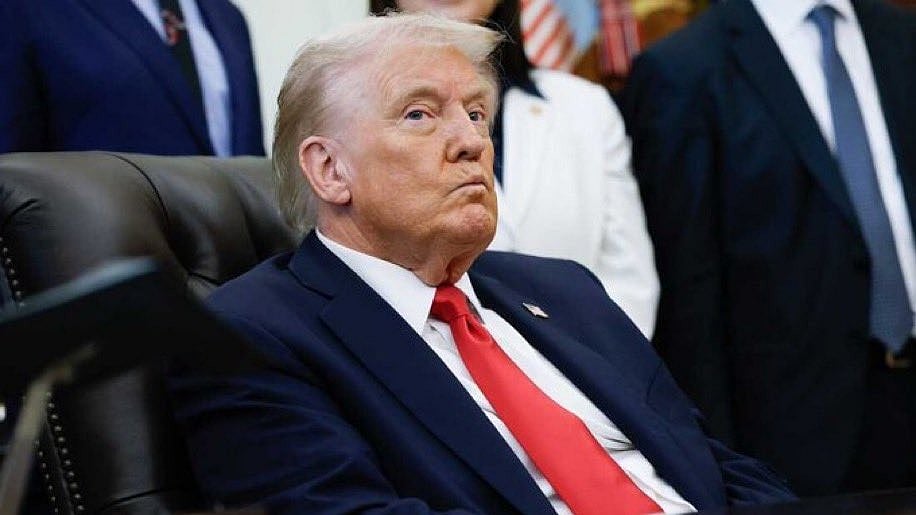
United States President Donald Trump has issued fresh threats against Colombia and hinted at further military action in Latin America, days after US forces seized Venezuela’s leader in a controversial operation that has triggered outrage across the region.
Speaking to reporters aboard Air Force One on Sunday, Trump warned Colombian President Gustavo Petro that his time in office may be limited and suggested Washington could consider intervening in Colombia. Describing both Colombia and Venezuela as “very sick”, Trump accused the government in Bogotá of presiding over cocaine production and trafficking into the US.
Referring to Petro, Trump said: “He’s not going to be doing it very long. Let me tell you.” When asked whether he was suggesting a US operation in Colombia, he replied: “Sounds good to me.”
Al Jazeera reported that the remarks followed the US raid in Caracas on Saturday in which Washington said it detained Venezuelan leader Nicolas Maduro as part of a law enforcement effort linked to 2020 narco-terrorism charges. Critics, however, argue the operation amounted to regime change and was aimed at asserting control over Venezuela’s vast oil reserves. It was the most contentious US intervention in Latin America since the 1989 invasion of Panama.
Trump insisted that the US was now “in charge” of Venezuela, despite the country’s Supreme Court appointing Vice President Delcy Rodriguez as interim leader. He also renewed his threat to deploy US forces again if Venezuela “doesn’t behave”.
Petro responded sharply, urging Latin American nations to unite or risk being treated as “servants and slaves”. In a lengthy post on X, he recalled that the US was “the first country in history to bomb a South American capital”, a reference to past interventions, adding that the trauma of such actions had left lasting scars. While rejecting revenge, he called for regional unity and a foreign policy that looks “in all directions, not only to the north”.
Trump also turned his attention to Cuba, claiming the island nation was close to collapse. He said Cuba had lost its main source of income following the disruption of Venezuelan oil supplies and suggested no US military action was required because the government was “ready to fall on its own”.
“Cuba now has no income,” Trump said, adding that many Cuban Americans would welcome such an outcome.
Mexico was also warned. Trump said drugs were “pouring through” the country and claimed he had repeatedly offered to send US troops to assist President Claudia Sheinbaum. While describing her as “a terrific person”, he added that Mexican cartels were so powerful they were effectively “running Mexico”.
Trump’s comments drew swift international condemnation. Brazil, Chile, Colombia, Mexico, Uruguay and Spain issued a joint statement expressing “profound concern” and rejecting what they described as unilateral US military actions in Venezuela. Such moves, they said, violated international law and posed a grave threat to regional peace and civilian safety.
Analysts say it remains unclear whether Trump intends to follow through on his threats or is using them as leverage. David Smith, an associate professor at the University of Sydney’s US Studies Centre, said Trump often relied on dramatic displays of force to intimidate rivals into compliance.
“Maduro appears to have called his bluff, and it wasn’t a bluff,” Smith said. “That makes it harder for other governments to judge whether his current threats are real.”
Another analyst, Matthew Wilson of Southern Methodist University in Texas, said Cuba would be more vulnerable than Colombia given the long history of hostility between Washington and Havana and the influence of Cuban American voters in the US.
Trump’s rhetoric fits a broader pattern, observers say, of targeting left-leaning governments in Latin America while backing right-wing allies. He has previously clashed with Petro over deportation flights, sanctioned a Brazilian judge involved in the prosecution of former president Jair Bolsonaro, supported Argentina’s President Javier Milei and pardoned a former Honduran leader convicted on drug charges.
With regional tensions rising, Trump’s revival of a US-first approach to the Western Hemisphere, likened by critics to a modern version of the Monroe Doctrine, has deepened fears that Latin America may once again become a stage for American power projection.
Join our official telegram channel (@nationalherald) and stay updated with the latest headlines