World
Donald Trump touts AI lead, hits China and Europe on energy
US president casts artificial intelligence as the key to future military and economic supremacy
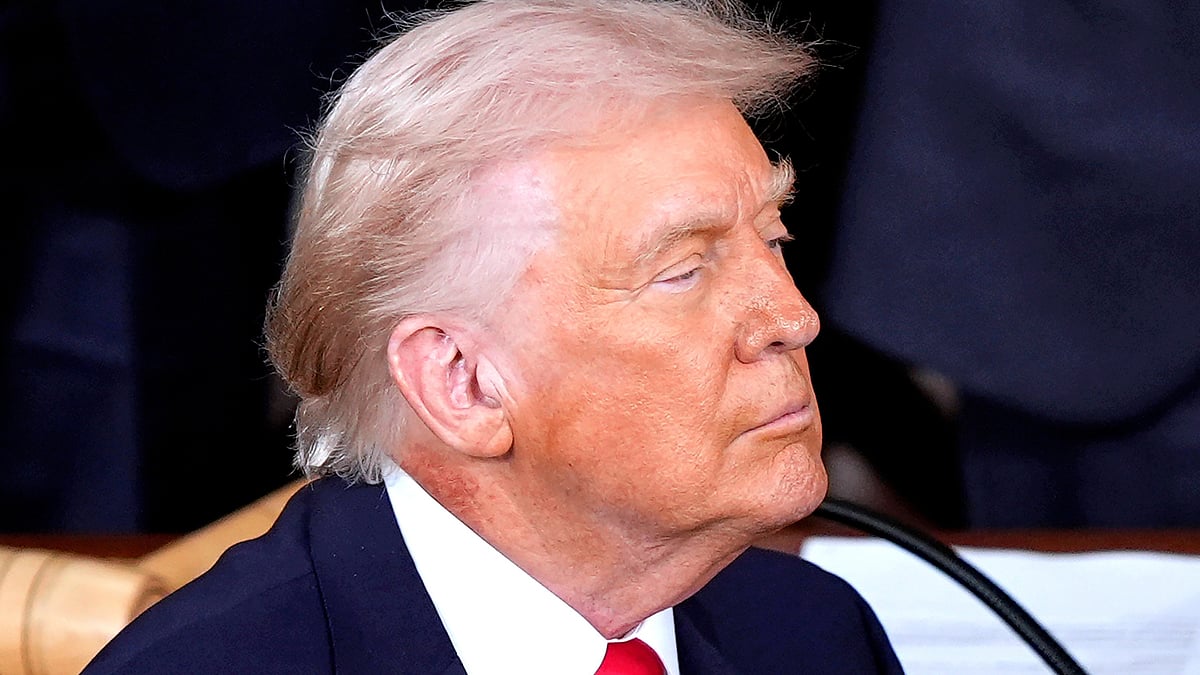
US President Donald Trump on Wednesday cast the global race for artificial intelligence (AI) as a defining contest of the century, declaring that the United States had surged far ahead of China while simultaneously accusing Beijing of tightening its grip on the world’s wind turbine market.
Speaking at a White House roundtable on the “Ratepayer Protection Pledge,” Trump portrayed artificial intelligence not merely as an industry, but as the fulcrum upon which future military and economic supremacy will pivot.
“The United States is leading the world in AI by a lot,” he asserted. “We’re leading China. We’re leading everybody by a lot.”
The president framed the technological sprint as a high-stakes geopolitical rivalry, warning that dominance in artificial intelligence would translate into dominance on the battlefield. Energy Secretary Chris Wright, echoing that sentiment, remarked that the nation at the forefront of AI would ultimately emerge as the preeminent military power.
Turning his focus to renewable energy, Trump accused China of cornering the global wind turbine manufacturing industry, claiming Beijing produces and exports the vast majority of the world’s windmills — particularly to European markets pursuing aggressive green transitions. He questioned the effectiveness of Europe’s wind energy push and suggested that China itself was not as reliant on wind farms as its export figures might imply.
At the same time, Trump acknowledged China’s rapid expansion of its broader energy infrastructure, describing it as “tremendous,” even as he maintained that the United States was matching that momentum. America, he said, was building the energy capacity required to fuel a new generation of data centres and advanced computing systems essential for AI development.
“We’re building what we need,” Trump declared, arguing that a robust and expanding electricity supply is indispensable to securing America’s technological edge.
The president also pointed to what he described as a reshaping of global manufacturing currents. Citing automotive companies from Canada, Mexico, Germany, Japan and South Korea, Trump said foreign manufacturers were increasingly shifting production to American soil — a development he attributed to trade policies and tariffs introduced during his administration.
“They’re all coming here to build cars again,” he said, linking the trend to renewed economic incentives and pressure from US trade measures.
Taiwan surfaced briefly in his remarks as Trump addressed the semiconductor industry, long regarded as a strategic linchpin of modern technology. He argued that the United States was reclaiming lost ground in chip manufacturing, reversing what he described as years of industrial decline.
“We lost the chip industry,” he said, before adding that production was now returning home.
Throughout the event, Trump’s message was clear: technological supremacy, energy expansion, and industrial revival are intertwined pillars of national power — and, in his telling, the United States is poised to lead them all.
With IANS inputs
Join our official telegram channel (@nationalherald) and stay updated with the latest headlines