World
Fears of wider disruption grow as Iran signals potential move on Bab el-Mandeb
Warning over second strategic chokepoint raises concerns of major impact on global oil supply and trade routes
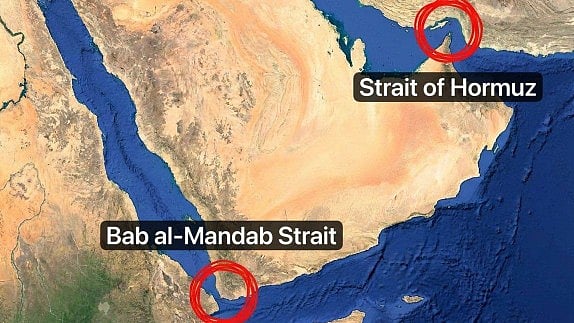
Concerns over global energy supplies and maritime trade have intensified as Iran signalled it could expand its strategic response in the Middle East by targeting another sea route, the Bab el-Mandeb Strait.
According to Iranian media reports citing a military source, Tehran may consider opening a new front in the narrow passage if its territory or offshore islands come under attack. The warning comes amid escalating tensions in the region and has triggered alarm among global policymakers and markets.
The development follows heightened focus on the Strait of Hormuz, through which roughly a fifth of the world’s oil and gas flows. Iran is reported to have tightened control over this critical route, raising fears of a broader disruption to global energy supplies.
Tehran has also responded sharply to recent indications from the United States and Israel that Iranian islands in the Persian Gulf could be targeted. The country controls more than 30 islands in the region, several of which play a vital role in energy exports, maritime security and surveillance operations around Hormuz.
The Bab el-Mandeb Strait, whose name translates to “gate of tears”, connects the Red Sea to the Gulf of Aden and the Arabian Sea. Situated between Yemen and the Horn of Africa, the narrow passage, at points just 29 kilometres wide, serves as a crucial artery for international trade. Around 12 per cent of global commerce and nearly 10 per cent of oil and liquefied natural gas shipments pass through it.
Analysts warn that any disruption in this corridor would force vessels to reroute around Africa via the Cape of Good Hope, significantly extending transit times by up to three weeks and sharply increasing shipping costs.
Experts suggest that if both the Strait of Hormuz and the Bab el-Mandeb were affected simultaneously, more than 30 per cent of global oil and gas flows could face disruption, potentially triggering volatility in energy markets and driving up prices worldwide.
The region around Bab el-Mandeb is already considered highly volatile. Iran-backed Houthi rebels operating from Yemen have repeatedly targeted commercial shipping in the Red Sea, leading to significant security operations by Western nations over the past year. Despite these efforts, several cargo vessels have reportedly been sunk, underlining the persistent risks in the area.
A direct escalation involving Iran in this corridor could pose a far greater challenge to global shipping and security, raising the stakes for international trade and economic stability.
With PTI, IANS inputs
Join our official telegram channel (@nationalherald) and stay updated with the latest headlines