World
Fresh 'mystery' strikes in Iran after US bombing ends, UAE the source?
Unclaimed attacks reignite speculation over Gulf involvement as Iran threatens UAE and tightens stance on Hormuz
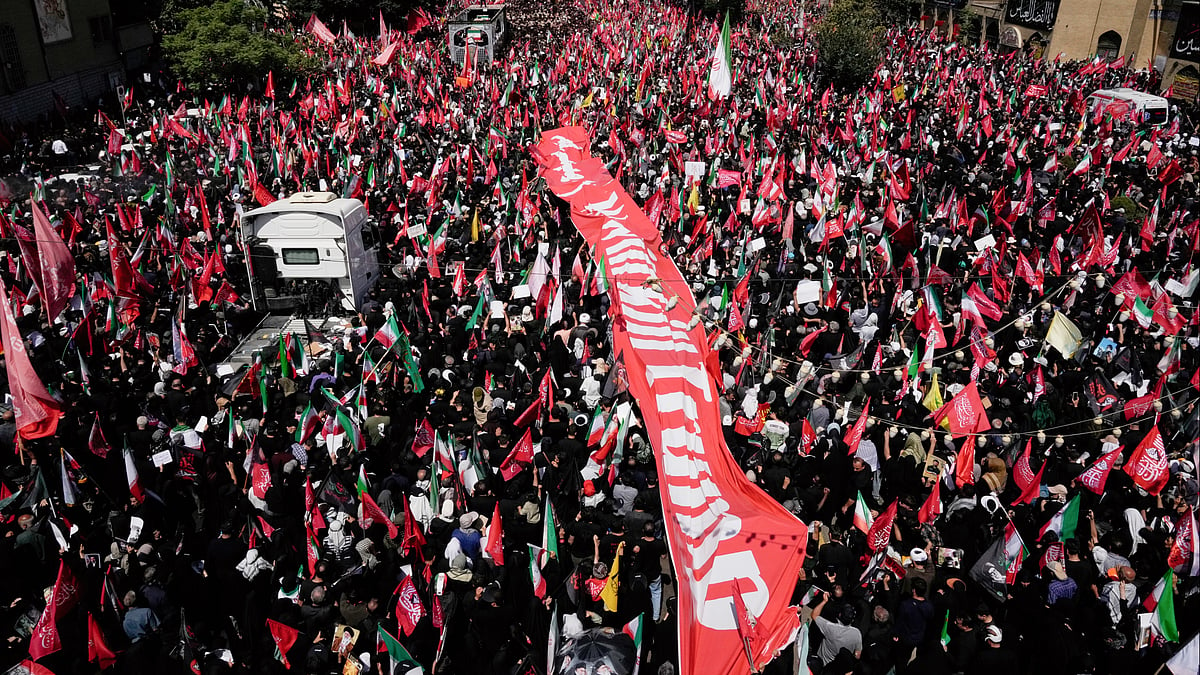
Fresh unclaimed airstrikes hit Iran on Thursday, 9 July, hours after the United States announced it had concluded its latest bombing campaign, fuelling fresh speculation over who else may be targeting the Islamic Republic.
The strikes, which came as Iran prepared to bury the late Supreme Leader Ayatollah Ali Khamenei, reportedly hit multiple locations across southern Iran, including Bushehr and Sistan and Baluchestan provinces, as well as the cities of Ahvaz and Chabahar.
Tehran has stopped short of blaming any country for the attacks. However, an influential Iranian lawmaker warned the United Arab Emirates would "pay the price" for allegedly assisting the United States during the conflict.
On Friday, 10 July, Iranian state media quoted Esmail Kousari, a member of parliament's national security committee and a former commander of the Revolutionary Guard, as accusing the UAE of playing a "behind-the-scenes" role in the recent US campaign.
"The UAE will pay the price for its cooperation with the United States," he warned.
Throughout the conflict, Iran repeatedly alleged that Gulf Arab states had actively supported the American war effort — claims consistently denied by those governments. The US maintains an extensive military presence across the Gulf, including its Fifth Fleet headquarters in Bahrain.
The UAE and other Gulf Arab states, which themselves came under repeated Iranian attacks during the war that began on 28 February, did not immediately comment on the allegations.
The fresh strikes come even as Washington and Gulf capitals have sought to reassure global markets that the Strait of Hormuz — a key artery through which roughly a fifth of the world's oil and natural gas supplies pass — must remain open to international shipping.
Iran, however, has insisted that the strategic waterway should remain under its exclusive control and has proposed levying transit fees on commercial vessels, despite the Strait long being recognised internationally as open waters.
Iran's control over the passage during the conflict triggered a global energy crisis, with crude prices briefly surging to around USD 120 a barrel before retreating after hostilities eased.
Israel, which participated in the war against Iran, has also remained silent on the latest strikes. Unlike previous operations, Israeli authorities have not claimed responsibility for any attacks since June.
The US military's Central Command said around 6.30 am local time on Thursday that it had completed its latest round of operations, targeting around 90 sites across Iran. Soon afterwards, Iranian state media reported a fresh wave of explosions and airstrikes in several parts of the country.
A US defence official, speaking on condition of anonymity, said there had been no further American strikes after Thursday morning's operation concluded.
Iran responded by launching a broader barrage across the Gulf, targeting Bahrain, Jordan, Kuwait and Qatar. Missile sirens sounded across the four countries, forcing residents into shelters, while one person was reportedly injured in Kuwait as air defence systems intercepted incoming missiles.
UAE President Sheikh Mohammed bin Zayed Al Nahyan travelled to Kuwait immediately after the attacks to meet the country's ruler. Gulf Arab states also held consultations with Qatar's foreign minister, who, alongside Pakistan, has played a key role in mediating indirect talks between Tehran and Washington that resulted in the current truce.
The latest attacks have revived memories of similar unclaimed strikes during the war. Officials later acknowledged that both Saudi Arabia and the UAE had launched retaliatory airstrikes on Iran after Tehran targeted energy infrastructure in the two countries. Any renewed Gulf military action against Iran would likely be intended as a deterrent against further attacks.
Israeli Prime Minister Benjamin Netanyahu also spoke with US President Donald Trump on Thursday night, with Israel saying Trump briefed him on "American moves in the Gulf".
Israeli defence minister Israel Katz renewed his warning that Israel remained prepared to strike Iran again if necessary. "The Israeli military is on alert and ready to renew the campaign, to re-establish aerial superiority, and to carry out a blue-white (Israeli) strike in Iran to remove threats, even for a third time," Katz said at a military ceremony. "If we have to return, we will return with even greater force."
Meanwhile, Tehran has continued to insist that it alone should control the Strait of Hormuz.
The US, however, is advising commercial vessels to continue using the southern shipping lane through Omani territorial waters to minimise the risk of confrontation with Iranian forces.
The Joint Maritime Information Centre, a multinational body overseen by the US Navy, reiterated that guidance in an advisory on Friday, despite recent attacks on merchant vessels.
"Notwithstanding recent unprovoked attacks on merchant vessels, mariners are reminded that the southern route of the Strait has been expanded and remains available for all traffic," the advisory said.
With AP/PTI inputs
Join our official telegram channel (@nationalherald) and stay updated with the latest headlines